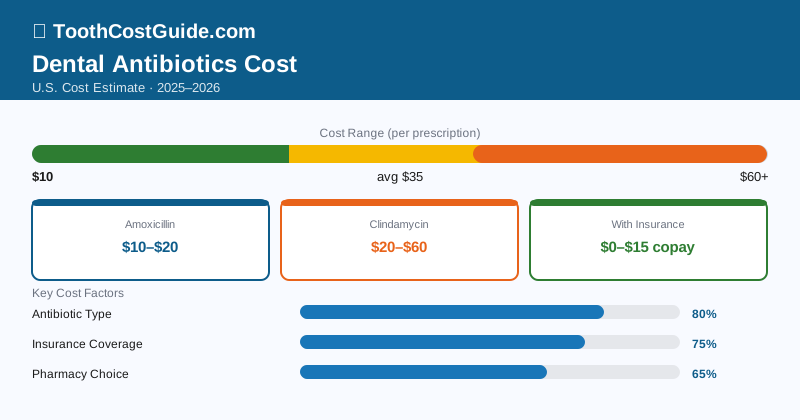
Here’s something most people don’t realize when they’re sitting in urgent care with a throbbing jaw: the antibiotic prescription they’re about to fill is actually the cheapest part of this whole ordeal. Amoxicillin — the workhorse of dental infection treatment — runs $4–$15 with a free GoodRx coupon at Walmart. Clindamycin, used when you’re allergic to penicillin, stays in the $15–$40 range. The antibiotics aren’t what’ll hurt your wallet. The root canal afterward will.
| Antibiotic | Typical Dose | Duration | Cost Without GoodRx | Cost With GoodRx |
|---|---|---|---|---|
| Amoxicillin 500 mg | 3x/day | 7–10 days | $15–$40 | $4–$12 |
| Amoxicillin-clavulanate (Augmentin) | 2x/day | 7–10 days | $35–$80 | $20–$40 |
| Clindamycin 300 mg | 3x/day | 7 days | $40–$80 | $15–$35 |
| Metronidazole 500 mg | 3x/day | 7 days | $20–$50 | $8–$20 |
| Penicillin VK 500 mg | 4x/day | 7–10 days | $15–$35 | $4–$12 |
| Azithromycin (Z-pack) | 1x/day | 5 days | $30–$60 | $15–$30 |
Why the Price Varies So Much
The antibiotic itself matters most. Amoxicillin and penicillin VK are first-line choices for dental infections — they’ve been around for decades, they’re off-patent, and they cost almost nothing. Augmentin (amoxicillin-clavulanate) is the beefed-up version for tougher or more resistant infections, and that extra firepower comes with a higher price tag. Clindamycin and metronidazole serve patients who can’t take penicillin-based drugs.
Insurance makes a real difference. If your medical plan includes a pharmacy benefit, generic antibiotics typically land in the $0–$15 copay tier. Without pharmacy coverage? The cash price at a retail pharmacy can be three to five times what GoodRx charges. Always check GoodRx before paying the sticker price.
Where you fill it changes things. Not all pharmacies price the same drug the same way. Walmart, Costco, and Sam’s Club pharmacies consistently undercut chain pharmacy cash rates on generics. Some GoodRx prices at Walmart show amoxicillin for $4 flat.
Course length affects the final count. Seven days of amoxicillin three times daily means 21 capsules. Ten days means 30. That’s a real difference on quantity-dependent pricing — some pharmacies charge per capsule, so a longer course costs more even for the same drug.
A Rundown of the Main Players
Amoxicillin 500 mg is the ADA’s first-line recommendation for dental infections. It hits the mix of aerobic and anaerobic bacteria responsible for dental abscesses well, it’s cheap, and most people tolerate it fine. Take it with food — it’s easier on the stomach. About 5–10% of patients report a penicillin allergy, though true IgE-mediated allergy is actually less common than self-reported figures suggest.
Penicillin VK 500 mg is essentially equivalent in effectiveness, but the four-times-daily dosing makes compliance harder than amoxicillin’s three-times-daily schedule. It’s not a bad drug — patients just miss doses more often.
Amoxicillin-clavulanate (Augmentin) comes out when amoxicillin alone isn’t cutting it, or when there’s reason to suspect resistant organisms. GI side effects — nausea, loose stools — are noticeably more common than with plain amoxicillin. Worth it when it’s indicated; overkill when it isn’t.
Clindamycin 300 mg is the go-to for penicillin-allergic patients. It works well against dental pathogens. The one concern worth knowing: prolonged use raises the risk of Clostridioides difficile (C. diff) colitis. Severe or persistent diarrhea during or after a clindamycin course warrants a call to your doctor — don’t just push through it.
Metronidazole 500 mg is particularly effective against the anaerobic bacteria that thrive in abscess environments. It’s sometimes paired with amoxicillin for serious mixed infections. Hard rule: no alcohol while taking it. The interaction causes severe nausea, flushing, and vomiting — it’s not subtle.
Azithromycin (Z-pack) shows up occasionally but isn’t favored by current dental infection guidelines. Resistance rates among dental pathogens are higher than for amoxicillin, which makes it a less reliable choice.
What Antibiotics Actually Do — and Don’t Do
This distinction matters. A lot of people leave a dental emergency visit thinking the antibiotic is fixing their tooth. It isn’t.
What they actually accomplish:
- Reducing the bacterial load in an active infection
- Keeping a spreading infection from getting worse while you arrange definitive care
- Bringing down fever and systemic symptoms
- Buying you a window of days or weeks to get the real treatment done
What they don’t do:
- Eliminate the source of infection (dead pulp tissue, infected periodontal pocket)
- Substitute for a root canal or extraction
- Prevent the abscess from coming back when you stop taking them
- Work if you don’t finish the full course
Antibiotics are a bridge treatment for dental infections — they reduce spreading infection while you arrange definitive care. They will not permanently resolve an abscess. A tooth infection that “gets better” with antibiotics will almost certainly return when antibiotics stop. The root canal or extraction cannot be avoided.
Paying For It: Insurance vs. No Insurance
If you have pharmacy coverage: Standard generics sit at Tier 1 or Tier 2 on most formularies, meaning a $0–$15 copay. Augmentin occasionally requires prior authorization on some plans — call the pharmacy benefit line before assuming it’s covered.
If you’re paying cash: Pull up GoodRx on your phone before you even leave the office. Search your drug, compare prices at pharmacies within a few miles, and show the coupon on your phone at the window. You don’t need to sign up for anything. Amoxicillin at $4 at Walmart is real — that coupon actually works.
Getting the prescription written: Your dentist is the most straightforward source. Urgent care works too. Telemedicine prescribing for dental antibiotics is legal in roughly 47 states, though not every telehealth platform offers it — check before booking a $75 virtual visit just to get a $4 prescription.
Six Things to Do Right Now
- Fill it today. Don’t let cost hesitation delay the first dose — use GoodRx and it’s likely $4–$15.
- Finish every pill. Stopping early when you feel better is exactly how you end up with a more resistant infection in a few weeks.
- Eat before each dose. Both amoxicillin and clindamycin are easier on the stomach with food.
- Skip the alcohol if you’re on metronidazole. This one is serious — the reaction is miserable.
- Book the dental appointment. Today if possible. The antibiotic is buying you time; it’s not solving the problem.
- Know the allergy warning signs. Rash, hives, facial swelling, difficulty breathing — stop the antibiotic immediately and get to an ER.
Squeezing Every Dollar
GoodRx is genuinely free. No membership, no subscription. Goodrx.com or the app. Search, compare, show coupon. Done.
Ask for generic specifically. Most prescriptions are written generically, but confirm at the counter. Brand-name Augmentin costs dramatically more than generic amoxicillin-clavulanate.
Publix Pharmacy offers free 14-day supplies of amoxicillin and several other common generics — no coupon needed, just ask. Some other regional chains have similar programs. It’s worth a quick call to check.
Costco and Sam’s Club pharmacies are open to the public for prescriptions even without a club membership in most states, and their cash prices on generics are reliably among the lowest around.
Dental antibiotics treat the symptoms of an infection, not the source. A dental abscess treated only with antibiotics will almost always return after antibiotics stop. If you experience severe allergic reaction symptoms — difficulty breathing, hives, swelling of the face/throat — stop the antibiotic and call 911 or go to an emergency room immediately.
The Short Version
For the medication itself, dental antibiotics are genuinely cheap — $4–$15 with GoodRx for the most common options, topping out around $40 for clindamycin. The real cost of a dental infection is the treatment that comes after: the root canal, the extraction, the crown. The antibiotics just get you there. Fill the prescription, take every pill, and schedule the definitive procedure. There’s no version of this story where antibiotics alone are the end of it.
Frequently Asked Questions
Dental antibiotics typically cost $10–$60 without insurance, depending on the type and pharmacy. Amoxicillin is the most affordable option at $4–$15 with a GoodRx coupon, while clindamycin (for penicillin-allergic patients) generally runs higher within that range.
Most dental insurance plans do not cover prescription medications like antibiotics, as they fall under medical rather than dental coverage. However, your medical health insurance may cover these prescriptions with a standard copay ($10–$50), so it's worth checking your plan details before filling at the pharmacy.
Antibiotics address the infection but do not fix the underlying problem—you will still need dental treatment such as a root canal or extraction to permanently resolve the issue. Antibiotics buy time and reduce pain temporarily, typically providing relief within 24–48 hours, but delaying professional dental care risks the infection spreading or worsening.