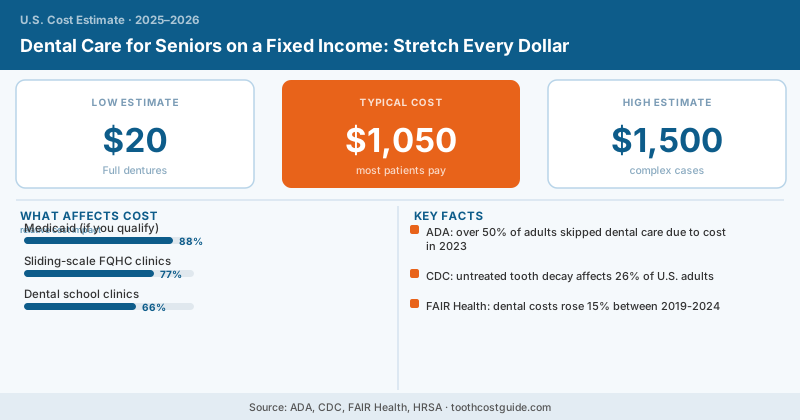
What does a retiree on $1,500 a month do when the dentist says she needs $4,000 of work? That’s not a hypothetical, it’s the exact bind millions of older Americans face. Original Medicare doesn’t cover routine dental, so a fixed income and a dental emergency collide hard. But there’s a real toolkit for getting care without blowing the budget, and most seniors only use a fraction of it.
Let’s walk through every dollar-stretching option, from coverage you might not know you have to programs that cost almost nothing.
The Medicare gap (and the workaround)
Here’s the trap: Original Medicare (Parts A and B) excludes routine dental care, cleanings, fillings, dentures, the works. Seniors assume they’re covered and find out at the worst moment that they’re not.
The workaround is Medicare Advantage (Part C). Many Advantage plans bundle in dental benefits worth $1,000–$3,000 a year, covering cleanings and a chunk of major work. If you’re on Original Medicare and paying full price for teeth, switching to an Advantage plan during open enrollment (Oct 15–Dec 7) can be the single biggest money move available.
| Service | Original Medicare | Medicare Advantage (dental) | Sliding-Scale Clinic |
|---|---|---|---|
| Cleaning + exam | $0 covered (you pay $75–$200) | $0–$30 copay | $20–$60 |
| Filling | Not covered | 20–50% copay | $40–$150 |
| Full dentures | Not covered | Partial, up to plan max | $600–$1,500 |
| Extraction | Not covered | 20–50% copay | $40–$200 |
Stretching a fixed income further
Beyond Medicare Advantage, these programs cut senior dental costs dramatically.
Medicaid (if you qualify). Low-income seniors often qualify for Medicaid alongside Medicare (“dual eligible”). Adult dental coverage varies by state, but where it exists, it can cover cleanings, dentures, and extractions at little to no cost.
Sliding-scale FQHC clinics. HRSA-funded health centers charge by income, often $20–$60 for a cleaning. They served over 30 million patients in 2023, including many seniors.
Dental school clinics. Our dental school clinics guide explains how supervised students provide care at 40–70% below private practice, a great fit for seniors who can trade extra time for big savings.
- During open enrollment, compare Medicare Advantage plans with dental benefits, this alone can save $1,000+ a year.
- Check whether you’re dual-eligible for Medicaid; many low-income seniors qualify without knowing it.
- Find your nearest FQHC at findahealthcenter.hrsa.gov for sliding-scale cleanings and basic care.
The dentures question
Tooth loss climbs with age, the CDC reports that about 1 in 6 adults aged 65 and older have lost all their teeth. So dentures are a top expense for this group. Private-pay full dentures run $1,500–$4,000, but a dental school clinic can make them for $600–$1,500, and some charity programs provide them free.
If you need a root canal or other major work, price it at a dental school before accepting a private quote, the savings often exceed 50%.
Don’t skip cleanings to save money, it backfires. Gum disease and decay caught early cost a fraction of what they cost once an infection sets in. A $40 sliding-scale cleaning twice a year is far cheaper than the $1,500 extraction-and-denture bill that follows years of skipped visits. Prevention is the best deal on a fixed income.
When you still face a big bill
If a large cost is unavoidable, don’t pay sticker price. Our negotiating dental bills guide shows how to ask for a senior or cash discount, many practices offer them. A dental discount plan at $80–$200 a year cuts costs 10–60% with no health questions, and the strategies in dental savings without insurance work especially well for retirees.
The bottom line for seniors on a fixed income: the system isn’t built to help you, Medicare’s dental gap sees to that, but the workarounds are real. Get the right Medicare Advantage plan, check for Medicaid, lean on sliding-scale and dental school clinics, and keep up with cheap preventive care. Done right, even a modest monthly budget can keep your teeth in your head and the bills in check.
Frequently Asked Questions
Routine dental cleanings typically cost $20–$60 for seniors who access programs like Medicaid, community health centers, or dental schools offering reduced-fee services. Without insurance or assistance programs, expect to pay $100–$200 for a standard cleaning at a private dental office.
Original Medicare does not cover routine dental care, including cleanings, fillings, or dentures, leaving seniors responsible for 100% of these costs out-of-pocket. Some Medicare Advantage plans offer limited dental benefits (usually $500–$1,200 annually), so checking your specific plan is essential.
Seniors should explore Medicaid (which covers extractions and dentures in most states), dental discount plans ($80–$200 annually for 10–60% savings), and dental schools where supervised students perform procedures at 30–50% of typical costs. Many community health centers also offer sliding-scale fees based on income, making essential work like dentures available for under $1,000.