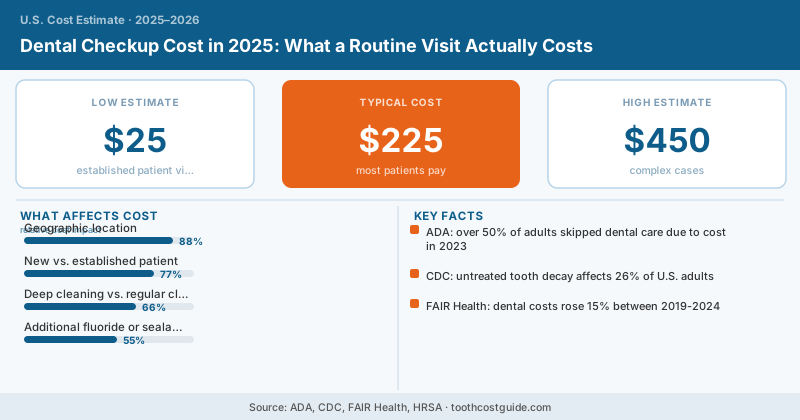
What does a routine dental checkup actually cost? It depends on whether you’re paying cash, using insurance, or skipping it altogether — and the difference between those choices is bigger than most people think.
Here’s the honest breakdown of what a standard checkup includes, what it costs in 2025, and exactly how to cut that number down if you’re uninsured or underinsured.
What’s Included in a “Routine Checkup”
Most people say “I’m just going in for a cleaning” — but a complete preventive visit is actually three separate procedures billed individually:
| Service | CDT Code | Typical Cost Without Insurance |
|---|---|---|
| Comprehensive oral exam (new patient) | D0150 | $75–$150 |
| Periodic oral exam (established patient) | D0120 | $50–$100 |
| Adult prophylaxis (teeth cleaning) | D1110 | $80–$200 |
| Bitewing X-rays (2–4 images) | D0272/D0274 | $25–$75 per image |
| Full mouth X-ray set (new patient) | D0210 | $100–$250 |
| Total new patient visit (no insurance) | $250–$450 | |
| Total established patient visit (no insurance) | $150–$300 |
The CDT codes matter because this is exactly how your dentist bills insurance. Knowing them helps you verify your EOB (explanation of benefits) and spot billing errors.
What Dental Insurance Typically Covers
For most PPO dental plans, a twice-yearly checkup is covered at 100% — no copay, no deductible. This is the “preventive” tier of the standard 100/80/50 structure:
- Preventive care (cleanings, exams, X-rays): 100% covered
- Basic care (fillings, extractions): 80% covered after deductible
- Major care (crowns, bridges, implants): 50% covered after deductible
There’s a catch: plans usually cover two cleanings per calendar year, not two per any rolling 12-month period. If your cleaning in July bleeds into the next calendar year cycle, you may owe out-of-pocket for the third visit.
Why Prices Vary So Much
The same cleaning visit can cost $90 at a community health center or $250 at a private practice in a major metro area. Here’s what’s driving that:
Geographic location — Dental fees in San Francisco or New York run 30–50% higher than national averages. ADA Health Policy Institute data from 2023 shows the average adult prophylaxis (cleaning) fee ranged from $82 in rural Mississippi to $198 in metropolitan California.
New vs. established patient — Your first visit includes a comprehensive exam and often full-mouth X-rays, adding $150–$250 to the bill. Once you’re an established patient, follow-up visits are cheaper.
Deep cleaning vs. regular cleaning — If your dentist finds significant tartar buildup or early gum disease, they may recommend a scaling and root planing (deep cleaning) instead of a routine prophylaxis. That’s $150–$350 per quadrant — a very different bill than you walked in expecting.
Additional fluoride or sealants — If you ask for fluoride treatment or your dentist recommends it, add $30–$60 per application.
If your dentist upgrades your visit from a routine cleaning to a “full mouth debridement” or “periodontal maintenance” visit without explaining why, ask before agreeing. These are legitimate procedures when needed — but they’re billed at significantly higher rates ($100–$200 more), and you should understand what you’re getting and why.
What Happens If You Skip the Checkup
People skip dental checkups most often because of cost. But the math typically punishes the skip. A CDC report from 2022 found that adults who hadn’t seen a dentist in over a year were nearly three times as likely to need major dental work within two years.
A cavity caught at a routine checkup: $150–$300 to fill. The same cavity left two years: root canal ($700–$1,800) + crown ($800–$1,800) = $2,500–$3,600.
Preventive care isn’t just better for your teeth. It’s dramatically cheaper.
Ways to Pay Less for a Dental Checkup
Community health centers — Federally qualified health centers (FQHCs) offer sliding-scale dental care based on income. A full checkup with X-rays might cost $20–$80. Find centers at findahealthcenter.hrsa.gov.
Dental schools — Accredited dental schools provide cleanings and exams performed by supervised students, typically at 40–65% below private practice rates. A complete new patient exam and cleaning often runs $80–$130.
In-office membership plans — Many dental practices now offer direct-pay membership plans ($15–$45/month or $150–$400/year) that include 2 cleanings, annual X-rays, and an exam — plus discounts on other services. If you’re uninsured, these often beat buying standalone dental insurance.
Government programs — Medicaid covers preventive dental care in all states for adults, though provider availability varies. CHIP covers comprehensive dental for children. Medicare generally does not cover routine dental — but Medicare Advantage plans often add dental benefits.
If you’re uninsured and paying cash, you can often negotiate a discount just by asking. Many practices offer 5–20% off for cash or same-day payment — just say you’re a self-pay patient when you call to schedule. Some practices have formal “courtesy discount” policies they don’t advertise. The worst they can say is no.
How Often Do You Actually Need a Checkup?
The standard recommendation is twice yearly — but that’s not universal. The ADA clarified in 2013 that visit frequency should be individualized based on your risk profile. People with:
- No cavities, healthy gums, excellent home care → once per year may be sufficient
- Active gum disease, history of frequent cavities, diabetes, dry mouth → every 3–4 months
Your dentist should be making a specific recommendation based on your clinical findings — not defaulting to “every six months” without individualized reasoning. Knowing your risk category also helps you maximize insurance benefits strategically.
The Bottom Line
A routine dental checkup costs $150–$450 depending on location, patient status, and what X-rays are needed. With insurance, you typically pay nothing for preventive care — but read your plan’s terms around timing carefully. If you’re uninsured, dental schools, community health centers, and in-office membership plans can make regular care genuinely affordable.
The math on skipping is never favorable. Catching problems early, consistently, is the single most effective cost control strategy in dentistry.
Frequently Asked Questions
A routine dental checkup costs $200–$350 for most patients paying cash, which includes the exam, professional cleaning, and X-rays. The exact price depends on your location, the dentist's experience level, and whether additional imaging or periodontal screening is needed. Urban areas and specialist practices typically charge at the higher end of this range.
Most dental insurance plans cover 100% of preventive visits like checkups and cleanings after you meet any waiting periods, meaning you pay $0 out-of-pocket for the exam and cleaning. However, you may have a copay of $0–$50 if X-rays are taken, and your plan may limit coverage to two cleanings per year. Always verify your specific plan details, as coverage varies by insurer and policy type.
The American Dental Association recommends a dental checkup every six months for most adults to catch cavities and gum disease early. Skipping checkups can lead to costly problems later—untreated cavities can cost $300–$1,000+ to fix with fillings or root canals, making preventive visits a smart financial choice even without insurance.