That crown you got in 2008? It might be fine for another decade. Or it might be silently failing right now. Dental crowns don’t last forever, and neither do bridges — and when they need replacement, the costs are real. Here’s what to expect.
Crown Replacement Cost
| Crown Type | Replacement Cost (per tooth) |
|---|---|
| Porcelain-fused-to-metal (PFM) | $1,200–$2,500 |
| All-ceramic / E.max | $1,500–$3,000 |
| Zirconia | $1,500–$3,500 |
| Gold | $1,500–$4,000 |
| CEREC same-day crown | $1,200–$2,500 |
Bridge Replacement Cost
| Bridge Type | Replacement Cost |
|---|---|
| 3-unit PFM bridge | $2,500–$5,500 |
| 3-unit all-ceramic bridge | $3,000–$6,000 |
| 4-unit or longer bridge | $4,000–$10,000+ |
| Maryland (resin-bonded) bridge | $1,500–$3,500 |
If the bridge replacement coincides with new decay or root problems on the abutment teeth, add $500–$2,000+ for that additional treatment.
How Long Do Crowns and Bridges Last?
The ADA reports that dental crowns last an average of 10–15 years, though many last 20+ years with good care. Bridges average 10–15 years as well.
Porcelain-fused-to-metal crowns from the 1990s and early 2000s often show a dark gray line at the gumline as gum recession reveals the metal base — a cosmetic issue that drives many patients to replace crowns that are still functionally intact.
Zirconia and all-ceramic crowns placed in the last decade have shown excellent longevity, with some studies showing 95%+ survival at 10 years.
Signs a Crown or Bridge Needs Replacement
Don’t wait for pain. By the time a failing crown hurts, you may have a deeper problem:
- Visible crack or chip in the crown material
- Dark line at the gumline (PFM metal showing through)
- Crown feels loose or rocks slightly
- Sensitivity or pain when biting — signals cement failure or new decay underneath
- X-ray shows decay under the crown margin
- Gum swelling around the crown — possible infection
- Bridge pontic feels loose or the bridge flexes when you bite
A broken bridge is the most urgent scenario — the entire structure becomes non-functional and food can pack into the gap.
Most dental insurance plans cover crown replacement once every 5–7 years per tooth. Check your plan’s specific “replacement frequency” clause — some plans require 5 years, others 7 or even 10. If your crown was placed within that window, you’ll pay out of pocket. If it’s been long enough, the plan typically covers 50% of the fee after deductible. Pre-authorization helps avoid surprises.
Why Crown Replacement Costs More Than the Original
Replacing a crown isn’t just re-doing the same procedure. Several factors add cost:
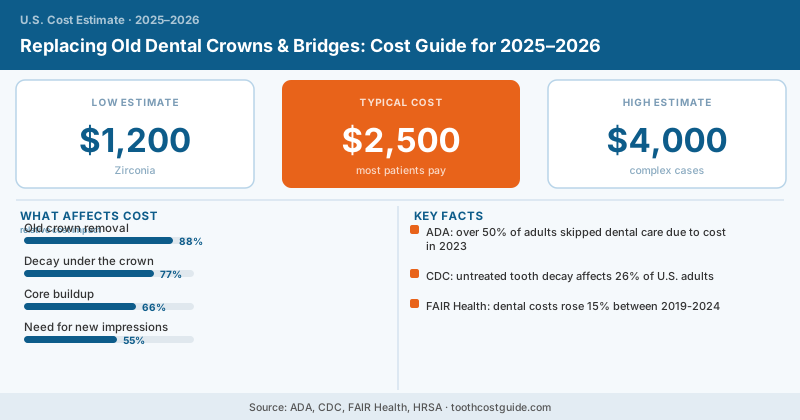
Old crown removal. Cutting off a cemented crown is more involved than preparing a virgin tooth. If the crown is porcelain or zirconia, it has to be cut away. If it’s cemented with resin cement (common today), it’s significantly harder to remove without damaging the preparation. Expect to pay an additional $50–$200 for removal in some offices, though many dentists include it.
Decay under the crown. This is the biggest cost escalator. Decay under crown margins — one of the most common reasons crowns fail — means your dentist must treat the decay before making the new crown. Depending on depth, that could be a simple filling cleanup or could require a buildup, re-treatment of a root canal, or in worst cases, extraction.
Core buildup. If significant tooth structure is lost to decay removal, a buildup ($200–$600) is required before a new crown can be placed.
Need for new impressions. Some older crowns were made to different bite relationships. New impressions and proper articulation may require additional appointments.
When a Bridge Fails: Replacement vs. Implants
Bridges fail for several reasons: decay on the abutment teeth, cement failure, porcelain fracture, or loss of one of the anchor teeth. When a bridge fails, you have a decision to make:
Replace the bridge: If the abutment teeth are healthy and there’s no decay, a new bridge is straightforward. Costs are similar to original placement.
Switch to implants: Many patients with a failing bridge use the opportunity to switch to implant-supported crowns. This eliminates the need to crown adjacent teeth and provides a more permanent solution. Cost: $3,000–$7,000 per tooth being replaced, but the abutment teeth are freed from the bridge and may not need new crowns.
The key question: Are the abutment teeth still healthy enough to support another bridge? If one is cracked, has recurrent decay, or has poor bone support, replacing the bridge is risky. A tooth-by-tooth assessment by your dentist guides the decision.
Never leave a failed crown or missing bridge unit unaddressed. A tooth that loses its crown can continue to function temporarily, but without protection, it’s vulnerable to fracture and decay. A lost bridge pontic leaves a gap that can cause adjacent teeth to shift and opposing teeth to over-erupt, creating new bite problems that are expensive to correct. Act within a few weeks of failure, not a few months.
Saving on Crown and Bridge Replacement
Get a second opinion on timing. Not every old crown needs immediate replacement. If your dentist says “this crown is getting old,” ask for specific clinical reasons — decay on X-ray, cement failure, visible damage. “It’s old” alone isn’t sufficient reason to spend $1,500.
Prioritize cosmetic vs. functional concerns. A crown that’s functionally sound but cosmetically dated (dark gumline) can often wait. A crown with underlying decay cannot.
Dental schools. Crown and bridge work at accredited dental school clinics costs 40–60% less than private practice. The procedures take longer (2–3 appointments vs. 2), but quality is faculty-supervised and excellent.
Dental savings plans. If you’re uninsured, an in-office membership plan ($200–$500/year) provides 15–25% discounts on restorative work and makes large treatment costs more manageable.
Ask about CEREC same-day crowns. If your dentist has a CEREC mill, a same-day crown eliminates the need for temporary crowns and a second appointment — potentially reducing total fees. Not all offices offer this; worth asking.
Crowns and bridges are long-term investments in your dental health. When one needs replacement, understanding your options means you can make a smart decision — not just the cheapest one, and not the most expensive one by default.
Frequently Asked Questions
Crown replacement costs $1,200–$3,500 per tooth depending on material, with porcelain-fused-to-metal (PFM) running $1,200–$2,500, all-ceramic $1,500–$3,000, and zirconia $1,500–$3,500. Gold crowns typically cost at the higher end of the range. These prices reflect professional fees and materials but do not include any diagnostic imaging or tooth preparation that may be needed.
Most dental insurance plans cover 50% of crown replacement costs after you meet your deductible, though some plans cover only 50% of the cost for crowns older than 5 years. You should expect to pay $600–$1,750 out-of-pocket per tooth after insurance, depending on your plan and annual maximum benefits ($1,000–$1,500 for most policies). Always verify coverage with your insurance provider before scheduling, as limitations and exclusions vary by plan.
Crown replacement typically requires two dental visits spaced 1–2 weeks apart: the first appointment involves removing the old crown, preparing the tooth, and taking impressions (30–60 minutes), while the second visit involves fitting and cementing the permanent crown (30 minutes). If you choose a same-day crown using CAD/CAM technology, the entire process can be completed in a single 2–3 hour appointment, though this option may cost $200–$400 more.