Is crown cementation its own separate charge, or part of the crown price you already agreed to? Most patients never ask, and the answer actually depends entirely on whether this is a new crown or a re-cementing visit for an existing one.
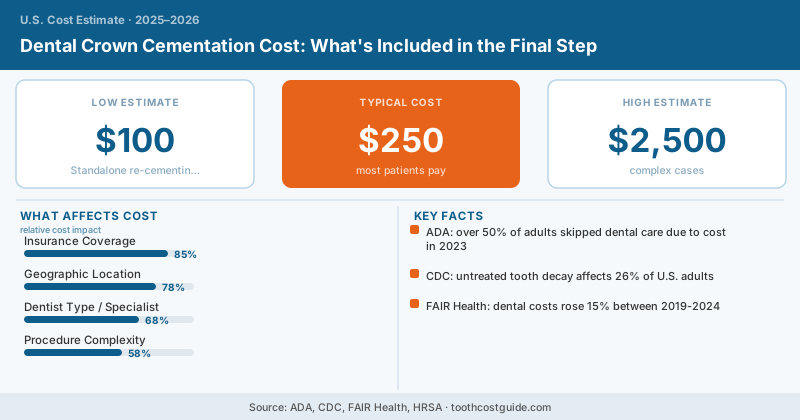
For a new crown, cementation is bundled into the overall fee of $1,000-$2,500 — it’s not billed separately. As a standalone re-cementing visit for a crown that’s come loose, expect $100-$400.
| Scenario | Typical Cost |
|---|---|
| New crown (cementation included in total fee) | $1,000–$2,500 (full crown) |
| Standalone re-cementing (loose/fallen off crown) | $100–$400 |
| Temporary crown cementation (interim step) | Included in crown fee |
| Re-cementing implant crown | $150–$400 |
Why New Crown Cementation Isn’t a Separate Line Item
When you get a new crown, the process involves several steps bundled into one quoted fee: preparing the tooth, taking an impression or digital scan, fabricating or milling the crown (either same-day in-office or via a dental lab over 1-2 weeks), fitting a temporary crown in the interim if needed, and finally cementing the permanent crown into place at the delivery appointment. Cementation is simply the last step in a process you’ve already paid for as a package — dentists don’t itemize it separately because it’s an inherent part of completing the crown.
When Cementation Becomes Its Own Charge
The situation changes for an existing crown that’s come loose or fallen off entirely, but is otherwise structurally intact. In this case, your dentist removes any old cement residue, checks the tooth underneath for decay or other problems, verifies the crown still fits properly, and re-cements it using fresh dental cement. Since this is a standalone visit rather than part of an original crown fabrication process, it’s billed on its own — typically $100-$400 depending on whether it’s a simple re-cementing or requires additional cleaning and preparation.
If your crown falls out completely, keep it — don’t throw it away, and don’t try to glue it back in yourself with household adhesive. In most cases, if you get to your dentist within a reasonable timeframe and the crown and underlying tooth are both in good condition, it can simply be re-cemented rather than remade, saving you the cost of a full replacement.
Temporary vs. Permanent Cement: A Cost-Relevant Distinction
Between your crown preparation appointment and the final delivery appointment (if your crown is lab-fabricated rather than same-day milled), you’ll wear a temporary crown held in place with intentionally weak temporary cement — designed to come off relatively easily so the temporary can be removed without damaging the prepared tooth underneath. It’s normal, not a problem, if the temporary crown feels slightly less secure than you’d expect a “real” crown to feel.
The final, permanent crown uses a much stronger cement (or in some cases a resin-based bonding agent) designed to hold securely for years. This distinction matters if your temporary crown comes loose between appointments — that’s expected and usually a quick, often no-charge fix, not a sign of a problem with your case.
Why a Crown Might Need Re-Cementing Sooner Than Expected
Some patients experience crown cementation failure earlier than the years-long lifespan generally expected, often due to grinding or clenching habits that put repeated stress on the cement bond, a tooth shape that doesn’t provide ideal retention for the crown, or in some cases the specific cement type used. If you find yourself back for a second or third re-cementing visit within a year or two, ask your dentist whether a different cement type, or addressing an underlying grinding habit with a nightguard, might reduce the recurrence.
Insurance Coverage for Cementation
As part of a new crown, cementation coverage follows whatever your plan pays for the crown itself — typically a major service at around 50% after deductible. Standalone re-cementing visits are usually classified as a minor/basic service and often covered at a higher percentage, sometimes close to 80-100%, since the cost itself is relatively low.
A crown that needs re-cementing repeatedly within a short time frame — rather than lasting the typical several years between issues — may indicate an underlying problem beyond just the cement, such as a poor-fitting crown or a grinding habit. Don’t just keep re-cementing indefinitely without asking your dentist to investigate the root cause.
The Bottom Line
Crown cementation is bundled into your original crown fee when it’s a new crown, and only becomes its own $100-$400 charge when re-cementing an existing crown that’s come loose. Keep a fallen-out crown rather than discarding it, and if you’re needing repeated re-cementing visits, ask your dentist to look deeper into why rather than treating each visit as an isolated, unrelated event.
Frequently Asked Questions
Usually not for a new crown — cementation is typically bundled into the overall crown fee of $1,000-$2,500. It's only billed as a standalone charge, usually $100-$400, when re-cementing an existing crown that's come loose or fallen off.
Temporary cement is intentionally weaker, designed to hold a temporary crown in place for a few weeks while a permanent crown is fabricated, and is meant to come off easily. Permanent cement is far stronger and designed to hold the final crown securely in place for years, though it can still be professionally removed if needed.
Yes, this matters clinically more than financially. Cement that's too weak leads to a loose crown requiring an early, avoidable re-cementing visit. Cement that's overly strong can occasionally make future crown removal (if needed for a root canal or other treatment) more difficult and time-consuming for the dentist.