Your crown just cracked — or chipped off entirely. Before you panic about the bill, the practical question is: what actually broke, and does the whole thing need replacing?
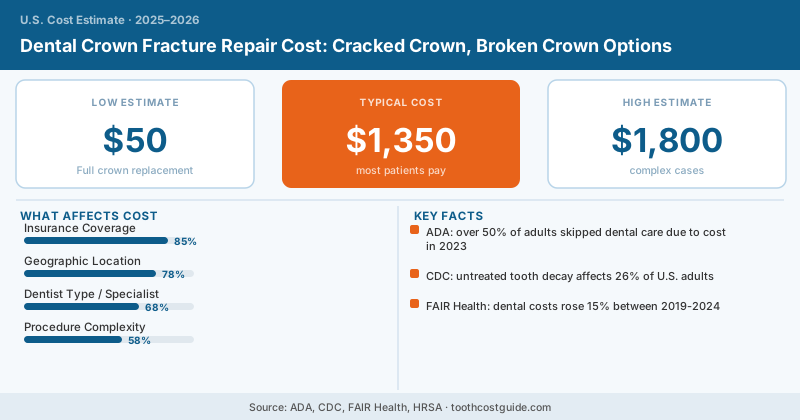
The answer matters a lot for your wallet. A small chip on a porcelain crown might be polished smooth or patched for $150–$300. A crown that’s fractured through to the underlying tooth structure, or one that’s split in half, typically means a full replacement at $900–$1,800. Here’s how to tell the difference and what each scenario costs.
Crown Fracture Repair Costs
| Repair Type | Cost Range |
|---|---|
| Polish / smooth small chip (no repair needed) | $50–$150 |
| Composite resin patch on existing crown | $150–$300 |
| Crown recementation (if intact but dislodged) | $150–$350 |
| Full crown replacement | $900–$1,800 |
| Emergency exam + X-ray (same day) | $100–$250 |
| Root canal (if fracture reached pulp) | $700–$1,800 |
| Tooth extraction (if tooth beneath is fractured) | $150–$650 |
Types of Crown Fractures and What They Mean
Not all crown fractures are the same. The type determines what’s repairable.
Chipped Porcelain (Most Common)
A small chip on a porcelain-fused-to-metal (PFM) or all-ceramic crown — particularly on the biting surface — is the most common crown problem. If the chip doesn’t expose metal and isn’t creating a sharp edge or sensitivity, the dentist may simply polish it smooth for a minimal fee, or patch it with composite resin ($150–$300).
Composite patches on porcelain don’t last forever — expect 2–5 years before the patch chips or discolors relative to the porcelain. But for a patch that buys time before a full replacement, it’s a reasonable short-term fix.
Bulk Fracture (Serious)
A fracture that runs through most of the crown’s thickness, or one that extends into the underlying tooth structure, means replacement. You can’t patch a structural fracture in ceramic. The crown needs to come off, the tooth needs to be evaluated, and a new crown needs to be fabricated — same process and cost as the original: $900–$1,800.
Crown Dislodged Intact
Sometimes a crown falls off without breaking — it’s still in one piece, just no longer cemented to the tooth. If the tooth underneath is undamaged and the crown margins are still intact, recementation may be all that’s needed ($150–$350). Don’t wait on this — an unprotected tooth can fracture surprisingly quickly without its crown.
Keep the crown — don’t throw it away. Rinse it gently. You can use temporary dental cement (available at pharmacies for $8–$12) to hold it in place until your dental appointment, but don’t use super glue. Call your dentist the same day; most offices have same-day slots for dislodged crowns because the risk of the underlying tooth cracking increases the longer it’s uncovered.
Fracture Exposing the Underlying Tooth Structure
This is the scenario that gets expensive. If the fracture line extends through the crown and into the natural tooth — especially if it reaches the root — you may be dealing with a vertical root fracture. According to the American Association of Endodontists, vertical root fractures are a leading cause of tooth loss in restored teeth, and they’re often not repairable. If the fracture runs below the gumline into the root, extraction followed by implant placement becomes the treatment path.
When the Tooth Beneath the Crown Is the Problem
Sometimes what looks like a crown fracture is actually the tooth underneath that’s cracked or failed. A new crown placed on a vertically fractured tooth will fail again — and fairly quickly. Before replacing an expensive crown, your dentist should:
- Take a periapical X-ray to evaluate the root
- Check for pain with biting pressure on different cusps (a split tooth sign)
- Probe the gumline around the crown for deep, localized pocketing (suggesting a fracture line)
The ADA reports that vertical root fractures account for approximately 11% of tooth loss in endodontically treated teeth. If your dentist recommends a new crown after a fracture, it’s worth asking whether the underlying tooth structure was thoroughly evaluated first.
Insurance Coverage
Crown replacement under dental insurance typically requires 5–10 years since the last crown on that tooth before insurance will contribute again. If you’ve had the crown less than 5 years and it fails, expect a denial — or a fight.
The recementation of an intact dislodged crown is usually covered at 50–80%. Emergency exams and X-rays may be covered under diagnostic benefits.
If your crown breaks and you also notice the tooth is now sensitive to temperature, or there’s sharp pain when biting, don’t delay the appointment. Sensitivity suggests the pulp may have been affected, which could mean a root canal is now needed in addition to the crown replacement — adding another $700–$1,800 to the bill.
How Crowns Fracture (and How to Prevent It)
- Bruxism (teeth grinding) — The most common cause of crown fracture. A night guard ($300–$700 custom) significantly extends crown life. If you don’t have one and you’ve broken a crown, this conversation with your dentist is overdue.
- Biting hard foods — Ice, unpopped popcorn kernels, hard candy. Crowns are strong but not invincible.
- Old crown reaching end of life — Crowns last 10–20+ years depending on material and how well they’re maintained. PFM crowns sometimes fracture at the porcelain-metal interface after 10–15 years.
- Crown cemented on a weakened tooth — If the tooth beneath has ongoing issues (decay, incomplete root canal), the foundation fails before the crown does.
Bottom Line
Small chip on an otherwise intact crown: $150–$300 for a patch, possibly nothing if it just needs smoothing. Dislodged but intact crown: $150–$350 for recementation. Fractured crown requiring replacement: $900–$1,800, and make sure your dentist evaluates the underlying tooth structure before committing to a new crown.
Frequently Asked Questions
Repair costs range from $150–$300 for minor chips that can be polished or patched, up to $1,800+ if the crown needs full replacement due to fractures extending to the underlying tooth. The final cost depends on the extent of damage, whether the tooth structure is compromised, and your dentist's location and fees.
Most dental insurance plans cover 50–80% of crown repair or replacement costs, though many plans have annual maximums ($1,000–$2,000) and may require you to wait 12 months after placing the original crown before covering replacement. You should contact your insurer immediately to confirm coverage, as pre-existing damage and maintenance issues may be excluded.
Small surface chips can often be repaired with composite bonding or polishing for $150–$300, but cracks that extend through to the tooth underneath typically require full crown replacement ($800–$1,800+) to prevent infection and tooth decay. Your dentist will assess whether the crack is structural; if it compromises the seal or the underlying tooth, replacement is usually the only safe option.