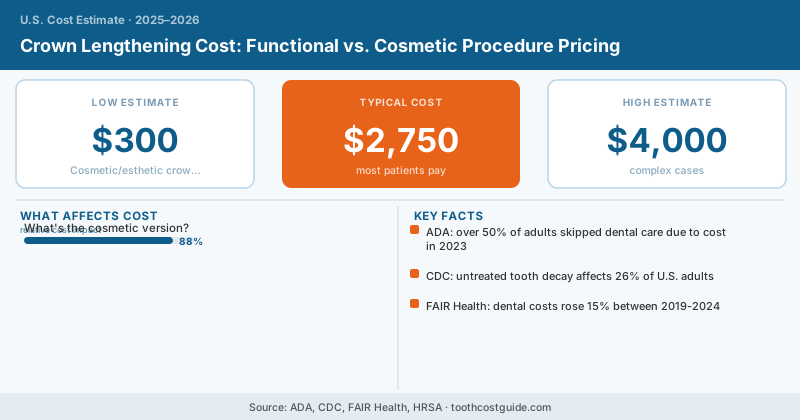
42% of people who need a crown have no idea crown lengthening might be part of the process — until they see a $1,500 line item on the treatment plan they didn’t expect. Crown lengthening is one of the most misunderstood dental procedures when it comes to cost, because the exact same surgical technique gets used for two completely different purposes, and insurance treats those two purposes very differently. Knowing which one you actually need is worth doing before you approve anything.
What Is Crown Lengthening, Exactly?
Crown lengthening removes gum tissue, bone, or both to expose more of a tooth’s structure. A periodontist or oral surgeon makes incisions around the tooth, reflects the tissue, may remove a small amount of alveolar bone, then sutures the gum lower on the tooth.
Why would a dentist need to do this before placing a crown? If decay or a fracture line extends below the gumline, there isn’t enough tooth structure above the gum for a crown to grip properly. Crown lengthening exposes enough tooth so the crown has a solid “ferrule” — the band of tooth structure the crown wraps around. Without sufficient ferrule, crowns fail faster and are more likely to pop off or fracture the remaining root.
What’s the cosmetic version? Esthetic crown lengthening is done for patients with a “gummy smile” — where teeth appear short because excess gum tissue covers them. Removing that tissue lengthens the visible crown without any restorative purpose. It’s sometimes called a gingivectomy for simpler cases.
What Crown Lengthening Costs
| Procedure Type | Cost Per Tooth | Notes |
|---|---|---|
| Functional crown lengthening (single tooth) | $1,000–$2,500 | Often precedes crown placement |
| Functional crown lengthening (multiple teeth) | $800–$1,800 per tooth | Slight discount per tooth for multiple sites |
| Cosmetic/esthetic crown lengthening | $1,500–$4,000 | Price spans depend on number of teeth |
| Gingivectomy (minor gum reshaping only) | $300–$800 per tooth | For mild gummy smile; less invasive |
The range within each category is driven by geography, the provider’s specialty (periodontist vs. general dentist), and whether bone removal is involved. Soft-tissue-only cases are faster and cost less; cases requiring bone recontouring take longer and cost more.
If your dentist recommends crown lengthening before a crown, the typical sequence is: crown lengthening procedure → 6–8 week healing period → crown preparation and delivery. Budget for both the crown lengthening ($1,000–$2,500) and the crown itself ($1,200–$2,000) when planning the total cost of saving that tooth. See our dental crown cost guide for crown pricing details.
Insurance Coverage: Functional vs. Cosmetic
This is the pivotal distinction — and it matters a lot. Functional crown lengthening performed to facilitate a crown or other restorative work is typically coded under periodontal surgery (CDT code D4249) and is often covered at 50–80% after deductible under major dental benefits. That’s the same way periodontal surgery is generally covered.
Cosmetic crown lengthening done purely for aesthetics? Categorically excluded. No amount of documentation will change that. You pay 100% out of pocket.
Be careful when a dentist proposes cosmetic crown lengthening as part of a “smile makeover” package that includes veneers or crowns. Sometimes functional language is used to help the cosmetic portion get covered — and sometimes it isn’t, leaving you with a surprise bill. Always get a pre-authorization (predetermination) submitted to your insurance before scheduling the procedure. The response isn’t a guarantee of payment, but it tells you what they’re likely to cover.
Is It Worth Getting a Second Opinion?
For functional crown lengthening, yes — particularly if the recommendation is for multiple teeth or seems aggressive. Some dentists refer out conservatively; others attempt it chairside in a general practice setting at lower fees. A consultation with a periodontist ($50–$150, often applied toward treatment) can confirm whether the procedure is truly necessary and what it will cost.
For cosmetic crown lengthening, comparing two or three periodontist quotes is simply good consumer behavior. Prices vary more for elective procedures than for insurance-covered ones, and the difference between providers can be $1,000 or more.
You can find related cost information in our guide on gum disease treatment cost if the crown lengthening is part of broader periodontal treatment.
Bottom Line
Functional crown lengthening runs $1,000–$2,500 per tooth and is often partially covered by dental insurance when needed to support a crown or bridge. Cosmetic crown lengthening for a gummy smile costs $1,500–$4,000 and is never covered by insurance. If you’re told you need crown lengthening before a crown, budget for both procedures — the combined investment typically runs $2,500–$4,500 per tooth — and get a pre-authorization before you schedule anything.
Frequently Asked Questions
Crown lengthening typically costs between $1,000 and $4,000 per tooth, depending on the complexity of the procedure and whether it's classified as functional or cosmetic. Functional crown lengthening (needed to support a restoration) may qualify for partial insurance coverage, while cosmetic crown lengthening is almost never covered and falls entirely on the patient.
Insurance coverage depends on whether the procedure is deemed medically necessary or cosmetic. Functional crown lengthening performed to expose tooth structure for a crown or filling is often covered at 50–80% after your deductible, but cosmetic crown lengthening for gum contouring is classified as an elective procedure and typically results in zero insurance reimbursement.
Most patients experience initial healing within 1–2 weeks, though complete bone and gum remodeling takes 4–8 weeks before your dentist can place a permanent crown. During this healing period, you may have some swelling, mild discomfort, and dietary restrictions; your dentist will typically place a temporary crown to protect the area.