Here’s the confusion most patients hit: they get quoted “$4,000–$6,000 for a dental implant” without anyone clearly explaining what that number includes. It includes the titanium post, the surgery, the healing period, the abutment connector, and the crown that goes on top — all bundled. But sometimes those pieces are billed separately, and patients don’t realize the crown itself is a distinct cost item. Let’s break this down.
What Just the Crown (and Abutment) Costs
| Component | Typical Cost |
|---|---|
| Implant abutment (connector piece) | $300–$700 |
| Implant crown (porcelain/zirconia) | $700–$1,800 |
| Abutment + crown together | $1,000–$2,500 |
| Premium zirconia implant crown | $1,500–$3,500 |
| PFM (porcelain-fused-to-metal) implant crown | $1,000–$2,000 |
| Full implant system (post + abutment + crown, bundled) | $3,500–$6,000+ |
If you’ve already had your implant placed and have an osseointegrated post waiting, the remaining work is the abutment and crown. That second phase typically costs $1,000–$2,500 and happens 3–6 months after the implant surgery.
Why an Implant Crown Costs More Than a Regular Crown
A crown on a natural tooth costs $800–$2,000. A crown on an implant often costs $1,000–$3,500. The difference comes down to:
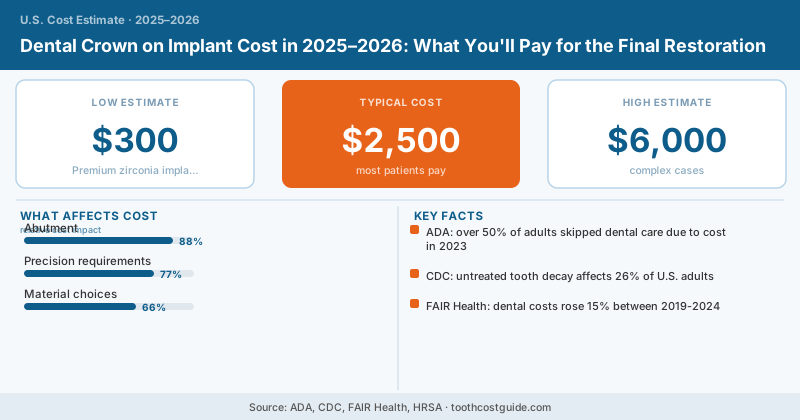
Abutment — A natural tooth already has a prepared core to receive the crown. An implant needs a separate titanium or zirconia connector piece (the abutment) that screws into the implant body. That’s an additional component with its own lab fabrication cost.
Precision requirements — Implant crowns must connect exactly to the implant’s internal interface. Labs use implant analog models and specific impression systems that cost more than regular crown fabrication.
Material choices — Most implant crowns use full-contour zirconia or high-strength ceramic rather than porcelain-fused-to-metal, because the crown must handle occlusal forces without the flex that natural tooth structure allows.
- Zirconia (most common) — Strong, tooth-colored, no metal. Cost: $1,200–$3,500
- Porcelain-fused-to-metal (PFM) — Metal substructure, porcelain exterior. Cost: $1,000–$2,000
- All-ceramic (e.max) — Best aesthetics for front teeth. Cost: $1,400–$3,000
- PMMA (temporary) — Plastic temporary crown during healing. Cost: $200–$500
Does Insurance Cover Implant Crowns?
More plans are beginning to cover implant crowns than ever before. FAIR Health data from 2024 shows increasing dental plan acceptance of implant restorations, particularly for tooth replacement when there’s documented tooth loss. However:
- Most PPO plans that cover implants treat the crown and abutment as a “major restorative” service — typically covered at 50%
- Annual maximums ($1,000–$2,000 per year) often cap how much benefit you can use
- Waiting periods of 12–24 months may apply for major services
- If your plan excludes implants entirely, the crown is usually excluded too
- Some plans cover the crown as a regular crown even when they exclude the implant post itself
Submit a predetermination request before your restorative appointment. Ask your dentist to code the abutment (D6057 or D6058) and the crown (D6065 through D6067 depending on material) separately — insurance sometimes covers one component even when it excludes another.
Timing your treatment across calendar years can maximize insurance benefits. If you have a $1,500 annual maximum, placing the implant in November and completing the crown in January means two separate annual maximums can contribute to the total cost. Discuss this strategy with your dentist’s billing coordinator.
The Full Timeline and Total Cost
Understanding the crown cost requires seeing it in the full implant timeline:
Phase 1 — Extraction (if needed): $150–$350 per tooth
Phase 2 — Bone grafting (if needed): $300–$800 per site
Phase 3 — Implant post placement: $1,500–$2,500
Phase 4 — Healing period: 3–6 months (no cost, just waiting)
Phase 5 — Abutment + crown: $1,000–$2,500
Total system cost: $3,500–$6,500+ depending on what was needed
The crown is the final and visible piece. It’s also where patients sometimes try to cut corners after spending thousands on the earlier phases — which is a mistake, because a poorly fitting crown stresses the implant connection and can cause failure.
Saving Money on the Crown Phase
Dental schools — University prosthodontic programs regularly complete implant restorations. You’ve already paid for the implant post; a dental school crown completion can save $400–$800 on the final step. CODA-accredited programs use the same implant systems and lab processes as private practices.
Choose your materials deliberately — For back teeth, full-contour zirconia is typically the best value (strong, no fracture risk). For front teeth, discuss e.max ceramic with your prosthodontist for optimal aesthetics. Don’t pay for premium materials in areas where strength matters more than appearance.
Get itemized quotes — Ask for the abutment and crown to be quoted separately. Some offices bundle them; knowing the individual costs lets you compare apples to apples when getting multiple estimates.
Timing for insurance — As described above, coordinate treatment phases across plan years when your annual maximum is a limiting factor.
The implant post itself (titanium) is designed to be permanent — 20+ years with proper care is the norm. The crown is replaceable. Well-made zirconia implant crowns routinely last 15–25 years. If your implant crown chips or fractures, the post doesn’t need to be replaced — just the crown and possibly the abutment. That replacement typically costs $800–$2,000, significantly less than the original system.
Bottom Line
The crown on an implant costs $1,000–$2,500 for the abutment and crown combined, with premium restorations running to $3,500. It’s billed separately from the implant surgery in most practices. More dental plans cover implant crowns than implant posts, so it’s worth checking your benefits specifically for the restorative phase even if you’ve been told “implants aren’t covered.” A well-made implant crown is the part you see and use every day — it’s not the place to compromise after investing in the foundation beneath it.
Frequently Asked Questions
A dental crown and abutment on an implant typically cost $1,000–$3,500 combined. This is separate from the implant post and surgery, which can add $3,000–$6,000 to your total bill, making a complete implant restoration $4,000–$9,500 depending on complexity and location.
Most traditional dental insurance plans do not cover implants or implant crowns, treating them as cosmetic or elective procedures. Some premium plans may cover 10–50% of the crown cost after you meet your deductible, but you should verify your specific policy since coverage varies widely by plan.
After your implant post heals (typically 3–6 months), your dentist can fabricate and place the crown in 1–2 additional appointments over 2–4 weeks. Total time from implant surgery to final crown is usually 4–7 months, depending on bone quality and healing speed.