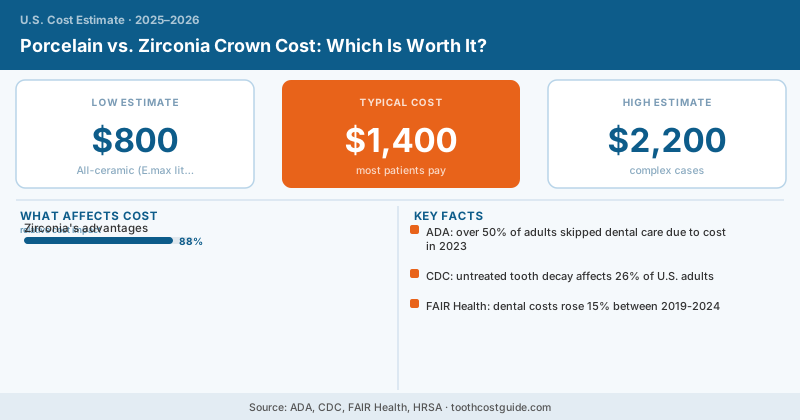
Porcelain-fused-to-metal crowns dominated dentistry for decades. Then zirconia arrived and changed the calculus — stronger, no metal margin issues, and increasingly affordable as milling technology improved. Today your dentist might offer you three or four crown material options, and the price difference between them can reach $500–$800 per tooth. Understanding what you’re actually paying for (and what matters clinically vs. what’s just marketing) saves real money.
Crown Materials and Their Costs
| Crown Type | Average Cost Per Crown | Best Use Case |
|---|---|---|
| Zirconia (monolithic) | $1,000–$2,000 | Molars, premolars; patients who grind |
| Zirconia (layered/high-translucency) | $1,200–$2,200 | Front teeth needing natural translucency |
| Porcelain-fused-to-metal (PFM) | $800–$1,500 | Back teeth; cost-conscious; well-established track record |
| All-ceramic (E.max lithium disilicate) | $1,000–$1,800 | Front teeth; excellent aesthetics |
| Gold/metal alloy | $800–$1,500 | Molars in bruxism patients; ideal fit |
| Same-day CEREC (zirconia or ceramic) | $1,000–$1,800 | Single-visit convenience; any tooth |
These are full-fee prices. With dental insurance, you’ll typically pay 40–60% of these figures after meeting your annual deductible, up to your plan’s maximum.
Zirconia: What You’re Paying For
Zirconia (zirconium dioxide) is a crystalline ceramic that’s 5–10 times stronger than traditional porcelain. Monolithic zirconia — milled from a single solid block — has virtually zero chipping risk. This is the material’s primary clinical advantage over PFM: PFM crowns occasionally chip the outer porcelain layer (chipping rate: 3–5% at 5 years, according to a 2017 meta-analysis in the Journal of Prosthetic Dentistry), while monolithic zirconia essentially never does.
The tradeoff: early-generation zirconia was opaque and looked artificial on front teeth. High-translucency zirconia has largely solved this problem, though some dentists still consider layered zirconia or E.max the gold standard for anterior aesthetics.
Zirconia’s advantages:
- Highest strength of any tooth-colored material
- No metal to show as a gray line at the gum margin over time
- Biocompatible (no nickel allergy concerns)
- Milled precisely by CAD/CAM — excellent fit
Porcelain-Fused-to-Metal: Why It’s Still Viable
Don’t dismiss PFM. This material has 50+ years of clinical data. Well-made PFM crowns last 15–25 years. They’re mechanically proven on molars, cost less than zirconia at many labs, and are still what many insurance-covered lab fees are calculated against.
The legitimate downsides:
- The metal substructure can show as a gray line at the gum margin, especially as gums recede with age
- Porcelain veneer can chip (3–5% at 5 years)
- Requires slightly more tooth reduction in some cases to accommodate metal thickness
For back molars in patients without gum recession or nickel sensitivity, PFM remains clinically sound and meaningfully cheaper.
Gold crowns fell out of fashion as aesthetics became prioritized. But for patients who grind heavily (bruxism), gold alloy is arguably the ideal crown material: it wears similarly to natural enamel, requires the least tooth reduction of any material, seals margins exceptionally well, and essentially never fractures. Many prosthodontists prefer gold for second molars for exactly these reasons. At $800–$1,500 and often covered like any other crown, it deserves consideration for non-visible back teeth.
What Insurance Typically Pays
Most dental PPO plans cover crowns at 50% of “usual and customary” fees after the deductible, regardless of the material you choose. Your plan’s allowed fee might be $800–$1,100 per crown — they pay half, you pay the rest. If your dentist charges $1,600 for a zirconia crown and your plan covers based on a $900 UCR, you’ll owe more than 50%.
Some plans specify material limitations: they’ll cover up to the cost of a PFM crown for any tooth, and you pay the upgrade if you choose zirconia. Review your Evidence of Coverage document before choosing material based purely on cost assumptions.
Location Matters
The same zirconia crown procedure can cost $900 in rural Missouri and $2,100 in Manhattan. This is overhead, not quality difference — the milling equipment, zirconia blank, and clinical skill involved are often identical. Dental school prosthodontic clinics offer supervised crown placement for $400–$800, with excellent oversight and much lower fees.
“Same-day CEREC” crowns are milled in-office from a digital scan — convenient, no temporary crown needed. Quality depends heavily on the dentist’s experience with digital impression-taking and design parameters. CEREC crowns can be excellent; they can also have marginal fit issues if the operator isn’t experienced. Ask how many CEREC crowns your dentist places per month and whether they send any to outside labs for quality comparison.
Bottom Line
For back teeth in grinding patients, monolithic zirconia is worth the premium over PFM — the no-chipping guarantee and lack of metal margin are real advantages. For front teeth, high-translucency zirconia or E.max lithium disilicate delivers natural aesthetics at similar cost. PFM remains a clinically valid and cost-effective option for posterior teeth when aesthetics aren’t the primary concern. Gold crowns deserve reconsideration for second molars in bruxism patients. Insurance covers all these materials at the same rate — your out-of-pocket depends on your plan’s UCR fee schedule more than the material you choose.
Frequently Asked Questions
Zirconia crowns typically cost $1,000–$2,000 per tooth, while porcelain-fused-to-metal crowns run $800–$1,500, making zirconia roughly $200–$800 more expensive depending on your dentist and location. The price premium for zirconia reflects its superior strength and metal-free construction, though both are durable options that last 10–15+ years with proper care.
Most dental insurance plans cover 50% of crown costs (both materials) after meeting your deductible, with annual maximums typically capping coverage at $1,000–$1,500 per year. If your crown costs $1,500, you might pay $750 out-of-pocket after insurance; however, some plans classify zirconia as cosmetic and cover only the cost of a standard crown, leaving you to pay the material difference yourself.
A traditional crown requires 2–3 visits over 2–3 weeks: the first visit for tooth preparation and impression, and a second (or third) visit 1–2 weeks later for permanent crown placement after the lab fabricates it. Same-day crowns using CAD/CAM milling (available at some offices) can be completed in one 2–3 hour appointment, though they may have fewer material options and sometimes cost slightly more upfront.