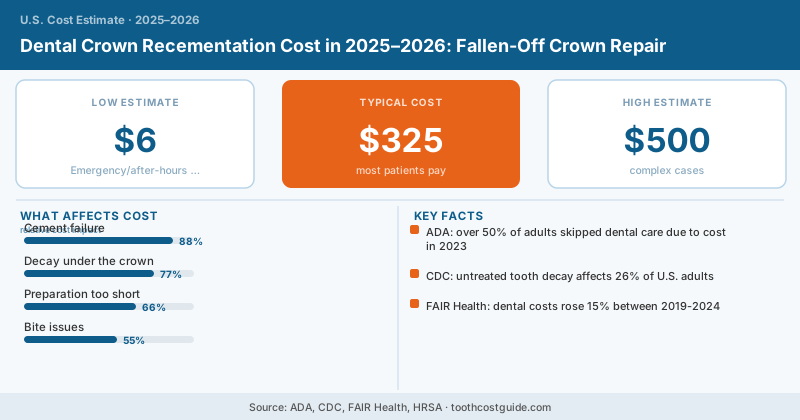
It happened at dinner. Something felt weird, and now there’s a crown sitting in your palm. Don’t panic — this is one of the most common dental “emergencies,” and it’s also one of the cheapest to fix. Here’s what recementation actually costs and what to do in the next 24 hours.
Crown Recementation Cost
| Situation | Typical Cost |
|---|---|
| Simple recementation (crown fits, no damage) | $50–$200 |
| Recementation with cleaning and exam | $100–$350 |
| Temporary cement (dentist-applied, short-term) | $50–$150 |
| Emergency/after-hours recementation | $150–$500 |
| OTC temporary cement (home use, Dentemp/Re-Weld) | $6–$15 |
| Crown recementation at dental school | $30–$100 |
| If crown needs adjustment before recementation | Add $75–$150 |
| If underlying tooth needs treatment first | Additional restorative costs |
Simple recementation — the crown fell off, it still fits perfectly, and the underlying tooth is fine — is often $50–$200. The dentist cleans the inside of the crown and the tooth, tries it back in, checks the bite, and cements it. The whole appointment might take 20–30 minutes.
Why Crowns Fall Off
Most patients assume something went wrong. Usually they didn’t — crowns fall off for predictable reasons:
Cement failure — Dental cement has a finite lifespan. Older crowns placed 10–20 years ago used cements that are less durable than today’s adhesive systems. Temperature changes, acidic foods, and time simply break the bond down.
Decay under the crown — This is the one that costs more money. If bacteria worked their way under the crown and decayed the tooth underneath, there’s no solid structure for the crown to hold onto. You’ll need the decay removed and possibly a new buildup before recementation — or potentially a new crown.
Preparation too short — If the tooth was trimmed too minimally when the crown was originally placed, there’s less surface area for the crown to grip. Short preparations come loose more easily.
Bite issues — A crown that takes excessive bite force (especially in patients who grind) experiences higher stress on the cement bond.
The food — Sticky foods like caramel, taffy, or gummy vitamins are notorious crown-pullers. If this is the culprit and the tooth and crown look fine, you’ll likely have the simplest and cheapest recementation scenario.
Don’t ignore a crown that’s come off. The exposed tooth underneath has been prepared (ground down) and is sensitive, structurally weak, and no longer sealed against bacteria. Even if it doesn’t hurt immediately, leaving a crown off for days or weeks allows the exposed tooth to crack, shift, or develop decay quickly. A $100 recementation now beats a $1,500 crown replacement later.
What to Do Before Your Appointment
In the next hour:
- Find the crown and rinse it gently. Don’t scrub it.
- Check the inside of the crown — does it look clean, or is there decay or crumbled tooth structure inside? If there’s visible decay, your dentist visit is more urgent.
- Check the tooth in your mouth. Is it painful to temperature? Sharp pain when you touch it? These suggest the nerve may be exposed and need attention.
If you can’t get to a dentist today: Drugstores carry temporary dental cement — Dentemp, Re-Weld, and Fixodent Denture Adhesive all work in a pinch. They’re $6–$15 and available at most pharmacies.
To use OTC cement:
- Dry both the crown and the tooth as much as possible
- Apply a small amount of cement to the inside of the crown
- Press firmly onto the tooth and hold for 5 minutes
- Remove excess cement with a toothpick before it hardens
- Check that your bite feels normal — if the crown feels high, remove it and try again with less cement
This is temporary. Dentist visit still required within 1–3 days.
Call your dentist immediately if:
- You can feel the exposed tooth stub touching your tongue and it’s intensely sensitive to cold air
- You’re having spontaneous, throbbing pain (suggests pulp involvement)
- The crown came off and you suspect you swallowed it (rare, usually passes safely, but note it)
- The tooth underneath appears broken or cracked
- The crown fell off on a front tooth before an important event — most dentists will fit you in quickly for this
When Simple Recementation Won’t Work
Not every fallen crown is a $100 fix. You’ll need more extensive treatment if:
Decay under the crown — Your dentist will need to remove the decay, possibly place a buildup (core buildup: $150–$400), and then decide whether the original crown can still be recemented or whether a new crown is needed. FAIR Health data from 2024 shows core buildups cost $200–$400 on average, with significant regional variation.
The tooth is cracked — A cracked tooth under the crown may need a root canal, or if the crack extends below the gumline, extraction. This is the scenario that turns a $100 visit into a $1,500+ visit. Your dentist will examine and X-ray the tooth before deciding.
The crown doesn’t fit anymore — Teeth shift. If months passed between the crown falling off and your appointment, the neighboring teeth may have drifted slightly, preventing the crown from seating properly. The crown may need adjustment or replacement.
The crown is too old or damaged — Old PFM crowns sometimes have the porcelain chip when they come off. Old gold crowns are more resilient. If the crown itself is compromised, you’ll need a new one ($800–$2,500 depending on material).
Does Insurance Cover Recementation?
Yes — recementation is typically covered under basic restorative services. CDT code D2910 (re-cement or re-bond crown) is in most PPO fee schedules at 70–80% coverage after deductible.
The only catch: most plans won’t pay for a new crown within 5 years of the original. So if your crown needs replacement rather than recementation, and it’s less than five years old, you may face a coverage dispute. Document the clinical reason (decay, fracture) clearly in the treatment notes — insurance companies are more likely to approve early replacement when there’s a documented clinical necessity.
- Call your regular dentist first — established patients often get same-day slots for crown emergencies
- Use OTC temporary cement only to protect the tooth overnight, not as a long-term fix
- Bring the crown to the appointment in a small container — losing it means paying for a new one
- Ask whether recementation requires exam and X-rays or just the recement — some offices bundle these, some bill separately
- If you’re paying out of pocket, dental schools recement crowns for $30–$100
Prevention Going Forward
Once your crown is back in place, a few habits reduce the chance of it happening again:
- Avoid sticky foods on the side where the crown is (caramel, gummy candy, chewy bread)
- If you grind at night, wear your night guard — grinding accelerates cement failure
- Keep your regular cleaning appointments — your hygienist checks crown margins for early signs of loosening or decay
- If a crown feels “different” or slightly loose, don’t wait for it to fall off — same-day evaluation is much cheaper than an emergency appointment
Most crowns, once properly recemented with modern adhesive cement, stay for 5–15 years before anything needs attention again. One fell off — that doesn’t mean the rest are about to follow.
Frequently Asked Questions
Simple recementation of a crown that still fits properly typically costs $50–$200, while recementation that includes a cleaning and full exam runs $100–$350. The final cost depends on whether your dentist needs to clean debris from the crown and tooth or perform additional diagnostics to ensure there's no underlying damage.
Most dental insurance plans cover recementation as a repair procedure, typically at 50–80% after your deductible, though some plans classify it as maintenance covered at a lower percentage. You should call your insurance provider immediately after your crown falls off to confirm coverage and your out-of-pocket responsibility before your appointment.
Over-the-counter temporary dental cement can hold a crown for 24–48 hours if the crown is undamaged and fits properly, giving you time to schedule a professional appointment. However, if the crown feels loose, doesn't fit snugly, or the tooth underneath feels painful, you should see a dentist within 24 hours to prevent decay or further damage.