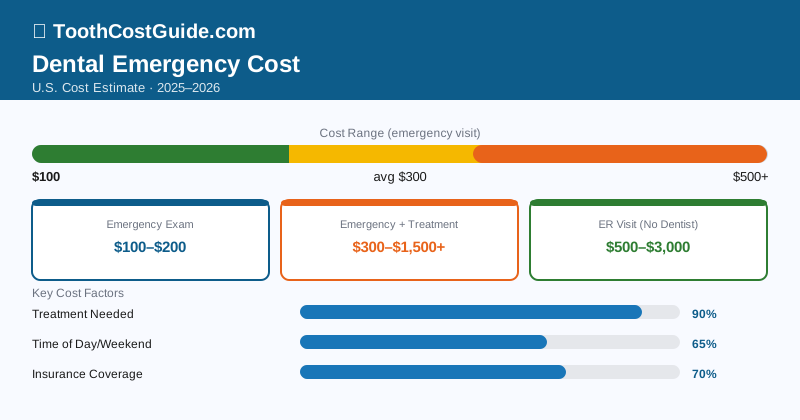
According to the ADA’s Health Policy Institute, roughly 2 million Americans visit hospital emergency rooms each year for dental problems — and most of them walk out with antibiotics and a referral, having spent $500–$1,500 for care that a dental office could’ve handled in 30 minutes for a fraction of that. The first rule of dental emergencies: call a dental office, not a hospital.
Here’s what the actual costs look like. Emergency dental visits run $100–$500 for the exam and diagnosis alone — before any treatment happens. What you pay beyond that depends entirely on what’s wrong: a crown that came loose is a very different situation from a tooth abscess spreading into the jaw.
| Emergency Service | Cost Without Insurance |
|---|---|
| Emergency exam (limited, problem-focused) | $75–$200 |
| Emergency X-rays (1–4 films) | $25–$150 |
| After-hours or weekend surcharge | $50–$200 |
| Emergency tooth extraction (simple) | $75–$250 |
| Emergency root canal treatment (molar) | $1,000–$1,800 |
| Dental abscess drainage | $150–$400 |
| Re-cementing a crown | $75–$200 |
| Replacing a lost filling | $100–$300 |
| Broken denture repair | $100–$300 |
| Hospital ER dental visit (no treatment) | $500–$1,500+ |
What Shapes Your Emergency Dental Bill
The nature of the emergency. This is the primary cost driver — and the range is enormous. A crown that fell off and needs re-cementation runs $75–$200 total. A tooth abscess that requires drainage, antibiotics, and a follow-up root canal can total $1,500–$2,500. The emergency exam fee is just the entry point; treatment is where the cost diverges dramatically.
Day and time. Dentists who see emergency patients during business hours charge their standard exam fee. After-hours appointments — evenings, weekends, holidays — typically carry a $50–$200 premium. Dedicated emergency dental clinics that operate outside standard hours often post flat emergency fees, which can be easier to budget for.
ER vs. dental office. If you go to a hospital emergency room for a toothache, you can expect a bill of $500–$1,500. The ER physicians will give you antibiotics and pain medication and then refer you to a dentist. They can’t perform any dental procedures. That $1,000 ER visit buys you exactly what a $150 urgent care visit would — a prescription, a referral, and instructions to call a dentist in the morning. Call the dental office first.
New vs. established patient. A dentist who already has your X-rays and records can diagnose your emergency faster with less additional imaging. A new emergency patient typically needs 2–4 periapical films of the affected area, adding $50–$150 to the visit cost.
Do not go to the hospital ER for a dental emergency unless you have swelling extending to your neck, difficulty swallowing, or difficulty breathing — these signs suggest the infection has spread to dangerous territory and require immediate medical attention. For standard tooth pain, abscess, or breakage, call a dental office directly.
What Common Dental Emergencies Actually Cost
Severe toothache (pulpitis or abscess): When decay reaches the nerve, inflammation causes severe, often throbbing pain that ibuprofen barely touches. The emergency visit establishes the diagnosis. Treatment is a root canal ($700–$1,800) or extraction ($75–$550). Many dentists will prescribe antibiotics and stronger pain relief to stabilize things before scheduling definitive care.
Knocked-out permanent tooth: This is a genuine time-sensitive emergency. If a tooth is reimplanted within 30–60 minutes, survival rates are high. Beyond two hours, success drops significantly. How to transport it: hold by the crown, rinse briefly with water (don’t scrub), and keep it in milk or your own saliva until you reach the dentist. Reimplantation and splinting costs $300–$600. A root canal is almost always required afterward — budget for that separately.
Cracked or broken tooth: Treatment runs the gamut from bonding ($300–$600) for a surface chip, to a crown ($800–$1,800) for a cusp fracture, to root canal plus crown ($1,700–$3,600) if the crack has reached the nerve, to extraction if it runs below the gumline. The emergency visit diagnoses which category you’re in.
Lost filling: Rarely a same-day crisis, but the exposed cavity needs protection. Emergency dentists can place a temporary filling for $50–$150. Don’t leave it open — decay resumes immediately in an unprotected cavity.
Crown came off: If both the crown and the underlying tooth are intact, this is often a quick re-cementation at $75–$200. If the tooth underneath has new decay or has fractured, more work is needed.
Insurance During a Dental Emergency
The short version: your insurance covers whatever treatment is performed at the same rates as non-emergency care. The emergency surcharge itself is often not covered as a separate line item.
- Emergency exam: Covered at 80–100% by most plans, treated like a limited problem-focused evaluation
- After-hours surcharge: Most plans don’t cover this separately — it comes out of pocket
- Treatment: Extraction, root canal, temporary filling — all covered per standard plan rates (50–80% for major procedures, after deductible)
- Hospital ER for dental: Billed to your medical insurance (not dental). The ER copay ($150–$500) applies, and coverage of any dental-related prescriptions depends on your medical plan
Cutting Costs in a Dental Emergency
Call your regular dentist first — always. Many practices hold same-day slots for established patients and won’t charge an emergency surcharge for their own patients. You’ll often get faster, cheaper care from someone who already knows your dental history.
Find community dental clinics. Federally Qualified Health Centers (FQHCs) and nonprofit emergency dental clinics operate on sliding-scale fees in most metro areas. Search “[your city] FQHC dental” or call 211 for local health resource referrals.
Dental school emergency clinics. Many dental schools see unscheduled emergency patients during school hours at 40–65% below private practice rates. Best for situations where same-day is preferred but not truly urgent.
Prevent the emergency in the first place. Most dental emergencies trace back to untreated decay, unaddressed cracked teeth, or deferred treatment caught at a routine exam. NADP data consistently shows that patients with regular preventive care have dramatically fewer emergency episodes.
Dental discount plan members benefit even in emergencies — the 20–40% fee reduction at participating dentists applies to emergency visits just as it does to scheduled appointments. If you’re uninsured, a $99/year discount plan card in your wallet can meaningfully reduce an emergency bill.
Financing an Unexpected Emergency Bill
CareCredit: The most common solution for unplanned dental emergencies. Many dental offices can process an application in minutes. A $2,000 root canal and crown becomes $167/month on a 12-month 0% promotional plan — far more manageable than one unexpected lump payment.
Splitting treatment when possible: If the emergency exam stabilizes the situation with antibiotics and a temporary, you may have days or weeks to shop for more affordable definitive care rather than staying with a high-priced emergency provider. Ask about this option explicitly.
State dental assistance programs: Some states operate emergency dental assistance funds for uninsured low-income adults. Your state dental association’s website is the best starting point for finding these programs.
The Bottom Line
Dental emergency costs range from $100–$500 for the exam itself to $3,000+ when treatment is factored in. Insurance covers underlying treatment at standard rates; the after-hours premium usually doesn’t get covered. The consistent money-saving pattern is the same one that applies across all dental care: catching problems at routine checkups costs a fraction of treating them in emergency mode. When an emergency does happen, call a dental office before driving to the ER — it’s faster, cheaper, and they can actually fix what’s wrong.
Always get a written treatment plan before agreeing to any dental work. In a dental emergency, it’s acceptable to ask for an itemized estimate before proceeding with treatment beyond stabilization. Understanding the cost of each proposed treatment option allows you to make informed decisions even under stressful circumstances.
Frequently Asked Questions
An emergency dental visit typically costs $100–$500+ for the initial exam and diagnosis alone. If treatment is needed (such as extraction, root canal, or filling), total costs can range from $200–$2,000+ depending on the type of emergency and complexity of treatment required.
Most dental insurance plans cover emergency visits at 50–80% after you meet your deductible, though coverage varies by plan. Many plans classify emergency treatment separately from routine care, and some have annual maximums ($1,000–$1,500) that may limit how much they'll pay toward your total emergency bill.
Call a dental office first—emergency rooms typically charge $500–$1,500 for dental problems and usually only provide antibiotics and a referral to a dentist. A dental office can diagnose and treat most emergencies in 30 minutes for a fraction of the hospital cost, making it the faster and more affordable option.