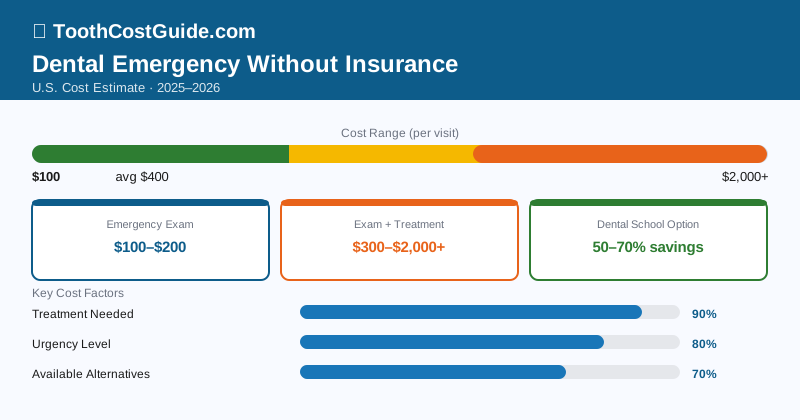
Nearly 74 million Americans have no dental insurance. Dental emergencies don’t care about that. The full-price bill for a single dental emergency runs $200–$3,000+ — but almost nobody actually has to pay that full price. Real, practical options cut those costs by 30–80%, and some of them are available within 24 hours.
| Treatment | Full Price (No Insurance) | Dental School | Community Clinic | Discount Plan Price |
|---|---|---|---|---|
| Emergency exam + X-ray | $100–$250 | $40–$80 | $0–$50 | $60–$150 |
| Tooth extraction (simple) | $150–$300 | $75–$150 | $0–$75 | $100–$200 |
| Tooth extraction (surgical) | $300–$600 | $150–$300 | $0–$150 | $200–$400 |
| Root canal (molar) | $1,000–$1,500 | $400–$600 | $200–$600 | $600–$900 |
| Crown | $1,000–$1,800 | $400–$700 | $300–$700 | $600–$1,100 |
| Antibiotics (Rx, with GoodRx) | $40–$80 | — | $0–$20 | $4–$20 |
What Drives the Price
The procedure itself sets the floor. An emergency exam plus antibiotics might total $150–$250. An emergency root canal and crown can hit $1,700–$3,300. You don’t control what you need — the infection does.
Where you go, though? That’s entirely in your hands. A molar root canal at a private practice runs around $1,200 in most cities. The same procedure at a dental school costs $450. The same infection treated at a Federally Qualified Health Center on sliding scale: as low as $200. Same tooth, same bacteria, same treatment — dramatically different bills.
Time is also a cost driver, and it always works against you. A $300 filling ignored for months becomes a $1,500 root canal. Getting seen the same day you’re in pain often stops the cost from escalating.
Six Paths to Affordable Care
Dental school clinics charge 40–70% less than private practices. Treatment is performed by advanced students under close faculty supervision. The real tradeoff: expect appointments to run 1.5–3 hours for procedures a private dentist handles in 45 minutes. Most schools reserve urgent slots for acute pain. Search the ADEA directory at adea.org, or just Google your city plus “dental school clinic.”
Federally Qualified Health Centers (FQHCs) receive federal funding specifically to provide healthcare — including dental — to underserved patients. Fees slide based on income and household size. At or below 100% of the federal poverty level, you’ll often pay little or nothing. Call 1-800-275-4772 or use findahealthcenter.hrsa.gov.
Dental discount plans like Careington Care 500 and Aetna Dental Access activate within 24–72 hours. No waiting period, no insurance bureaucracy — just negotiated discounts at participating dentists. For someone facing $2,000 in emergency work, a $100 annual plan that saves 30% pays for itself immediately.
Dental chains — Aspen Dental, Comfort Dental, Western Dental — almost always have same-day emergency slots. Some run promotional first-visit packages or offer in-house financing. Not always the cheapest, but often the most accessible when you need care fast.
Negotiate cash discounts directly. Call any dental office and ask: “Do you offer a discount for patients paying cash without insurance?” A 5–15% discount is common. Many offices also have in-house membership plans ($200–$400/year) that include basic exams and X-rays plus discounts on treatment.
Dental assistance programs. Dental Lifeline Network (dentallifeline.org) provides free comprehensive care for elderly, disabled, and medically fragile patients. Medicaid covers emergency dental in all 50 states — apply at healthcare.gov, and coverage can be retroactive to the application month. For kids, CHIP covers dental for families who don’t qualify for full Medicaid.
The Real Numbers
A root canal and crown, total procedure cost around $1,500:
- With dental insurance (40–60% coverage): $600–$900 out of pocket
- Full price, no insurance: $1,500+
- Dental school: $650–$1,100 total
- Discount plan + private dentist: $900–$1,200 total
- FQHC on sliding scale: $200–$700 total
- Negotiated self-pay at private practice: $1,200–$1,400 total
What To Do Right Now
Call your area’s FQHC first. These centers exist specifically for people without insurance. Then check for dental school emergency slots — most schools reserve appointments for acute pain cases each day.
For prescriptions, use GoodRx no matter what. Antibiotics for dental infections cost $4–$15 at any major pharmacy with a GoodRx coupon — versus $40–$80 without it.
Don’t skip care to save money. A $300 extraction ignored for six months can become a $5,000 hospital stay when infection spreads to the neck. That math never works in your favor.
If you can’t pay everything upfront, ask about payment plans. Dental offices routinely set up 3–6 month arrangements. CareCredit and Sunbit both offer 0% interest promotional periods ranging from 6–18 months.
A dental emergency with facial swelling, fever, or difficulty breathing requires emergency room care regardless of your insurance status. Hospitals must provide emergency stabilization under EMTALA regardless of ability to pay, and hospital financial assistance programs can significantly reduce the bill afterward.
A dental emergency without insurance is expensive at full price — but rarely has to be paid at full price. Dental schools, FQHCs, Medicaid, and dental discount plans collectively offer care at 30–80% less than standard rates. Start with findahealthcenter.hrsa.gov to find your nearest FQHC. Never avoid treatment because of cost: untreated infections cost far more, in every sense.
Frequently Asked Questions
A dental emergency without insurance typically costs $200–$3,000+, depending on the type of treatment needed. However, you can reduce these costs by 30–80% using dental schools ($50–$150), community health centers ($75–$200), or discount dental plans ($100–$400).
Most dental insurance plans do cover emergency care like extractions or root canals, typically paying 50–80% after you meet your deductible ($50–$200). However, if you have no insurance, you'll pay the full price upfront, which is why discount plans and dental schools are valuable alternatives.
Yes—many dental schools and community clinics can see uninsured patients within 24 hours for emergencies like severe pain or infection. Hospital emergency rooms also provide emergency dental extractions immediately if a tooth is abscessed or causing severe pain, though costs run $400–$1,500.