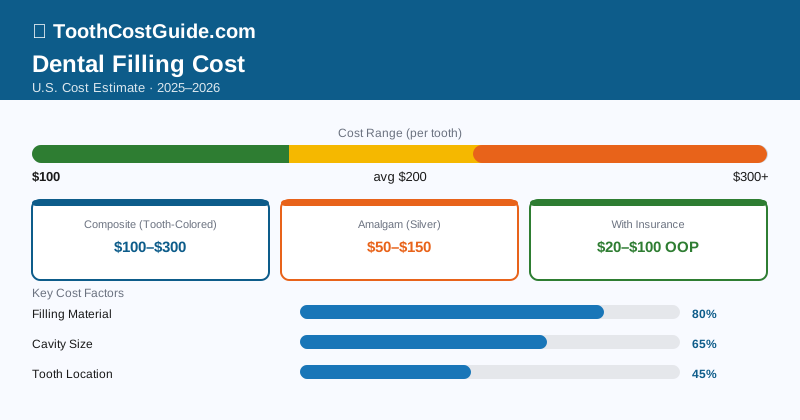
Fillings are priced by the surface — which most patients don’t know until they see the bill. A tiny one-surface cavity in a front tooth might run $100. A large three-surface cavity in a molar can hit $300. Same procedure, wildly different price. Here’s what drives that, and how to avoid overpaying.
Cost at a Glance
| Material | 1 Surface | 2 Surfaces | 3+ Surfaces |
|---|---|---|---|
| Composite (tooth-colored) | $100–$200 | $150–$250 | $200–$300 |
| Amalgam (silver metal) | $50–$100 | $75–$150 | $100–$200 |
| Glass ionomer (children / temporary) | $75–$150 | — | — |
| Gold inlay / onlay | $650–$1,200 | $800–$1,500 | — |
With insurance covering fillings at 70–90%, most people pay $20–$80 per filling. Without insurance, a $120 one-surface composite is manageable; four fillings in one visit can run $500–$900.
What “Surfaces” Actually Means
Dental billing codes for fillings are built around tooth surfaces. Every tooth has five: the top (occlusal), two sides toward adjacent teeth (mesial and distal), the cheek side (buccal), and the tongue side (lingual). When your dentist says “two-surface filling,” they mean the decay spans two of those faces.
Why this matters: your dentist determines the surface count from x-rays and clinical examination. A one-surface filling ($100–$200) and a three-surface filling ($200–$300) are two different billing codes, two different amounts of drilling, and a meaningfully different restoration. Ask to see the x-ray and ask which surfaces are affected before treatment begins.
If a filling seems to be crossing multiple surfaces: that’s legitimate if the x-ray shows it. But cavities that have spread to three surfaces on a back molar sometimes qualify for a crown instead — larger composite restorations on molars are less durable than crowns. Worth asking your dentist at what point they’d recommend a crown versus a large filling.
Composite vs. Amalgam: Which Is Better for Your Situation?
This debate is mostly settled in U.S. dentistry — composite is now the default. But understanding the difference still affects your choices and costs.
Composite resin (tooth-colored): Bonds directly to tooth structure, so the dentist can remove less healthy enamel. Matches your tooth color. The material is slightly more technique-sensitive — it needs a dry field to bond properly, which is harder to achieve on deep back-molar cavities. Average lifespan 7–15 years with proper care. Costs more, looks better, preserves more tooth structure.
Amalgam (silver): An alloy of mercury, silver, tin, and copper that’s been used in dentistry for over 150 years. Extremely durable — amalgam fillings routinely last 15–20 years. Less technique-sensitive. The mercury is bound in the alloy and not considered dangerous at the levels used in fillings (the ADA and CDC maintain this position). However, many dentists have stopped placing amalgam due to esthetic preferences, patient requests, and state/local environmental mercury disposal regulations. If an office offers it, it costs 40–60% less than composite — worth considering for a non-visible back molar if cost is a priority.
Insurance and the LEAT problem: Many dental insurance plans have a “Least Expensive Alternative Treatment” (LEAT) provision. For back teeth, they’ll only pay the amalgam-equivalent rate even if you get composite. Example: your insurance covers 80% of the amalgam rate ($80), you get composite ($180), they pay $64, you pay $116. This surprises a lot of people. Call your insurance company and ask: “If I get a composite filling on a back molar, do you pay the composite rate or the amalgam rate?”
Before a composite filling on any back tooth, ask your insurance: “Does your plan use LEAT provisions for composite fillings on posterior teeth?” If yes, ask what the allowable fee is for amalgam on that tooth. That’s what they’ll pay, and you’ll be responsible for the difference.
Common Scenarios and What They’ll Cost You
Small cavity on a front tooth, composite: 1-surface filling, $100–$160. With insurance: $20–$50 out of pocket. Typical 30-minute appointment.
Back molar, two-surface composite: $150–$250 without insurance; $30–$80 with typical 80% coverage. May bump to amalgam rate on your insurance — check first.
Large three-surface molar cavity: $200–$300. At this size, ask your dentist whether a crown might be more durable long-term. A large composite filling on a molar is under significant chewing force and may crack or fail faster than a crown would.
Multiple cavities in one visit (4–6 teeth): Typically done in two appointments (right side, then left) using local anesthetic. Bulk cost: $500–$1,200. Discuss payment plans before the appointment. Many offices will split this across two monthly payments without charging interest.
Child’s filling (baby tooth): $75–$150 for glass ionomer or composite. Primary teeth matter — untreated decay spreads and can affect permanent tooth development. The filling is worth it even on a tooth that will eventually fall out.
How to Pay Less
Don’t wait. A one-surface cavity today becomes a two-surface cavity in 6 months and a root canal candidate in a year. Filling costs scale with decay size. The $120 filling you delayed becomes a $900 root canal plus $1,200 crown within 18 months if ignored.
Dental school clinics: Composite fillings typically $40–$100, amalgam $30–$60. Appointments are longer (2–3 hours for thorough work), but supervised dental students perform careful, documented procedures. Good option for patients with multiple needed fillings and limited budgets.
Ask about amalgam on hidden teeth: If cost is a concern and the cavity is on a back tooth no one will ever see, amalgam is a legitimate, durable option that’s 40–60% cheaper. Not every dentist will suggest it — ask directly.
Dental discount plans ($80–$120/year): Provide 20–35% off fillings at participating offices with no waiting period. A single uninsured patient needing 3–4 fillings recoups the plan cost immediately.
In-house membership plans: Many dental offices offer $100–$200/year plans that include two free cleanings, x-rays, and discounts on all other work including fillings. If you’re uninsured, this often beats standalone dental insurance for preventive + basic care.
After the Filling: What’s Normal
Sensitivity to hot, cold, and biting pressure for 2–4 weeks after a composite filling is completely normal — the tooth is adjusting to the new restoration. If sensitivity continues past 4–6 weeks, or if biting feels “high” (like the tooth is hitting before the others), call your dentist. High bite contact is a quick in-office adjustment that takes 5 minutes and costs nothing.
If sensitivity becomes sharp pain that lingers minutes after a hot or cold stimulus, the decay may have been close to the pulp and the tooth might be progressing toward needing a root canal. Get it checked.
Bottom Line
Composite fillings cost $100–$300 per tooth depending on size and location; amalgam runs $50–$150. With 80% insurance coverage, most patients pay $20–$60 per filling. Without insurance, dental school clinics bring composite costs to $40–$100 — the most reliable cost reduction available.
The most expensive filling is the one you postponed. A small cavity treated promptly costs roughly a third of what it costs to treat after it grows. That’s one appointment in 2025 vs. multiple appointments and potentially a crown or root canal in 2026.
Before any filling, ask your dentist to show you the cavity on the x-ray and confirm how many surfaces are affected. If you have insurance, ask whether the plan applies LEAT provisions for composite on back teeth — you may owe more than expected. And if a cavity has grown to three or more surfaces on a molar, ask whether a crown might be the better long-term choice.
Frequently Asked Questions
Composite (tooth-colored) fillings typically cost $100–$200 for a single-surface cavity, $150–$250 for two surfaces, and $200–$300 for three or more surfaces. The exact price depends on cavity size, tooth location, and your dentist's local rates, with front teeth generally costing less than molars.
Most dental insurance plans cover fillings at 80% after your deductible, leaving you with 20% out-of-pocket—typically $20–$60 per filling. Some plans may cover amalgam at a higher percentage than composite, so check your specific coverage before your appointment to avoid surprise costs.
A typical filling appointment takes 30–60 minutes depending on cavity size and complexity. You can return to normal activities immediately, though you should avoid eating or drinking for at least 30–60 minutes while the filling sets, and be cautious with the treated tooth until it fully hardens.