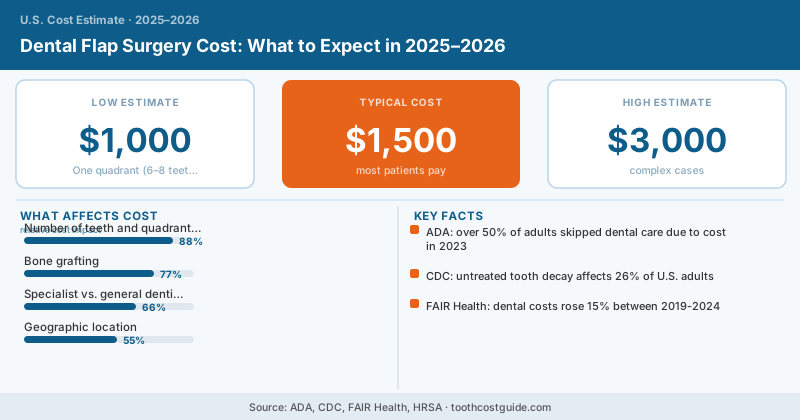
Most people hear “flap surgery” and immediately think of operating rooms and scalpels. The reality is more straightforward — but the cost still catches plenty of patients off guard. If your periodontist has recommended flap surgery, you’re likely dealing with moderate to advanced gum disease, and this procedure is often the most effective way to stop it from destroying the bone around your teeth.
Here’s a clear look at what you’ll pay, what the surgery involves, and how to make it as affordable as possible.
What Is Dental Flap Surgery?
Periodontal flap surgery — also called open flap debridement or osseous surgery — is a procedure where your periodontist folds back the gum tissue to gain direct access to the roots and bone underneath. This allows them to:
- Remove hardened tartar deposits (calculus) that can’t be reached with standard cleaning
- Smooth rough bone surfaces where bacteria hide
- Reduce the depth of periodontal pockets around your teeth
It’s recommended when non-surgical treatments like scaling and root planing haven’t been enough to control your gum disease — typically when pocket depths exceed 5–6 mm after initial therapy.
How Much Does Dental Flap Surgery Cost?
| Scope of Treatment | Low | Typical | High |
|---|---|---|---|
| One quadrant (6–8 teeth) | $1,000 | $1,500 | $3,000 |
| Two quadrants | $2,000 | $3,000 | $5,500 |
| Full mouth (4 quadrants) | $4,000 | $6,000 | $12,000 |
| Bone grafting added (per site) | $200 | $600 | $1,200 |
| Antibiotics (systemic) | $30 | $60 | $150 |
Surgery is almost always performed one or two quadrants at a time — meaning separate appointments, separate recovery periods, and (if you’re billing insurance) separate claims that may each hit your plan’s major service limits.
What Drives the Cost Up or Down?
Number of teeth and quadrants involved. The more of your mouth that needs treatment, the higher the total. Your periodontist will assess each quadrant independently.
Bone grafting. If bone loss is significant, they may add bone graft material to regenerate lost structure. This adds $200–$1,200 per graft site and is often necessary for long-term stability.
Specialist vs. general dentist. Flap surgery is almost exclusively performed by periodontists. Their fees tend to run 20–40% higher than general dentists — but this procedure requires specialized training, and you want someone who does it regularly.
Geographic location. Costs in New York City or San Francisco run 40–60% higher than in smaller Midwestern or Southern markets.
Anesthesia type. Local anesthesia is standard and included in the procedure fee. If you opt for IV sedation, expect an additional $400–$1,000.
Scaling and root planing (deep cleaning) is done without opening the gum — your hygienist works through the sulcus. It’s effective for mild to moderate disease. But when pockets are deep (6 mm+) or when bone defects are present, direct visualization through flap surgery achieves significantly better results. The American Academy of Periodontology recommends flap surgery when SRP alone fails to reduce pocket depths to manageable levels.
Does Insurance Cover Periodontal Flap Surgery?
Most PPO dental plans classify flap surgery as a major periodontal procedure and cover 50% of the cost after your deductible — once your waiting period is met. But a few important limitations apply:
Annual maximums hurt here. A typical plan pays out $1,500–$2,000 per year. If you need full-mouth treatment ($6,000–$12,000), insurance might cover $750–$1,000 — and you owe the rest. Many periodontists stage treatment across two calendar years specifically to maximize what two years of benefits will cover.
Frequency limitations. Most plans limit coverage for periodontal surgery on the same area to once every 3–5 years. If your disease recurs, you may be paying largely out of pocket for retreatment.
Pre-authorization is critical. Always have your periodontist submit a pre-authorization request before scheduling. This tells you exactly what your plan will pay before you commit.
According to the CDC, nearly half of American adults aged 30 and older have some form of periodontal disease — and severe periodontitis affects about 9% of adults. Many of these cases ultimately require surgical intervention.
Staging Treatment Across Two Calendar Years
This is one of the most practical cost-saving strategies available. If you need four quadrants of flap surgery, your periodontist can treat two quadrants in Q4 of one year and two quadrants in January of the next. You get two full annual-maximum payouts instead of one, potentially saving $1,500–$2,000 in out-of-pocket costs.
It requires some coordination with your periodontist’s scheduling team, but it’s a completely legitimate and commonly used approach.
Delaying periodontal surgery to “see if it gets better” typically makes things worse — not better. Untreated advanced gum disease leads to progressive bone loss, loose teeth, and eventually tooth loss. The cost of implants or dentures far exceeds the cost of treating the disease now.
What to Expect During Recovery
Flap surgery is an outpatient procedure done under local anesthesia. Most patients take 2–3 days off from work. Expect:
- Swelling and some bleeding for 24–48 hours
- A surgical dressing (“periodontal pack”) over the treated area for 1–2 weeks
- Soft diet for 1–2 weeks
- Follow-up appointment at 1–2 weeks to remove sutures and check healing
Pain is generally manageable with prescription or over-the-counter pain relievers. Most patients are surprised by how tolerable recovery is compared to their expectations.
Long-Term Maintenance Costs
Flap surgery isn’t a cure — it’s a reset. After healing, you’ll need periodontal maintenance visits (typically every 3–4 months instead of the standard 6-month cleanings) for life. These run $150–$350 per visit and are essential for keeping the disease from progressing again. Factor this recurring cost into your decision-making.
Finding Affordable Periodontal Care
Dental schools with periodontal departments perform flap surgery at 40–60% lower fees under faculty supervision. Many university programs have periodontics residents who receive extensive hands-on training.
Flexible spending accounts (FSAs) and health savings accounts (HSAs) can be used to pay for periodontal surgery with pre-tax dollars — effectively reducing your out-of-pocket cost by your marginal tax rate (often 22–30%).
Payment plans. Most periodontal practices offer in-office payment plans or work with third-party financing (CareCredit, Sunbit) with promotional 0% interest periods. Spreading a $3,000 procedure over 12 months makes it far more manageable.
Bottom Line
Dental flap surgery costs $1,000–$3,000 per quadrant, and full-mouth treatment can reach $6,000–$12,000 before insurance. It’s a significant investment — but it’s the most effective tool available for stopping advanced gum disease and preserving your teeth long-term. The cost of losing those teeth (and replacing them) would be far greater. Talk to your periodontist about staging treatment across calendar years and get a pre-authorization from your insurer before you schedule anything.
Frequently Asked Questions
Dental flap surgery typically costs between $1,000 and $3,000 per quadrant (one section of your mouth), with most patients paying $1,500–$2,500 per quadrant without insurance. If you need surgery on multiple quadrants, total costs can easily reach $4,000–$12,000 depending on the extent of periodontal disease and your location.
Most dental insurance plans cover 50–80% of periodontal flap surgery after you meet your deductible, since it's considered a necessary treatment for gum disease rather than cosmetic. However, many plans have annual maximums of $1,000–$2,000, meaning you could still owe $500–$2,000 out-of-pocket even with coverage.
The procedure typically takes 1–2 hours per quadrant and is performed under local anesthesia in a periodontal office. Most patients can return to normal activities within 1–2 weeks, though you should avoid hard foods and strenuous exercise for at least 7–10 days to allow the surgical sites to heal properly.