Implants take 4–8 months from placement to final crown. They cost $3,500–$6,000 per tooth. That timeline and price are well-known. The question most patients don’t think to ask until they’re sitting in the chair: what do I wear in the meantime?
That’s what a dental flipper is for. It’s a removable acrylic appliance — part placeholder, part cosmetic solution — that fills a visible gap while the real restoration is being planned, fabricated, or healed into place. It costs $300–$600 and it solves a very specific problem: you don’t want to go six months without a tooth in your smile.
What a Dental Flipper Actually Is
A flipper is the simplest form of a removable partial denture. It has an acrylic base (often gum-colored), one or a few prosthetic teeth, and wire clasps that hook around adjacent teeth to hold it in place. It’s made from a dental impression and fabricated in a lab over 1–2 weeks — or sometimes in a same-day lab turnaround if you need it at the time of extraction.
The name “flipper” comes from how easy it is to remove. It literally flips in and out with minimal effort. That’s intentional — it’s not supposed to function like a permanent tooth. It’s supposed to look acceptable in photos, conversations, and professional settings while the real solution takes shape.
Cost Comparison: Flipper vs. Alternatives
| Temporary Option | Typical Cost | Durability | Esthetics | Chewing Function |
|---|---|---|---|---|
| Dental flipper | $300–$600 | 1–2 years | Good | Limited — soft foods only |
| Essix retainer with tooth | $200–$400 | 6–12 months | Very good | Very limited |
| Temporary crown on adjacent teeth | $800–$1,200 | Better | Excellent | Moderate |
| Going without (back tooth) | $0 | N/A | Not visible | Missing one tooth |
The Essix option — a clear thermoplastic retainer with a prosthetic tooth set into it — is thinner and more discreet than a flipper, making it popular for anterior (front) tooth gaps. It’s also more fragile. If esthetics are the priority and you’re careful with it, the Essix is worth considering.
The temporary crown option involves placing a temporary restoration that’s bonded or attached in some way to adjacent teeth. It’s more expensive but gives better function and appearance. It’s not universally available or appropriate depending on your specific clinical situation.
Going without is a legitimate choice for a back molar that doesn’t show and where chewing function on the other side is adequate. No shame in skipping the flipper for a lower second molar.
How a Flipper Is Made
At your appointment, your dentist takes an impression of your teeth. That impression goes to a dental lab, which fabricates the acrylic base and sets the prosthetic tooth (or teeth) in the correct position, shade, and size to match your existing teeth. Turnaround is typically 5–10 business days. If you need the flipper placed the same day as an extraction — which is common for visible front teeth — an “immediate flipper” is fabricated before the extraction using pre-op impressions.
The fit is adjusted at placement. Expect one or two follow-up adjustments in the first few weeks as your gum tissue heals and minor soreness points emerge.
Remove it before eating anything hard, chewy, or sticky. Clean it daily with a soft-bristle denture brush and denture cleanser — not regular toothpaste, which is abrasive and will scratch the acrylic surface. Soak it overnight in denture solution or plain water to prevent warping. Store it in a hard case when it’s out of your mouth, not wrapped in a napkin (that’s how flippers get thrown away). Handle it over a folded towel — they crack if dropped. A well-maintained flipper can last 18–24 months; a neglected one can fail in under a year.
Insurance Coverage
Most dental plans that cover major restorative work will reimburse a flipper at 50% after deductible under the prosthetics benefit. However, some plans classify temporary prostheses at a lower reimbursement schedule than permanent partials — so the actual payout may be less than you expect.
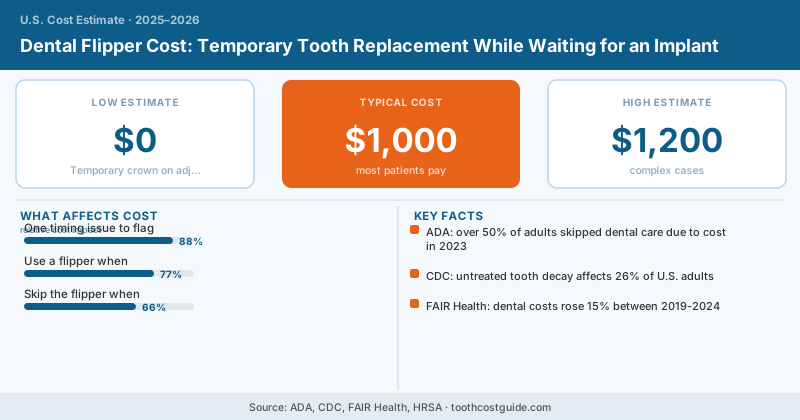
One timing issue to flag: if your plan pays for a flipper now, check the replacement frequency clause before your permanent prosthesis is placed. Some plans won’t pay for a new prosthesis within 5–7 years of covering a previous one — even if the flipper was always intended as temporary. Your dentist’s billing coordinator should flag this before treatment starts. Per AAOMS guidance on implant temporization, this coordination between temporary and permanent prosthodontic timing is an important part of treatment planning.
When a Flipper Makes Sense — and When It Doesn’t
Use a flipper when: The missing tooth is in your visible smile zone. You have a 3–8 month wait for your implant or bridge. You need something conservative that won’t interfere with implant site healing.
Skip the flipper when: The missing tooth is a back molar you can’t see. You’re planning an extraction and an immediate implant placement in the same appointment (often more cost-effective and doesn’t require a separate temporary). The gap is too posterior to matter cosmetically or functionally.
A flipper is never a permanent solution, and treating it like one causes real harm. Leaving a gap — even with a flipper covering it — doesn’t stop bone resorption at the extraction site. The underlying ridge shrinks over time without the stimulation an implant or tooth provides. Patients who wear a flipper for years instead of moving to a permanent restoration often find the implant is now more complicated and expensive because of bone loss that occurred during the delay. The flipper solves your cosmetic problem in the short term; only a permanent restoration protects your bone.
Bottom Line
A dental flipper costs $300–$600 and does exactly what it’s designed to do: fill a visible gap while you wait for the real solution. It’s not glamorous and it’s not permanent. But for the 4–8 months most implant patients spend in the waiting period, it’s usually worth every dollar.
Frequently Asked Questions
A dental flipper costs $300–$600 for a single tooth. Multi-tooth flippers run $400–$700. The price depends on the lab, your geographic area, and whether you need it the same day as an extraction.
Most flippers last 1–2 years with proper care. They're not designed for permanence — the acrylic degrades and the fit changes as your gum tissue heals and remodels after extraction.
You can eat soft foods while wearing a flipper, but you should remove it before eating hard, chewy, or sticky foods. Flippers aren't built for chewing forces and can crack under pressure.