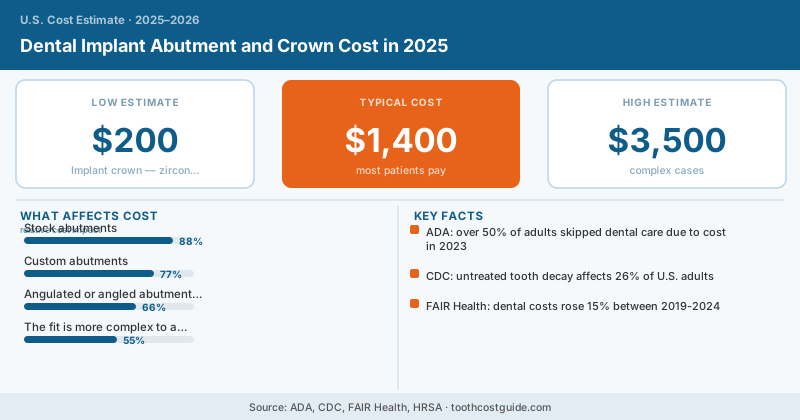
“The implant went great — now we just need to do the abutment and crown, and that’ll be another $2,200.” If you’ve heard a sentence like this and weren’t expecting it, you’re not alone. The implant post and the visible tooth on top are separate components, billed separately, often by different providers. The total single-tooth implant cost is typically $3,000–$6,000 — and the abutment and crown represent roughly half of that.
Here’s how to understand what you’re paying for and what affects each component’s price.
Cost Breakdown
| Component | Cost (No Insurance) |
|---|---|
| Implant post (fixture) — placed by oral surgeon or periodontist | $1,500–$2,500 |
| Abutment (connector piece) | $300–$700 |
| Implant crown — porcelain-fused-to-metal | $800–$1,400 |
| Implant crown — zirconia | $1,000–$1,800 |
| Implant crown — CEREC same-day | $1,000–$1,700 |
| Abutment + crown bundled fee | $1,500–$3,500 |
| Temporary crown during healing | $200–$500 |
What the Abutment Actually Is
The abutment is a small connector piece that screws into the top of the implant post and creates the interface between the implant and the visible crown. Without it, there’s nothing to attach the crown to. There are three main types:
Stock abutments are pre-fabricated by the implant manufacturer in standard shapes and sizes. They’re the least expensive option ($150–$400) and work well for many standard cases. Your dentist chooses from available sizes.
Custom abutments are milled from a digital scan of your mouth and implant position, creating a precise fit customized to your gum anatomy and the planned crown position. They’re more expensive ($400–$700) but provide better emergence profile (the contour where the crown meets the gum), which matters for aesthetics in visible locations.
Angulated or angled abutments are used when the implant post was placed at an angle and the crown needs to be positioned differently. They cost slightly more than standard abutments.
For front teeth, custom abutments are generally worth the premium — the way the gum tissue forms around the crown affects how natural the result looks. For back molars that aren’t visible, a stock abutment often serves just as well.
How the Crown Differs From a Regular Crown
Implant crowns differ from crowns placed on natural teeth in a few ways:
They can’t rely on tooth structure for retention. Regular crowns are cemented onto a prepared natural tooth. Implant crowns either screw directly into the abutment (screw-retained) or are cemented onto the abutment (cement-retained). Each approach has tradeoffs: screw-retained crowns are easier to remove and service but may require a small hole in the crown’s chewing surface; cement-retained crowns look cleaner but can be harder to remove if the implant needs servicing.
The fit is more complex to achieve. The crown must match the natural teeth in size, shape, and color while also fitting precisely onto the abutment. Labs charge more for implant crowns than for regular crowns because of this complexity.
Material options are the same. Zirconia, PFM, and ceramic options apply to implant crowns just as they do to regular crowns. Zirconia is the most popular for implant crowns currently — it’s strong, tooth-colored, biocompatible, and holds up well to bite forces.
If a specialist (oral surgeon or periodontist) placed the implant post, your general dentist typically places the abutment and crown. This means two providers, two fee schedules, and sometimes two insurance claims. Confirm with each provider what their specific fees cover before treatment starts. Some dental offices offer implant placement and restoration in-house, which can simplify billing and sometimes reduce total cost.
The Healing Timeline Between Post and Crown
The abutment and crown placement doesn’t happen right after the implant post is placed. There’s a mandatory healing period of 3–6 months while osseointegration occurs — the bone grows around and fuses to the titanium post. Rushing this phase risks implant failure.
During healing, a temporary healing cap sits over the implant. Some providers place a temporary crown during healing for aesthetic or functional reasons, adding $200–$500 to the total. This is sometimes appropriate for front teeth, rarely necessary for back teeth.
After osseointegration is confirmed (typically with an x-ray), the healing cap is removed and the abutment is placed. The crown is then fabricated by a dental lab over 2–3 weeks, with a temporary in place during this time. Total treatment timeline: 6–9 months from post placement to permanent crown.
Does Insurance Cover the Abutment and Crown?
Dental insurance coverage for implants has expanded significantly over the past decade, but it remains inconsistent. The American Academy of Implant Dentistry reports that more and more plans now include some implant coverage, though annual maximums often limit real-world benefit.
Typical coverage patterns:
- Implant post: Some plans cover at 50% under major restorative or oral surgery; many exclude it entirely
- Abutment: Covered by some plans at 50% under major restorative
- Crown: Typically covered at 50% under major restorative if the plan covers implants
A $2,200 abutment-and-crown combination at 50% coverage means insurance pays $1,100 — but only if you haven’t exhausted your annual maximum ($1,500–$2,000 in most plans). If the implant post was billed earlier in the same plan year, the annual maximum may already be depleted.
Practical approach: Submit predetermination requests for each phase before starting. Ask each provider (surgeon and restorative dentist) to run predetermination so you know exactly what each insurer will cover for each component.
If you’re paying a large portion out of pocket, ask your dentist whether the crown can be placed in a new calendar year to maximize two years of insurance benefits. Implant post in November, abutment and crown in January covers the procedure across two plan years — a legitimate and common strategy for patients with $1,500–$2,000 annual maximums.
Reducing the Total Cost
Dental school clinics perform implant restoration at significant discounts — typically 40–65% below private practice fees. Graduate prosthodontics programs supervise this work. Waiting lists exist, but a $2,200 abutment and crown might cost $900–$1,300 at a university clinic.
HSA and FSA funds cover implant components as qualified medical/dental expenses. Using pre-tax money provides a 22–37% effective discount.
Package pricing: Ask whether your dental office bundles the abutment and crown into a single fee. Some offices price them separately ($300–$700 + $900–$1,800) while others bundle at a slight discount. Knowing which applies to your quote helps you compare across providers.
Bottom Line
The abutment and crown phase of a dental implant costs $1,500–$3,500, separate from the implant post. Total single-tooth implant cost across all components runs $3,000–$6,000 without insurance. With insurance that covers implants, expect to pay $1,500–$3,500 total depending on your plan’s annual maximum and coverage percentage. The abutment and crown quality — particularly the material choice and whether a custom abutment is used — directly affects the aesthetic result and longevity of the final restoration.
Frequently Asked Questions
The abutment and crown phase of a dental implant typically costs $1,500–$3,500, depending on materials and complexity. This is billed separately from the implant post itself, which usually costs $1,500–$3,000, bringing your total single-tooth implant cost to $3,000–$6,000.
Most dental insurance plans do not cover implants or their components, including abutments and crowns, because they are considered cosmetic or elective procedures. You should expect to pay the full $1,500–$3,500 out-of-pocket unless you have a specialized implant rider or discount plan.
You typically wait 3–6 months after implant post placement for the bone to fuse with the implant, then the abutment and crown are usually completed within 2–3 weeks. The entire implant-to-finished-crown process generally takes 4–8 months total.