Marcus noticed a faint click every time he bit down on his implant crown — not painful, just… off. Two days later, the click was joined by a slight wobble. His dentist’s diagnosis took about ten minutes: a loosening abutment screw, the small titanium component connecting the crown to the implant post beneath the gum. Not a failed implant. Just a loose screw.
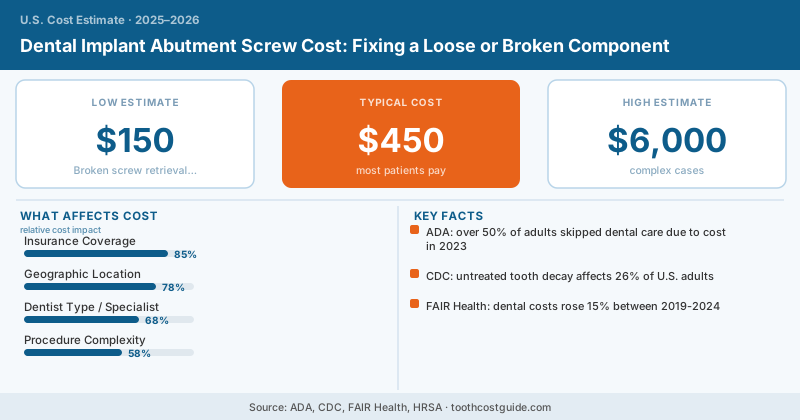
Fixing it runs $150-$600, dramatically less than the $3,000-$6,000 cost of replacing a failed implant from scratch.
| Issue | Typical Repair Cost |
|---|---|
| Loose screw, simple retightening | $150–$300 |
| Screw replacement (worn threads) | $200–$400 |
| Broken screw retrieval and replacement | $300–$600 |
| Full implant crown remake (if damaged) | $1,000–$2,500 |
| Full implant replacement (rare, if fixture failed) | $3,000–$6,000 |
Why Abutment Screws Loosen
An implant crown is connected to the titanium post in your jawbone through a small abutment screw, torqued to a specific, manufacturer-recommended level during placement. Over years of chewing forces, that torque can gradually decrease — a well-documented, mechanical phenomenon in implant dentistry, not a sign of poor placement or implant failure. Patients who grind or clench their teeth at night put additional cyclic stress on this connection, making screw loosening somewhat more common in that population.
The good news: this is one of the most predictable and fixable problems in implant maintenance. Your dentist removes the crown, accesses the screw, and retightens it to the correct torque specification using a calibrated instrument — often resolving the issue in a single, relatively quick visit.
When the Screw Actually Breaks
Less commonly, a screw that’s loosened repeatedly without being addressed can eventually fracture, usually leaving a small broken fragment lodged inside the implant’s internal screw channel. Retrieving this fragment requires specialized micro-instruments and more time than a simple retightening, which is reflected in the higher cost for this scenario. In the rare case where the fragment can’t be safely retrieved, the entire implant abutment connection may need to be reassessed by an implant specialist.
A loose abutment screw that’s ignored puts uneven stress on the implant-crown connection every time you chew, increasing the risk of the screw fracturing entirely — turning a simple $150-$300 fix into a more involved $300-$600 retrieval procedure. Address the clicking or wobbling as soon as you notice it.
How This Differs From Implant Failure
It’s worth separating two very different problems that can both involve an implant crown feeling “off.” A loose abutment screw is a mechanical connector issue — the titanium implant post itself remains solidly integrated into the bone, and the fix is purely about the small screw component. True implant failure, where the implant post itself has failed to stay integrated with the bone (osseointegration failure), is a much less common and more serious problem, often accompanied by pain, swelling, bleeding, or visible movement of the implant post itself, not just the crown.
If you’re experiencing pain, swelling, or a bad taste/odor around the implant site — not just a mechanical click or wobble — this points toward a different problem, possibly peri-implantitis (infection around the implant), and needs prompt evaluation rather than a simple screw check.
Preventing Repeat Loosening
If your dentist finds you’re a candidate for repeat screw loosening — often related to grinding or clenching habits — a custom nightguard is the most effective preventive step, typically costing $300-$800 but potentially saving you multiple $150-$600 repair visits over the years. Some dentists also use a small amount of screw-retention cement or a slightly different torque protocol for patients with a documented grinding history.
Insurance and Implant Component Repairs
Implant component repairs like screw retightening are typically billed as a minor procedure, and coverage varies significantly by plan — some dental insurance plans that otherwise exclude implants from coverage will still cover maintenance and repair of an existing implant, since it’s framed as restorative maintenance rather than new implant placement. Confirm this distinction with your specific insurer, as it’s not consistent across plans.
Never try to tighten a loose implant screw yourself with household tools, even if you can feel or see it. The screw requires a specific torque level applied with a calibrated dental instrument — over-tightening or using the wrong tool can strip the threads or damage the internal connection, turning a simple fix into a more expensive repair.
The Bottom Line
A loose or broken abutment screw is one of the most common, and most fixable, implant maintenance issues — costing $150-$600 to resolve, compared to $3,000-$6,000 for a full implant replacement. Address any clicking or wobbling promptly, ask about a nightguard if grinding is a factor, and don’t confuse this mechanical issue with true implant failure, which presents very differently.
Frequently Asked Questions
Tightening or replacing a loose abutment screw typically costs $150-$400, while a broken screw that requires retrieval from inside the implant can cost $300-$600 due to the additional time and specialized instruments needed to remove the fractured piece.
No — in most cases, a loose or broken abutment screw is a mechanical issue with a small connecting component, not a sign that the implant itself has failed to integrate with the bone. The titanium implant fixture in the bone is usually unaffected and doesn't need replacement.
A loose implant crown accompanied by a clicking sound when chewing, or the ability to slightly wiggle the crown, often points to a loose abutment screw. Pain, swelling, or bleeding around the implant suggests a different issue — possibly infection or bone loss — and needs prompt evaluation rather than assuming it's just the screw.