You spent $3,000–$5,000 on a dental implant. Now your dentist is pointing to an X-ray showing bone loss around it. This situation — more common than most patients expect — is called peri-implantitis, and it affects roughly 22% of implants at some point in their functional life, according to a 2022 systematic review in the Journal of Clinical Periodontology. The critical question: can the implant be saved, and what does treatment cost?
Understanding Peri-Implantitis
Peri-implantitis is bacterial inflammation of the bone and soft tissue surrounding an implant — essentially periodontitis affecting the implant site. Left untreated, it progresses to significant bone loss and eventually implant failure. Unlike natural teeth, implants lack a periodontal ligament to provide early warning signals; peri-implantitis can silently progress for months before causing pain.
Risk factors include:
- History of gum disease (highest single risk factor)
- Poor oral hygiene around implants
- Smoking
- Uncontrolled diabetes
- Excessive cement left around the implant crown
- Occlusal (bite) overload from grinding
A 2017 study published in Clinical Oral Implants Research found that patients with a history of periodontitis had a nearly three times higher risk of peri-implantitis compared to periodontally healthy patients.
Bone Loss Treatment Cost by Stage
| Treatment / Condition | Typical Cost |
|---|---|
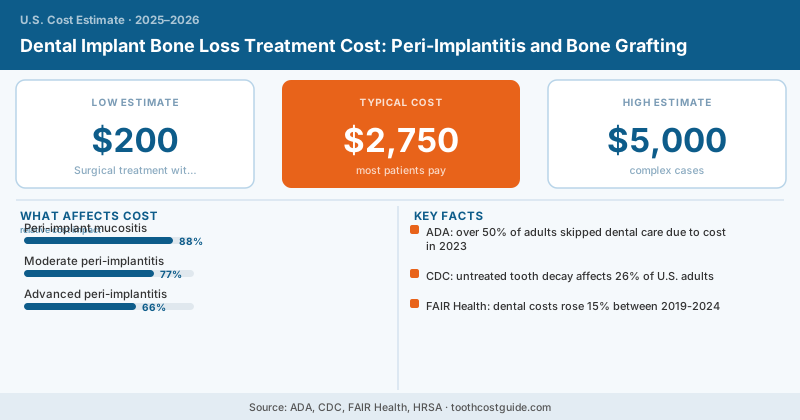
| Peri-implant mucositis treatment (early stage, no bone loss) | $200–$500 |
| Mechanical debridement + antimicrobial (moderate peri-implantitis) | $500–$1,500 |
| Surgical peri-implantitis treatment (resective) | $1,000–$2,500 |
| Surgical treatment with bone grafting (regenerative) | $1,500–$4,000 |
| Implant removal (failed implant) | $300–$800 |
| Bone graft after removal (site preservation) | $400–$1,000 |
| New implant placement after healing | $2,500–$5,000 |
Stage-by-Stage Treatment
Peri-implant mucositis (soft tissue only, no bone loss): This is the reversible early stage — bacteria have colonized the tissue around the implant but haven’t yet destroyed bone. Treatment involves professional mechanical debridement using implant-safe instruments (plastic, titanium, or piezoelectric — never steel scalers that scratch implant surfaces), irrigation with antimicrobials, and patient instruction on cleaning technique. Cost: $200–$500. Resolution is predictable when caught early.
Moderate peri-implantitis (early bone loss, 2–4mm pocket depths beyond baseline): Requires more aggressive decontamination. Options include:
- Mechanical debridement with antimicrobial local delivery (Arestin or chlorhexidine chips placed in pockets): $500–$1,000
- Laser-assisted decontamination: $800–$1,500
- Air-powder abrasion (ErythritolPlus systems): newer approach, good decontamination evidence, $600–$1,200
Advanced peri-implantitis (significant bone loss, 5mm+ pockets): Surgical intervention is typically needed. Two surgical approaches exist:
Resective surgery: Removes infected tissue and recontours the bone to reduce pocket depth, making the area easier to maintain. Doesn’t regenerate lost bone. Cost: $1,000–$2,500.
Regenerative surgery: Attempts to rebuild lost bone using bone graft material and often a barrier membrane, similar to guided bone regeneration used before implant placement. Results are variable — regenerative success is less predictable around implants than around natural teeth. Cost: $1,500–$4,000.
Some implants are not salvageable. Signs that suggest removal may be more appropriate than continued treatment: bone loss exceeding 50% of implant length, implant mobility, vertical bone defect patterns that don’t support regeneration, or recurrent infection after two surgical attempts. Keeping a hopeless implant is expensive, painful, and ultimately delays the inevitable while destroying more bone you’ll need for replacement. Get a second opinion from a periodontist or prosthodontist before committing to expensive treatment of a severely compromised implant.
What Does Insurance Cover?
Peri-implantitis treatment falls into a gray area:
- Periodontal treatment codes (deep cleaning, surgical debridement): Covered like any periodontal procedure if your plan includes periodontal benefits — typically 50–80% after deductible.
- Bone grafting around implants: Less consistently covered. Some plans exclude any implant-related procedures entirely.
- Implant removal: Usually covered as a surgical extraction ($200–$400 plan allowance).
- Replacement implant: If your plan has implant benefits, it may cover a replacement, though some plans have lifetime-per-tooth limitations.
Check your Summary of Benefits and call your insurer specifically to ask about peri-implantitis treatment coverage under periodontal codes D4263, D4264, D4285.
Prevention Is Far Cheaper Than Treatment
The single most effective way to avoid peri-implantitis costs: meticulous implant hygiene and regular professional maintenance. The American Academy of Periodontology recommends implant maintenance visits every 3–4 months for patients with implants, at least in the first two years. These visits ($100–$200 each) catch early mucositis before it progresses to bone loss.
Standard Waterpik jets can disrupt the bacterial biofilm around implants, but they don’t replace professional debridement. And using metal instruments or hard-bristle brushes on implant surfaces can scratch the titanium, creating rough surfaces that harbor more bacteria. Use implant-specific floss, water flossers, and soft-bristle or electric toothbrushes designed for implant care.
Bottom Line
Peri-implantitis treatment costs $200–$500 when caught at the mucositis stage, rising to $1,500–$4,000 for surgical intervention with bone grafting. Severely compromised implants may need removal and replacement at $3,000–$6,000 total. Insurance coverage varies; periodontal treatment codes are your best pathway. Prevention via 3–4 month maintenance visits is dramatically cheaper than treating advanced peri-implantitis — and far preferable to losing the implant entirely.
Frequently Asked Questions
Treatment costs range from $500–$5,000+ depending on severity and the procedures needed. Non-surgical cleaning and antibiotics may cost $500–$1,500, while surgical debridement runs $1,500–$3,000, and bone grafting to restore lost bone typically costs $2,000–$5,000 or more per implant.
Most dental insurance plans cover a portion of peri-implantitis treatment if diagnosed as a medical condition, typically covering 50–80% of surgical therapy after the deductible is met. However, many plans exclude implant-related complications entirely or cap annual benefits at $1,000–$2,000, leaving significant out-of-pocket costs for patients.
Yes, implants can often be saved if caught early with non-surgical treatment (scaling and antibiotics), but advanced peri-implantitis may require surgical intervention or bone grafting, which takes 3–6 months for bone to integrate before the implant is fully stable again. If bone loss is severe and the implant cannot be saved, extraction and replacement typically requires 4–12 months total including healing and re-implantation.