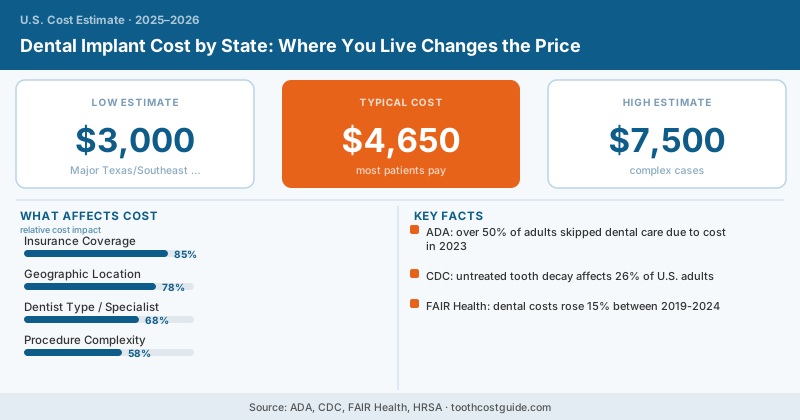
The same brand of titanium implant, placed by an equally qualified dentist, can cost $3,200 in Cleveland and $6,800 in San Francisco. That’s not a typo, and it’s not about quality — it’s overhead, and overhead tracks almost exactly with regional cost of living.
If you’re planning implant treatment and have any flexibility in where you get it done, understanding this regional spread can save you thousands of dollars on a single tooth.
| Region | Typical Single Implant Cost |
|---|---|
| Midwest (OH, IN, MO, KS) | $3,000–$4,200 |
| South (excluding major metros) | $3,200–$4,500 |
| Mountain West (UT, ID, MT) | $3,300–$4,600 |
| Major Texas/Southeast metros | $3,800–$5,500 |
| Northeast metros (NYC, Boston) | $5,000–$7,000 |
| West Coast metros (SF, LA, Seattle) | $5,500–$7,500 |
Overhead Drives the Difference, Not the Implant Itself
The titanium fixture — the actual implant screw — costs a dentist roughly the same wherever the practice is located, whether it’s Nobel Biocare, Straumann, or another established brand. What differs dramatically by region is everything around it: commercial lease rates, staff wages, malpractice insurance premiums, and state-specific licensing and regulatory costs. A dentist in Manhattan pays multiples of what a dentist in rural Ohio pays for the same square footage and staffing, and that overhead gets built into every procedure fee, implants included.
Rural vs. Metro Within the Same State
The state-level average can be misleading, because rural and metro pricing within a single state often diverges as much as the state-to-state comparison. A dental implant in rural upstate New York can run closer to Midwest pricing, while the same procedure in Manhattan sits at the top of the national range. If you live near a state border or have some flexibility in where you get treated, comparing a nearby smaller city against your home metro is often more useful than comparing entire states.
If you live in or near a high-cost metro, check pricing at practices 60-90 minutes outside the city center — many patients find $1,000-$2,000 in savings on a single implant without sacrificing quality, simply by driving to a suburban or small-city practice rather than staying downtown.
Dental Schools Narrow the Regional Gap
One consistent exception to regional pricing: dental school clinics. Whether you’re in a high-cost or low-cost state, a dental school implant program typically runs 30-50% below the local private-practice rate, since students perform the procedure under close faculty supervision. This means a dental school implant in a high-cost city can sometimes land close to the private-practice price in a low-cost state — worth checking if a school is within reasonable driving distance.
Insurance Coverage Doesn’t Vary by State the Same Way
Interestingly, dental insurance coverage for implants doesn’t track regional cost differences proportionally — a plan that covers 50% of implant costs up to your annual maximum applies the same percentage regardless of whether the total bill is $3,500 or $6,500. That means the dollar amount you’re responsible for out-of-pocket is directly proportional to your local pricing, making regional research even more valuable if you have coverage.
Full-Mouth Cases Amplify the Regional Effect
For patients considering full-arch solutions like All-on-4, the regional pricing gap multiplies across four to six implants per arch. A treatment plan quoted at $22,000 per arch in a Midwest metro might run $32,000-$38,000 in a high-cost coastal city for the identical implant system and technique — a difference substantial enough that some patients do choose to travel for treatment, factoring in the multi-visit nature of the process.
Don’t choose a dentist based on regional price alone without verifying credentials and experience. A significantly below-market implant fee, especially outside dental schools or established practices, is worth extra scrutiny — ask how many implants the dentist places per year and request to see their specific case outcomes.
The Bottom Line
Where you live — and specifically the local cost of commercial real estate and staffing — shapes your implant bill more than most patients realize, with a spread of $2,000-$3,000+ for the same procedure across US regions. If you have flexibility, compare a nearby lower-cost metro or a dental school program before committing to your default local practice.
Frequently Asked Questions
States with a lower overall cost of living — including much of the Midwest and South, such as Ohio, Indiana, Texas outside major metros, and parts of the Southeast — typically see single implant costs of $3,000-$4,200, compared to $5,500-$7,000+ in high-cost coastal metro areas.
Practice overhead — commercial rent, staff wages, and malpractice insurance — runs significantly higher in major coastal metros, and dentists price procedures to cover those fixed costs. Implant material costs are largely the same nationwide; the price gap reflects local overhead, not different quality implants.
It can be, for the implant placement itself, but factor in travel costs and the need for follow-up visits over 3-6 months during healing. Many patients instead look at nearby lower-cost metro areas within driving distance rather than a different region entirely, to keep follow-up visits manageable.