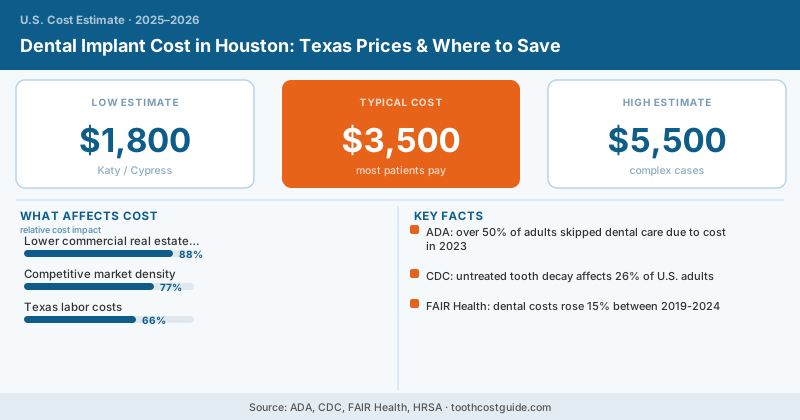
42% of American adults haven’t been to a dentist in the past year, according to the CDC — and cost is the most-cited reason. Houston’s dental market, thankfully, offers some genuine relief: implant costs here run 10–15% below the national average, making one of the most expensive dental procedures meaningfully more accessible than in coastal metros.
A complete single-tooth dental implant in Houston — post, abutment, and crown — typically runs $2,800 to $5,200. Compare that to $3,800–$6,500 in Los Angeles or $4,200–$7,500 in Manhattan, and the advantage is real. Here’s the full breakdown of Houston’s dental implant market, where to find the best prices, and what to know about Texas Medicaid and Mexico dental tourism.
Houston Implant Prices by Area
| Area | Single Implant (All-In) |
|---|---|
| River Oaks / Galleria / Upper Kirby | $4,200–$5,500 |
| Medical Center / Greenway Plaza | $3,800–$5,200 |
| The Heights / Montrose | $3,500–$4,800 |
| Sugar Land / Pearland | $3,000–$4,500 |
| Katy / Cypress | $2,800–$4,200 |
| Spring / The Woodlands | $3,000–$4,500 |
| Pasadena / Clear Lake | $2,800–$4,200 |
| UTHealth Houston School of Dentistry | $1,800–$2,800 |
All-in prices include the titanium post, abutment, and implant crown. Bone grafting (if needed due to bone loss) adds $350–$2,200. Tooth extraction, if the failing tooth hasn’t been removed yet, adds $150–$400.
Why Houston Runs Below the National Average
Texas has several structural advantages that keep dental costs lower than coastal markets.
Lower commercial real estate costs. Even in the Galleria or River Oaks, dental office space runs $2,500–$7,000 per month — a fraction of comparable Manhattan or Beverly Hills square footage. In Houston’s vast suburban sprawl (Katy, Spring, Pearland), practice overhead is lower still.
Competitive market density. Houston has one of the highest dentist-to-population ratios among major US cities, driven in part by the University of Texas dental school pipeline and the city’s size. More competition moderates fees.
Texas labor costs. Texas doesn’t have an income tax and has a lower overall cost of living than California or New York, which keeps dental staff wages lower — and keeps those labor costs from flowing to patients.
The American Dental Association’s 2023 survey data shows that Houston area dentists report average overhead rates below the national benchmark, with lower commercial rent cited as the primary driver.
Houston’s implant prices are lower than national averages because of economics, not because practices are cutting corners. Some of the country’s most skilled oral surgeons and periodontists practice in the Texas Medical Center. Lower overhead enables competitive pricing — it doesn’t signal inferior care.
UTHealth Houston School of Dentistry
The UTHealth Houston School of Dentistry (formerly UT Health Science Center Houston) operates patient clinics where predoctoral students and graduate residents perform implant procedures under faculty supervision. It’s located in the Texas Medical Center — the largest medical complex in the world — giving faculty and residents access to a rich training environment.
Single-tooth implants at UTHealth run approximately $1,800–$2,800 complete — roughly $1,200–$2,000 below private practice rates in Houston. The surgical component is handled by graduate periodontics or oral surgery residents; the restorative work (crown) is done separately.
Realistic expectations for the dental school route:
- Timeline: 12–18 months start to finish vs. 5–8 months at a private practice
- Appointments: More frequent, longer visits
- Patient selection: Complex cases with severe bone loss, active systemic disease, or unusual anatomy may be referred elsewhere
- Waitlist: Expect 4–8 weeks for an initial screening appointment; call early
For patients with straightforward cases, the UTHealth clinic is an excellent option and the savings are substantial. See our dental school clinics guide for more on how to work with dental school programs.
Texas Medicaid: The Real Picture for Adults
Texas has one of the most restrictive Medicaid dental programs in the country. Adult Texas Medicaid (for adults over 21 not in a special category) covers only emergency dental services — specifically, extractions only. There is no coverage for fillings, crowns, root canals, dentures, or implants for most adults on Texas Medicaid.
Exceptions: pregnant women on Medicaid and adults in certain long-term care facilities have slightly broader dental coverage.
What this means practically: if you’re on Texas Medicaid and have a tooth that needs to come out, the extraction may be covered. But if you want to replace that tooth with an implant, you’re paying entirely out of pocket. Your options are UTHealth’s subsidized rates, federally qualified health centers (Legacy Community Health, People’s Community Clinic), or private practice with a payment plan.
For patients with employer-sponsored or individual market insurance, Texas PPO dental plans follow national norms — implant crown at 50% after deductible and subject to annual maximum. The same split-year strategy applies: post placement in Q4 of one year, crown in Q1 of the next, to use two annual cycles of your benefit.
Dental Tourism to Mexico from Houston: What to Know
Houston’s proximity to the Mexican border makes dental tourism a genuinely realistic option for many patients — particularly for procedures as expensive as implants.
The drive from Houston to Nuevo Laredo or Reynosa is 4–5 hours. Monterrey, Mexico’s third-largest city and home to several internationally accredited dental clinics, is about 6 hours. Los Algodones (the “dental capital” of Mexico, near the Arizona border) is accessible by flight.
What patients actually pay at accredited Mexican clinics:
- Single implant (post, abutment, crown) in Monterrey: $900–$1,600
- Same in Nuevo Laredo or Reynosa: $800–$1,400
- Savings vs. Houston: $1,500–$3,500 per implant
The risks are real: if complications arise after you’re home, your Houston dentist manages them at full US prices. Implant failure rates — while generally low with reputable implant systems — can be higher at lower-quality clinics. Vetting matters.
What to look for in a Mexican dental clinic:
- Nobel Biocare, Straumann, or Zimmer Biomet implant systems (ask specifically)
- COEPRIS (Mexican health department) accreditation
- US-trained or US-board-tested dentists
- Evidence-based consultation — they should take a CBCT scan and not proceed without diagnostic imaging
For healthy patients with straightforward implant needs and the willingness to travel and do thorough due diligence, it’s a legitimate option that saves real money. For complex cases involving significant bone grafting or systemic health complications, staying local is the safer call. Our cheapest states for dental work guide covers the Mexico dental tourism topic in more depth.
Getting the Best Price in Houston
Compare at least three quotes — Houston’s competitive market means price variation is real. Practices in Katy and Pearland often quote $500–$1,000 less than comparable practices inside the loop, with no compromise in clinical quality.
Ask specifically what the quote includes. Even in Houston’s more transparent market, some practices quote the implant post only ($1,200–$1,800) and add the abutment and crown separately. An honest all-in quote should list every procedure code.
Leverage your HSA or FSA. Dental implants are qualified expenses for both accounts. Pre-tax dollars at a 22–24% effective rate (common for Houston households) save you meaningful money on top of Houston’s already-below-average pricing.
CareCredit and LendingClub Patient Solutions are both widely accepted in Houston dental offices. CareCredit’s 0% promotional period works well if you can guarantee full payoff — the deferred-interest clause at 26–29% APR if you don’t is a trap to avoid. LendingClub’s fixed-rate installment loans are better for longer repayment needs.
Some Houston implant practices heavily advertise same-day implants or all-on-4 procedures at dramatic prices. “Same-day” implants are a legitimate technique in some cases, but require careful patient selection — not everyone is a candidate. And all-on-4 quotes that seem dramatically low often omit bone grafting, extractions, or the final prosthetic. Always get a comprehensive treatment plan with itemized costs before proceeding.
Houston vs. Other Texas Cities
Houston’s pricing is typical for major Texas markets. Dallas and Austin run slightly higher — Austin in particular has seen significant price inflation as the city’s cost of living has risen. San Antonio tends to run slightly below Houston’s averages, with a stronger influence from nearby Mexico keeping competitive pressure on prices.
For the full national context, our dental implant cost guide covers what you’d pay in other major US markets. Houston’s position — affordable by coastal standards, with a strong dental school and genuine Mexico dental tourism access — makes it one of the better major metros for implant patients watching their budget.
Frequently Asked Questions
A complete single-tooth dental implant in Houston, including the post, abutment, and crown, typically costs $2,800–$5,200. This is 10–15% below the national average, making Houston one of the more affordable markets for implant surgery in the US.
Most traditional dental insurance plans do not cover implants, classifying them as cosmetic or elective procedures. However, some PPO plans cover 10–50% of implant costs; you should check your specific policy, and Texas Medicaid rarely covers implants except in cases of severe trauma or medical necessity.
The complete dental implant process typically takes 4–6 months from initial surgery to final crown placement, as the implant post requires time to integrate with the jawbone (osseointegration). Some fast-track options may compress the timeline, but this depends on bone density and your dentist's protocol.