A Westside implant specialist quoted $6,200 for a single tooth. A periodontist in Van Nuys quoted $4,100 for the exact same procedure. Same implant brand, same titanium post, same porcelain crown — $2,100 difference, 20 miles apart. That spread tells you everything you need to know about dental implant pricing in Los Angeles.
LA runs 20–30% above the national average for implants. You’re not getting worse care in the Valley than in Beverly Hills — you’re paying for zip code, overhead, and the business model of the practice. Here’s what the numbers actually look like and where smart patients go to close that gap.
LA Implant Prices by Area
| Area / Neighborhood | Single Implant (All-In) |
|---|---|
| Beverly Hills / Bel Air | $5,500–$7,500+ |
| West Hollywood / WeHo | $5,000–$7,000 |
| Santa Monica / Westside | $4,800–$6,800 |
| Downtown LA / Koreatown | $3,800–$5,500 |
| San Fernando Valley | $3,500–$5,200 |
| East LA / Boyle Heights | $3,200–$4,800 |
| Long Beach / South Bay | $3,500–$5,000 |
| USC Dental School (students) | $2,500–$3,500 |
| UCLA Dental School (residents) | $2,800–$4,000 |
“All-in” means implant post, abutment, and crown — the three components you need for a functional tooth. It does not include bone grafting if you need it, or tooth extraction first. Those add $300–$3,000 depending on complexity.
Why LA Implant Prices Run So High
Commercial rent is the dominant factor. A dental practice on Wilshire Boulevard or in Beverly Hills pays $8,000–$20,000 per month just for the space. That overhead gets baked directly into procedure fees. A practice in Reseda paying $3,500/month for their suite can price the same implant $1,200–$1,800 less.
Labor is the second driver. The California Dental Association notes that California practices pay among the highest dental staff wages in the country — hygienists, dental assistants, and front desk staff all command more than the national median. That’s a good thing for the people doing the work, but it means your bill reflects it.
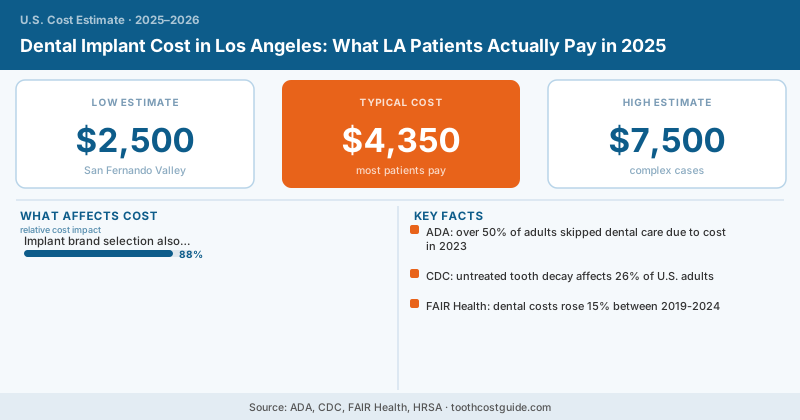
Implant brand selection also matters here. Premium-neighborhood practices tend to use Nobel Biocare, Straumann, or Zimmer Biomet — the established brands with 20–30 years of outcome data. Some budget clinics in the LA area use off-brand systems to cut costs. Always ask: “What implant system are you using, and is it a major manufacturer?”
The American Academy of Implant Dentistry estimates that about 3 million Americans have dental implants, with roughly 500,000 placed each year — and California accounts for a disproportionate share of that volume given its population and the density of specialists here.
Ask every practice you call: “What does your implant quote include — post, abutment, AND crown? Is imaging included? What about potential grafting?” Some practices quote the post placement only ($1,500–$2,000) and tack on the rest separately. An honest quote covers all three components plus the diagnostic scan.
Beverly Hills vs. San Fernando Valley: What You’re Actually Paying For
Let’s be direct: you’re not getting a better implant in Beverly Hills. The titanium post going into your jaw is the same Nobel Biocare or Straumann fixture whether it’s placed on Rodeo Drive or Ventura Boulevard. What changes is:
- Office experience — marble lobbies, spa-style amenities, concierge service
- Specialist credentials — Beverly Hills practices disproportionately employ prosthodontists and periodontists who trained at elite programs
- Technology — top-tier practices have in-office CBCT scanners and milling units that reduce lab turnaround time
- Parking and convenience — ironically, harder to access in premium neighborhoods
For straightforward single-tooth implants, the Valley and East LA practices deliver identical clinical outcomes. For complex cases with significant bone loss or multiple implants, there’s a genuine argument for a specialist — but you can find highly credentialed periodontists and oral surgeons throughout LA County, not just on the Westside.
USC and UCLA Dental Schools: The Real Numbers
Both schools offer implants at a significant discount because the work is supervised teaching. Wait times are longer — plan for 12–18 months from start to final crown — and appointments run longer than private practice. But the clinical supervision is rigorous.
USC Herman Ostrow School of Dentistry (University Park): Graduate students and residents place implants under attending supervision. Single-tooth implants typically run $2,500–$3,500 all-in, depending on complexity and whether bone grafting is needed.
UCLA School of Dentistry (Westwood): Predoctoral and graduate periodontics/prosthodontics clinics. Pricing is similar to USC — roughly $2,800–$4,000 for a complete single implant. Wait lists exist; call early.
Both schools require extensive diagnostic records up front (x-rays, impressions, medical history review) before accepting patients for implants. If your case involves significant bone loss or systemic health factors, they may refer you out.
For a full breakdown of dental school pricing options, see our dental school clinics guide.
California Medi-Cal and Implant Coverage
Here’s the straightforward answer: Medi-Cal does not cover dental implants for adults. The California Medi-Cal dental program (Denti-Cal) covers basic restorative and preventive care, extractions, and some prosthodontics — but not implants, which are classified as elective.
Adult Medi-Cal dental was significantly expanded starting in 2023, adding coverage for more complex procedures — but implants remain excluded. If you’re on Medi-Cal and need tooth replacement, your covered options are partial dentures or, in some cases, fixed bridges.
For patients with private insurance, most California PPO dental plans cover implants at 50% after meeting the deductible and annual maximum — but the annual maximum (usually $1,000–$2,000) is often hit before the implant is complete. Some plans have a separate implant lifetime maximum of $1,000–$2,000. Read your policy carefully before assuming coverage.
Tips for Getting the Best Price in LA
Compare three quotes minimum. In a market this size, the spread between practices is real and significant. Call practices in different neighborhoods — Westside, Valley, and East Side — and get written itemized quotes that specify what’s included.
Consider the San Fernando Valley corridor. The stretch from Burbank through Sherman Oaks to Woodland Hills has a high density of general dentists and specialists with lower overhead than the Westside. Clinical quality is comparable.
Ask about payment plans. Most LA implant practices work with CareCredit or Lending Club Patient Solutions — 12–24 months no-interest if paid on time. This doesn’t lower the price but makes the cash flow manageable.
Time your implant with your insurance year. If you have dental insurance with a $1,500 annual maximum, you can schedule the implant post placement in November/December (using this year’s maximum) and the crown in January (using next year’s). That’s up to $3,000 in potential insurance contribution for a single implant.
Dental tourism to Tijuana is worth knowing about. It’s a real option for many LA-area patients — 3 hours by car or trolley from central LA. Implants from accredited Tijuana clinics often run $900–$1,800 complete, though you need to vet the practice carefully and factor in travel and follow-up logistics. Our cheapest states for dental work guide covers this in more detail.
“Dental implant” ad pricing in LA often reflects the implant post placement only — not the abutment or crown. A “$1,500 implant” ad almost certainly excludes $1,500–$2,500 in additional components. Always ask for an all-inclusive quote in writing before booking a consultation.
How LA Compares to Other Major Cities
For context on how LA’s prices fit into the national picture, see our dental implant cost guide for national averages, or the root canal cost guide if you’re weighing implant vs. root canal + crown for a salvageable tooth.
LA implant pricing sits roughly in the middle of the major US city spectrum — above Houston and Phoenix, below Manhattan. You’re not at the extreme end, but you’re paying a real premium over what the same procedure costs in the Southeast or Midwest. The strategies above — Valley practices, dental schools, insurance timing, and payment plans — can meaningfully close that gap.
Frequently Asked Questions
A single dental implant in Los Angeles typically costs $3,800–$6,500, which includes the titanium post, abutment, and porcelain crown. Prices vary significantly by location within LA—a Westside specialist may charge $6,200 while a Valley periodontist quotes $4,100 for the identical procedure, a difference driven by overhead, demand, and provider specialization rather than quality of care.
Most traditional dental insurance plans do not cover implants, classifying them as cosmetic or elective procedures, though some PPO plans cover 10–50% of the cost. You should expect to pay the full $3,800–$6,500 out-of-pocket unless you have specialized implant coverage or a discount dental plan, so verify your specific policy before proceeding.
The complete implant timeline typically spans 4–6 months: the titanium post is surgically placed (1–2 hours), followed by 3–6 months of osseointegration (bone fusing to the implant), and then the crown is attached during a final 30–60 minute appointment. Some patients qualify for faster protocols, but rushing the healing phase increases failure risk significantly.