Your implant was supposed to be the permanent solution. So when you press on it and it moves, or the gum around it looks angry and starts bleeding — that sinking feeling is real. Implant failure happens. Not often, but often enough that anyone considering implants should know what failure costs, what it looks like, and how to reduce the risk.
Overall implant failure rates run 5–10% over a patient’s lifetime, according to data published by the American Association of Oral and Maxillofacial Surgeons (AAOMS). Framed the other way: well-placed implants in healthy patients succeed at rates above 95% at the 10-year mark. Both statistics are true. The difference between those outcomes comes down to bone quality, systemic health, provider skill, and patient habits.
| Service | Typical Cost |
|---|---|
| Failed implant removal (surgical) | $300–$1,000 |
| Bone graft after removal (if needed) | $500–$1,500 |
| Replacement implant placement | $1,500–$3,000 |
| Replacement crown (new) | $1,200–$2,000 |
| Peri-implantitis treatment (non-surgical) | $500–$1,200 |
| Peri-implantitis treatment (surgical) | $1,000–$2,000 |
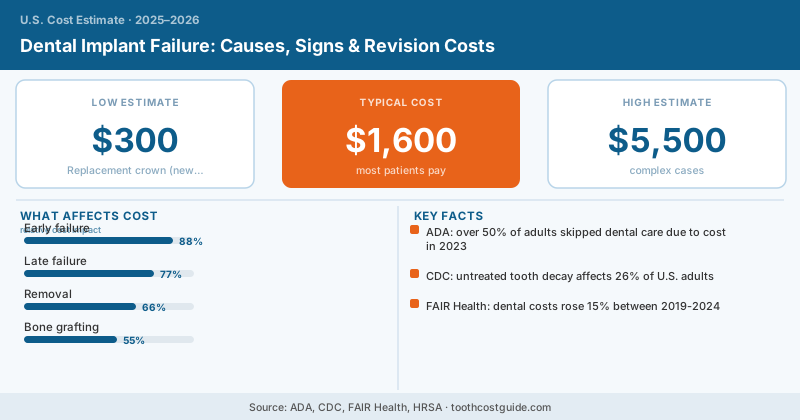
| Total revision cost (typical range) | $2,000–$5,500 |
Early Failure vs. Late Failure
The distinction matters for both prognosis and cost.
Early failure occurs within the first 3–4 months, before or shortly after the implant integrates with bone. The most common cause is failed osseointegration — the titanium post simply doesn’t bond to the surrounding bone. This can happen because of infection at the surgical site, poor bone quality or density, compromised healing (smoking, diabetes, medications), or mechanical overload before the implant has integrated. Early failure typically means the implant is mobile — you can feel it move, which no properly integrated implant should do.
Late failure happens months or years after successful integration. The two main culprits are peri-implantitis (infection and inflammation of the tissue around the implant, similar to periodontitis around natural teeth) and mechanical failure — cracked or fractured implant components from heavy forces, especially in bruxers. A 2022 study in the Journal of Oral and Maxillofacial Implants found that peri-implantitis affected approximately 22% of implant patients in long-term follow-up studies, making it the leading cause of late implant failure.
Signs of Implant Failure
These aren’t symptoms to monitor and wait on. Any of these should prompt an immediate call to your dentist:
- Mobility. A properly integrated implant doesn’t move at all. Any detectable movement means integration has failed or is failing.
- Persistent pain. Some discomfort in the first 1–2 weeks post-surgery is normal. Pain weeks or months later is not.
- Visible implant fixture. If you can see metal above the gum line when that wasn’t the case before, bone is receding around the implant.
- Gum swelling, redness, or bleeding around the implant site, especially if it’s been stable and then changes.
- Pus or discharge around the implant — a clear sign of infection.
Peri-implantitis is the most common reason for late implant failure, and it’s often silent until significant damage has occurred. It develops when bacterial biofilm accumulates around the implant fixture, triggering bone loss. The early stage (peri-implant mucositis) involves gum inflammation without bone loss — treatable with professional cleaning and improved home care. Once bone loss begins (peri-implantitis proper), treatment is more complex and expensive. Regular implant maintenance cleanings every 6 months are critical prevention, not optional.
The Cost of Fixing a Failed Implant
Failed implant revision is almost always more expensive than the original placement. Here’s why:
Removal: A failed implant typically requires surgical removal, not just unscrewing. Cost: $300–$1,000 depending on how integrated the implant is and how much drilling is needed to extract it.
Bone grafting: If the failure caused bone loss (as peri-implantitis often does), the extraction site needs to be grafted before a replacement can be placed. Bone can’t be rushed — grafts require 4–6 months of healing. Cost: $500–$1,500 per site.
Replacement implant: By the time bone is lost, grafted, and healed, you’re placing an implant into a compromised site. That increases surgical complexity and sometimes requires larger fixtures or additional bone support. Replacement implants cost $1,500–$3,000 — at the higher end because of the bone condition. A new crown adds another $1,200–$2,000.
Total typical revision cost: $2,000–$5,500. For comparison, the original dental implant including crown probably cost $3,000–$6,000 — so revision can equal or exceed the original investment.
Risk Factors: What Predicts Failure
Smoking is the single strongest modifiable risk factor. Smokers have implant failure rates 2–3x higher than non-smokers, per AAOMS data. Smoking impairs the vascular response needed for osseointegration and weakens resistance to peri-implantitis. Many surgeons will not place implants in active smokers.
Uncontrolled diabetes impairs wound healing and increases infection susceptibility. Patients with well-controlled diabetes (HbA1c under 7–8) have outcomes comparable to non-diabetics. Poor glycemic control significantly raises failure risk.
Bruxism (teeth grinding) creates heavy occlusal loads on implant components — crown, abutment, fixture. Bruxers are at higher risk for mechanical failure and bone resorption. Protective nightguards are standard protocol for implant patients who grind.
Poor bone density at the implant site increases early failure risk. Pre-surgical CBCT imaging helps surgeons identify low-density bone and adjust technique accordingly.
Certain medications. Bisphosphonates (used for osteoporosis) are associated with a condition called medication-related osteonecrosis of the jaw (MRONJ). Patients on these medications need to discuss implant surgery with both their dentist and prescribing physician before proceeding.
Warranties: What Practices Offer
Some implant practices offer limited warranties — typically 2–5 years, covering replacement of the implant fixture if it fails due to integration failure (not patient-caused damage). Warranties never cover peri-implantitis, which is the most common late failure mechanism, because it’s considered a maintenance failure.
If your practice offers a warranty, read it carefully. Most have conditions: you must have completed all follow-up appointments, maintained consistent 6-month maintenance visits at that practice, and not violated post-surgical protocols like smoking.
Dental implant revision is a complex surgical procedure. If you suspect implant failure, see a dentist immediately — delay allows bone loss to progress, making revision more difficult and expensive. Cost estimates reflect U.S. national averages for 2025 and vary significantly by region, bone condition, and provider. Patients with systemic health conditions affecting healing should discuss implant candidacy with both their dentist and physician before placement.
Frequently Asked Questions
Overall dental implant failure rates are 5–10% over a patient's lifetime, though most published studies show success rates above 95% at 10 years for healthy patients. Smokers experience failure rates 2–3x higher than non-smokers. Diabetics with poor blood sugar control face similar elevated risk. Early failure (within 3–4 months) accounts for the majority of failures and occurs during osseointegration.
Removing a failed implant costs $300–$1,000 depending on complexity. If bone has been lost, a bone graft before replacement costs $500–$1,500. A replacement implant runs $1,500–$3,000 — often more than the original because the bone condition is compromised. Total revision costs commonly range $2,000–$5,000 per site.
Early failures (within 3–4 months) are usually caused by failed osseointegration — the implant doesn't bond to the bone, often due to infection, poor bone quality, or the patient's systemic health. Late failures (after months or years) are typically caused by peri-implantitis (bacterial infection around the implant), mechanical overload from bruxism, or trauma. Smoking and uncontrolled diabetes are the strongest modifiable risk factors.