95% is the number implant surgeons like to quote — the approximate 10-year success rate for dental implants across multiple long-term studies. It’s a genuinely strong statistic. It’s also cold comfort if you’re the person in the other 5-10%, staring at a $4,000 crown that’s now attached to an implant that’s failing.
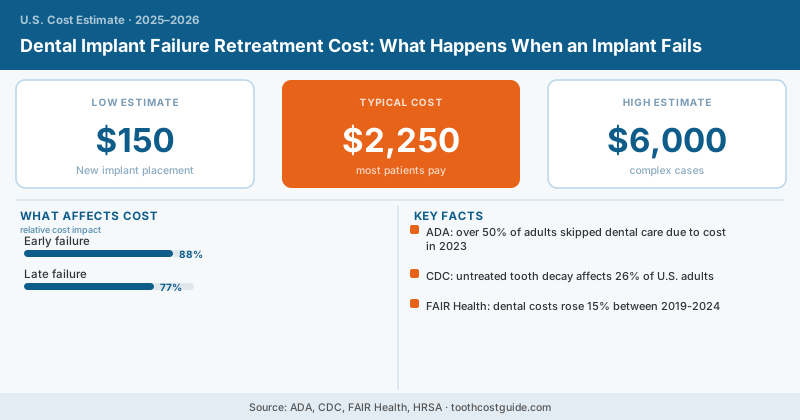
Implant failure retreatment costs $1,500-$6,000+, and the exact number depends heavily on why the implant failed and how much bone was lost in the process.
| Retreatment Step | Typical Cost |
|---|---|
| Failed implant removal | $300–$1,000 |
| Site cleanup/debridement | $150–$500 |
| Bone grafting (rebuild lost bone) | $600–$3,000 |
| Healing period (no direct cost, but 3-6 month delay) | — |
| New implant placement | $1,500–$3,000 |
| New crown/abutment | $1,000–$2,500 |
| Total typical retreatment | $1,500–$6,000+ |
Why Implants Fail: Early vs. Late
Early failure (within the first 3-6 months) usually stems from a failure of osseointegration — the process where bone fuses to the implant surface. Causes include infection at the surgical site, insufficient bone density at placement, smoking (which significantly impairs healing), or the implant being disturbed by biting force before it fully integrated. Early failures are often addressed relatively simply: remove, let the site heal, then reattempt.
Late failure (months to years later) is most commonly linked to peri-implantitis — a bacterial infection around the implant that causes progressive bone loss, functioning very similarly to periodontal (gum) disease around natural teeth. Poor oral hygiene, uncontrolled diabetes, and smoking are significant risk factors. Late failures are often more complex to treat because significant bone has typically already been lost by the time symptoms are noticed.
Why Retreatment Sometimes Costs More Than the Original Implant
This surprises a lot of patients. The original implant placement worked with intact, healthy bone. After a failure — especially a late failure from peri-implantitis — that bone is often compromised or partially resorbed. Rebuilding it before a new implant can be safely placed requires bone grafting, which adds $600-$3,000 depending on the extent of bone loss, plus a healing period of 3-6 months before the new implant can even be attempted.
Not every implant issue requires full removal and retreatment. Some complications — a loose abutment screw, minor gum inflammation, or a fractured prosthetic crown — can be resolved without touching the implant itself, at a fraction of the cost. Before agreeing to a full retreatment plan, ask your surgeon to explain specifically what’s failing: is it the implant fixture itself, the crown, the abutment connection, or the surrounding bone and gum tissue?
What Implant Warranties Actually Cover
Most major implant manufacturers (Straumann, Nobel Biocare, Zimmer Biomet, and others) offer a lifetime warranty on the implant fixture itself — meaning if the implant fixture fails due to a manufacturing defect, the replacement part is provided at no cost. This warranty typically does not cover the surgeon’s placement fee, anesthesia, imaging, bone grafting, or the crown — all of which can still total several thousand dollars out of pocket.
Some individual dental practices also offer their own workmanship guarantee separate from the manufacturer’s warranty, sometimes covering a portion of the surgical fee if failure occurs within a specific window (commonly 1-5 years). Ask your original surgeon directly what their specific practice guarantee covers before assuming “lifetime warranty” means a free redo.
Reducing the Risk of Needing This Article at All
- Don’t smoke, or quit before implant surgery — smoking is one of the most well-documented risk factors for both early and late implant failure
- Maintain rigorous oral hygiene around the implant, including any specific interdental brushes your dentist recommends for implant-specific cleaning
- Keep regular maintenance visits, typically every 6 months, so peri-implantitis is caught early rather than after significant bone loss
- Manage diabetes and other systemic conditions that affect healing and infection risk
Bleeding, persistent bad taste, gum recession around an implant, or any looseness in the crown or implant itself should be evaluated immediately, not monitored at home. Peri-implantitis caught early is far less expensive and complex to treat than a case where significant bone has already been lost.
The Bottom Line
Implant failure is uncommon — most studies put long-term success rates at 90-95% — but retreatment when it does happen can cost $1,500-$6,000+, often more than the original placement due to bone grafting and healing delays. Understand what your manufacturer and practice warranties actually cover before assuming a “lifetime guarantee” means a free fix, and don’t ignore early warning signs like bleeding or looseness around an implant.
Frequently Asked Questions
Dental implants have a high long-term success rate, with most studies showing 90-95% success over 10 years. Failure is less common than success, but when it happens, it usually occurs either early (within the first few months, tied to poor osseointegration) or later, often linked to peri-implantitis, a gum infection around the implant similar to periodontal disease.
Retreatment costs vary widely based on cause: removing a failed implant runs $300–$1,000, additional bone grafting to rebuild lost bone before a new implant can be placed runs $600–$3,000, and placing a brand-new implant and crown after healing runs $3,000–$6,000 or more. Total retreatment for a failed case can range from $1,500 to over $8,000.
Many implant manufacturers offer a lifetime warranty on the implant fixture itself, but this typically only covers the cost of the replacement part — not the surgeon's fee, anesthesia, bone grafting, or the new crown, which can still leave patients responsible for a significant portion of the retreatment cost. Read the specific warranty terms before assuming 'lifetime' means fully covered.