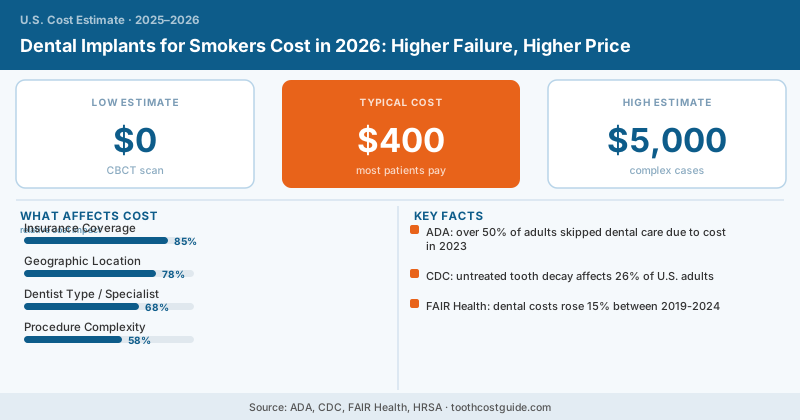
Smoking roughly doubles to triples your odds of an implant failing — and that statistic shows up directly in what you’ll spend. The sticker price is the same as anyone else’s. The lifetime cost isn’t, because a redo erases your savings fast.
Studies cited by the American Academy of Implant Dentistry put smoker implant failure rates around 6–20% versus roughly 2–5% for non-smokers, depending on the site and habit. That difference is the whole story here.
The Upfront Price Is the Same
A single implant still costs you in this range whether or not you smoke:
| Item | Typical Cost |
|---|---|
| Single implant (post + abutment + crown) | $3,000–$5,000 |
| Bone graft (smokers need these more often) | $300–$1,200 |
| CBCT scan | $150–$650 |
| Smoking-cessation visit (sometimes required) | $0–$200 |
| Redo if it fails | $3,000–$5,000 |
See the last row? That’s the smoker tax. You don’t pay it at the start — you pay it if the implant doesn’t integrate, and your odds of that are materially higher.
Why Smoking Wrecks Implants
Nicotine constricts blood vessels and reduces blood flow to the gums and bone. That starves the surgical site of oxygen exactly when it needs to heal and fuse to the titanium (osseointegration). The CDC has documented smoking’s broad damage to oral tissue and healing for decades, and implant osseointegration is one of the most healing-dependent procedures in dentistry.
The biggest danger window is the first few weeks after surgery, when the implant is bonding to bone. Smoking through that window is the most common way smokers lose implants.
You can absolutely get implants as a smoker — but quitting for at least one week before surgery and eight weeks after dramatically improves your odds. Many surgeons require it. That short cessation window is the single cheapest “upgrade” you can buy: it costs nothing and can save you a $3,000–$5,000 redo.
The Hidden Cost: Voided Warranties
Read the fine print before you assume a guarantee protects you. Most labor warranties — and the practice-level guarantees discussed in dental implant warranty cost — explicitly exclude smokers. If you smoke and the implant fails, you often pay the full replacement yourself. That turns a “free redo” into an out-of-pocket dental implant failure cost.
What Surgeons May Require
- A cessation commitment. Often one week before and eight weeks after.
- Extra grafting. Smokers tend to have less healthy bone, so dental bone graft work is more common, adding $300–$1,200.
- More frequent recall visits. To catch peri-implantitis early, which smokers develop more often.
- A signed acknowledgment. Documenting that you understand the elevated risk.
Vaping is not a safe substitute. Nicotine is the primary culprit in implant failure, and vape products still deliver it. If you switch to vaping right before surgery and assume you’re in the clear, you’re not. Tell your surgeon the truth about your nicotine use so they can plan correctly.
Are Implants Even the Right Call for Heavy Smokers?
For someone unwilling or unable to pause smoking around surgery, a fixed dental bridge cost or a removable partial can be the more cost-rational choice. Bridges don’t depend on bone integration the way implants do, so they sidestep the single biggest smoker risk. It’s not as permanent, but it won’t fail in the same expensive way.
How to Cut the Real Cost
- Quit around the surgery window — the free move that protects everything else.
- Get the labor warranty in writing and ask whether a documented cessation period keeps you eligible.
- Front-load the bone graft if your surgeon flags weak bone; fixing it once beats a failed implant.
- Keep every cleaning appointment — peri-implantitis is cheaper to catch early than to treat.
Bottom Line
Implants cost smokers the same $3,000–$5,000 per tooth at the register, but the elevated failure rate and voided warranties make the true cost higher. The cheapest insurance you have is free: pause nicotine for a few weeks around the surgery, keep your maintenance visits, and get any guarantee terms in writing. Do that, and your odds start to look a lot more like everyone else’s.
Frequently Asked Questions
The initial cost per implant is the same $3,000–$5,000 for smokers and non-smokers, but smokers face a 6–20% failure rate versus 2–5% for non-smokers. If your implant fails and requires a redo, you'll pay another $3,000–$5,000 out of pocket, potentially doubling your total cost.
Most dental insurance plans exclude or limit coverage for implant failures, and many explicitly deny coverage if smoking contributed to the failure. You should expect to pay the full $3,000–$5,000 replacement cost yourself, as most warranties are also voided for smokers.
Most dentists will place implants in smokers, but many recommend quitting at least 2 weeks before surgery and ideally 8 weeks after to improve healing and reduce failure risk. If you continue smoking post-surgery, your implant failure risk jumps to 2–3 times higher than a non-smoker's, making the long-term investment far riskier.