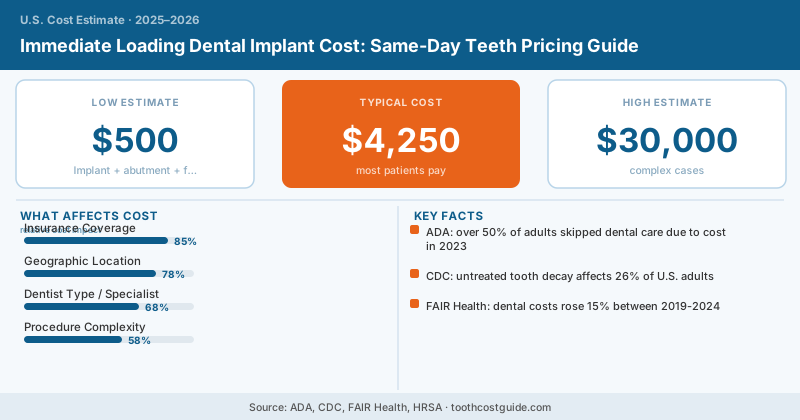
In 2010, getting a dental implant meant waiting 3–6 months between surgery and your final crown — a long stretch with either a gap or a temporary appliance. By 2025, that timeline has compressed dramatically for the right patients. Immediate loading implants (also called same-day implants or teeth-in-a-day) place a functional provisional crown on the implant on the very same day as surgery.
It’s not magic. It’s precision — and it costs more than traditional implant placement.
What Immediate Loading Costs
| Procedure Component | Average Cost |
|---|---|
| Single immediate loading implant + provisional | $3,500–$6,000 |
| Traditional implant (implant only) | $1,500–$2,500 |
| Implant + abutment + final crown (traditional) | $3,000–$5,500 |
| All-on-4 immediate loading (full arch) | $15,000–$30,000 per arch |
| Same-day bone grafting (if needed) | $500–$1,500 |
The premium for immediate loading over traditional placement is typically $500–$1,500 per implant. That covers the extra clinical time, the provisional crown fabricated same-day, and the higher diagnostic burden (CBCT scanning, digital planning) required to execute immediate loading safely.
Why It Costs More
Traditional implants are placed and then left alone for 3–6 months while osseointegration occurs. During that healing window, the implant has zero load on it — just bone growing in.
Immediate loading puts a crown on the implant the same day, which means the implant must be placed with extremely precise torque values (typically 35–45 Ncm) to handle early loading forces. That requires:
- 3D CBCT imaging for surgical planning ($200–$500 if not included)
- Surgical guides fabricated digitally ($200–$400)
- A same-day provisional crown (usually $300–$600)
- Higher skill level and time from the surgeon
Some oral surgeons and prosthodontists charge a single bundled fee; others itemize each component. Always ask for a complete breakdown.
Not everyone is a candidate. Immediate loading generally requires: sufficient bone density and volume (no grafting needed at time of placement), healthy gums with no active infection, non-smoking status or recent cessation, good bite mechanics that won’t put excessive force on the provisional, and implant torque values achievable during placement. Heavy grinders, patients with bone deficiencies, and those with uncontrolled diabetes are typically not candidates for same-day loading.
Immediate Loading vs. Traditional: The Real Comparison
Immediate loading advantages:
- Tooth visible same day — no gap, no flipper
- Fewer total appointments
- Psychological benefit for patients, particularly for front teeth
- Comparable survival rates in carefully selected patients
Traditional implant advantages:
- More forgiving — allows healing before adding occlusal force
- Can be done even with minor bone deficiencies
- Lower overall cost
- Lower risk of early implant failure in marginal cases
A 2022 meta-analysis published in the International Journal of Oral and Maxillofacial Implants found immediate loading survival rates of 95–98% over 5 years for properly selected single-tooth cases — statistically comparable to traditional loading. The patient selection piece is critical.
All-on-4 Immediate Loading: A Different Category
The most visible application of immediate loading is the All-on-4 full-arch fixed bridge. All-on-4 procedures routinely place a full provisional arch bridge on four implants the same day — this isn’t even called “immediate loading” by most oral surgeons, it’s just how All-on-4 is done.
Cost per arch: $15,000–$30,000 including the provisional same-day bridge and the final bridge placed 4–6 months later. That’s a different scale than single-tooth immediate loading.
Same-day implant advertisements that emphasize “teeth in an hour” or extremely low prices should raise red flags. The procedure requires significant pre-surgical planning — CBCT scanning, digital planning, surgical guide fabrication. Any clinic promising immediate loading without thorough pre-surgical imaging is cutting corners that matter for long-term success.
Insurance and Financing
Dental insurance for immediate loading works the same as for traditional implants — many plans cover implants at 50% as major restorative procedures, up to annual maximums. The immediate loading premium (that extra $500–$1,500) is rarely covered separately; insurers typically approve a standard implant fee and you pay the difference.
CareCredit and similar financing options work well here. On a $4,500 single-tooth immediate loading case, a 12-month 0% promotional financing plan puts your monthly payment around $375. For most working adults, that’s more manageable than $4,500 due at surgery.
Frequently Asked Questions
Immediate loading implants typically cost $3,500–$6,000 per tooth, which is 20–40% higher than traditional implants ($2,500–$4,500) due to advanced planning, specialized components, and same-day placement. The final cost depends on bone quality, the need for bone grafting, location of the tooth, and your dentist's experience with the procedure.
Most dental insurance plans do not cover implants at all, including immediate loading implants, since they are considered cosmetic or elective procedures. You can expect to pay the full $3,500–$6,000 out-of-pocket per tooth, though some plans may cover 20–50% of the abutment or crown portion if you meet annual maximums.
You typically qualify for immediate loading if you have adequate bone density, good oral health, and realistic expectations—patients with severe bone loss or active gum disease usually need traditional implants with a 3–6 month waiting period instead. Recovery from immediate loading takes 1–2 weeks for swelling to subside, with full osseointegration (bone-to-implant bonding) still requiring 3–4 months before permanent crown placement.