The implant your dentist called “a lifetime investment” is now causing pain, swelling, or bone loss. Now what? Implant removal — called explantation — is more common than most patients realize, and the cost varies widely based on how badly things went wrong.
Here’s a clear breakdown of what you’ll pay and why.
How Much Does Dental Implant Removal Cost?
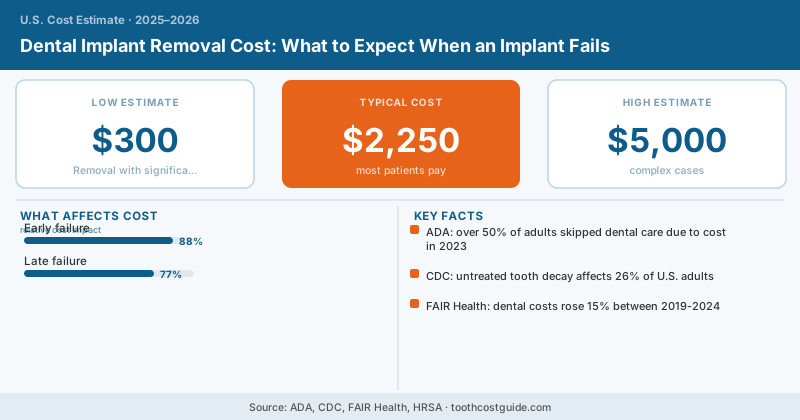
| Scenario | Typical Cost Range |
|---|---|
| Early failure (before osseointegration) | $500–$1,200 |
| Integrated implant removal (no bone loss) | $900–$1,800 |
| Removal with significant bone loss | $1,500–$3,000 |
| Removal + bone graft for future re-implantation | $2,500–$5,000+ |
| Surgeon fee (oral surgeon vs. general dentist) | $300–$800 premium for specialist |
These figures cover the removal procedure only. If you need a new implant after healing, that’s an additional $3,000–$6,000+ per tooth.
Why Implants Fail (and Need Removal)
The American Academy of Implant Dentistry estimates implant failure rates at 5–10% over a 10-year period. Most failures fall into two categories:
Early failure happens within the first few months, before the implant fuses to bone. This is usually easier and cheaper to remove since the implant isn’t locked in by bone integration.
Late failure occurs after osseointegration. Common causes include peri-implantitis (the implant version of gum disease), excessive bite force, systemic conditions like uncontrolled diabetes, or infection. Late failures require more aggressive surgical removal and often bone grafting.
According to a 2023 FAIR Health analysis, peri-implantitis affects an estimated 10–20% of implant patients over time — making late failure a real risk worth knowing about.
What Affects the Cost?
Bone loss severity. When bone has dissolved around the implant due to infection, removal is more involved. Your surgeon may need to use special tools or make an incision to access the implant safely. More surgical time = higher cost.
Bone grafting need. If you want another implant later, you’ll likely need a bone graft to restore the lost volume. Socket preservation grafts run $400–$900 per site on top of the removal fee.
Surgeon type. Oral surgeons and periodontists typically charge more than general dentists for removal procedures, but they have the specialized training to handle complicated cases with minimal additional damage.
Anesthesia/sedation. Local anesthesia is included in most quotes. IV sedation adds $400–$800.
Geographic location. Expect to pay 30–50% more in major metros like New York, LA, or San Francisco compared to rural areas.
Most dental insurance plans treat implants as elective, which means removal may not be covered either. If the failure is linked to a documented infection or systemic condition, some plans cover a portion under surgical benefits. Always get a pre-treatment estimate before scheduling. Medical insurance occasionally covers removal if it’s deemed medically necessary (e.g., implant affecting a nerve).
Signs You May Need Removal
Don’t ignore these symptoms — early intervention is almost always cheaper than waiting:
- Persistent pain or pressure around the implant site
- Visible implant threads (bone recession)
- Swelling, pus, or bad taste around the implant
- Implant feels loose or “rocks” when you press it
- X-ray shows bone loss around the implant post
If any of these apply, call your dentist or oral surgeon promptly. Some early-stage peri-implantitis can be managed without full removal, saving you significant cost.
After Removal: Your Options
Wait and re-implant. After bone grafting and several months of healing, many sites can receive a new implant. Success rates for replacement implants are comparable to first-time placement — around 90–95%.
Dental bridge. If the adjacent teeth are healthy, a three-unit bridge can replace the missing tooth without another implant. Cost: $3,000–$5,000.
Removable partial denture. The most affordable replacement option, starting around $900–$1,500, though it’s the least comfortable long-term.
Do nothing temporarily. If it’s a back tooth and money is tight, waiting is an option — but bone continues to resorb over time, making future implants harder.
Never try to remove a failed implant yourself or ask a dentist without implant training to remove a fully integrated implant. Improper removal can fracture the implant, damage surrounding bone, or injure the inferior alveolar nerve. Always use a dentist or oral surgeon with documented implant removal experience.
Reducing Costs
Get multiple quotes. Prices vary dramatically between practices, especially between general dentists and oral surgeons. A general dentist with implant training may charge 20–30% less for straightforward removals.
Dental schools. Accredited dental school oral surgery clinics perform implant removals at 40–60% off private practice fees. Cases are supervised by experienced faculty.
CareCredit / payment plans. Most oral surgery offices offer financing. At 0% interest for 12–18 months, this makes even $2,000+ procedures manageable month to month.
Address it early. If your implant is showing signs of failure, acting sooner typically means a simpler removal, less bone loss, and lower total cost.
Implant removal is never fun. But understanding what’s driving the price — and what your options are afterward — helps you make the best decision for your smile and your budget.
Frequently Asked Questions
Dental implant removal typically costs $500–$1,200 for early failures before the implant fuses to bone, and $1,500–$3,000+ for established implants that require surgical extraction. The final cost depends on implant depth, bone integration level, and whether additional bone grafting is needed after removal.
Most dental insurance plans do not cover implant removal if the implant was elective, though they may cover it if infection or damage to surrounding teeth is documented. You should expect to pay the full $500–$3,000+ out-of-pocket unless your plan explicitly includes surgical extractions, so contact your insurer before scheduling.
Recovery typically takes 1–2 weeks for normal activities, though complete bone healing requires 3–6 months before a new implant can be placed. If significant bone loss occurred, you may need a bone graft first, which adds $500–$2,000 to your total treatment cost and extends the timeline by 4–9 months.