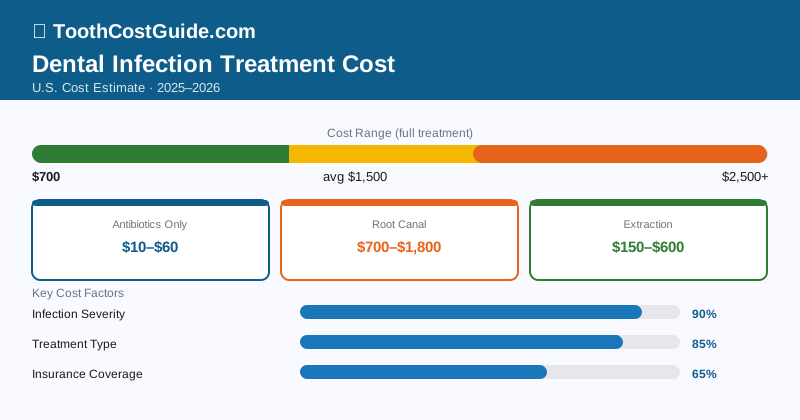
Antibiotics cost $10–$60 and feel like the whole solution. They’re not. A dental abscess is a bacterial infection with an infection source — dead pulp tissue or a deep gum pocket — that antibiotics can’t physically remove. They reduce bacterial load. They manage fever. They buy time. But they don’t fix the tooth. The definitive treatment that actually cures a dental infection is either a root canal ($700–$1,500) or an extraction ($150–$600). Combined with the exam, imaging, and any necessary drainage, total treatment costs $700–$2,500 when handled early.
Left untreated long enough for the infection to spread? That same abscess becomes a hospital admission costing $10,000–$50,000 or more.
| Treatment Component | Cost (No Insurance) |
|---|---|
| Emergency exam + X-rays | $100–$250 |
| Antibiotics (amoxicillin, clindamycin) | $10–$60 |
| Incision and drainage (I&D) of abscess | $150–$400 |
| Root canal — front tooth | $700–$1,000 |
| Root canal — molar | $1,000–$1,500 |
| Crown (following root canal) | $1,000–$1,800 |
| Simple tooth extraction | $150–$300 |
| Surgical extraction | $300–$600 |
| Hospitalization (if infection spreads) | $10,000–$50,000+ |
The Decision That Drives Most of the Cost
Save the tooth or pull it — that’s the question. Everything downstream flows from that decision.
Root canal + crown: $1,700–$3,300 total at a private practice. Root canal therapy removes the infected pulp tissue, sterilizes and seals the canals. The crown that follows protects the treated tooth from fracture. You keep the tooth. Adjacent bone stays stimulated. Chewing mechanics stay intact.
Extraction: $150–$600 for the pull itself. Faster, cheaper upfront. But that gap doesn’t stay a gap forever. An implant to replace the missing tooth runs $3,000–$6,000. A bridge is $2,500–$6,000. Factor in replacement, and extraction often ends up costing more over five years than the root canal + crown path — while also creating the bone loss and bite shift problems that come with a missing tooth.
Which type of abscess you have also matters. A periapical abscess forms at the root tip when the pulp is infected — root canal or extraction is the fix. A periodontal abscess forms in the gum and bone around the tooth — treatment involves deep cleaning, scaling, and sometimes antibiotics. Same word “abscess,” very different diagnosis and treatment. Your dentist can tell which one you have from clinical exam and X-ray within minutes.
What Each Treatment Actually Does
Antibiotics — $10–$60. Amoxicillin or clindamycin for 7–10 days. They knock back the bacterial count, reduce fever, and can help localize a spreading infection. With GoodRx, a standard amoxicillin prescription fills for $4–$15 at most pharmacies. Important: antibiotics do not cure an abscess. They make you feel better while the underlying problem persists. Every dentist will tell you this. Every ER doctor will tell you this.
Incision and drainage — $150–$400. When there’s a fluctuant, pus-filled swelling that’s visibly “pointing” through the gum or cheek, draining it under local anesthesia provides immediate significant relief. The dentist opens the pocket, flushes the area, may place a small rubber drain for 24–48 hours. Often done at the emergency appointment before definitive treatment is scheduled.
Root canal — $700–$1,500. Front teeth cost less ($700–$1,000); molars cost more ($1,000–$1,500) due to additional root canals and greater complexity. The infected pulp is removed, root canals are cleaned and shaped, then sealed with an inert material. Pain relief is usually dramatic within 24 hours of the procedure. A crown follows in 2–4 weeks to prevent the treated tooth from cracking. Total with crown: $1,700–$3,300.
Extraction — $150–$600. Simple erupted tooth extraction: $150–$300. Surgical extraction (impacted tooth, broken roots, complex anatomy): $300–$600. Pain relief is quick. Recovery from uncomplicated extraction: 2–5 days. The gap left behind is the beginning of a longer story involving replacement decisions, bone loss, and neighboring tooth drift.
Hospitalization — $10,000–$50,000+. Not a treatment option you choose — it’s what happens when delay or inadequate treatment allows infection to spread to jaw spaces, the neck, or the floor of the mouth. IV antibiotics, surgical drainage, possible ICU stay. The cost difference between catching it at Stage 1 versus Stage 4 is not subtle.
What You’ll Pay With Insurance
- Emergency exam + X-rays: Covered 80–100% under diagnostic benefits
- Root canal: Covered 40–60% under major restorative; out of pocket roughly $350–$750
- Crown: Covered 40–60%; new plans may have a waiting period
- Extraction: Covered 75–90% for simple; out of pocket $15–$75
- Antibiotics: Usually covered by pharmacy benefit; often $0–$10 with Rx coverage
Realistic totals: Abscessed molar needing root canal + crown — approximately $700–$1,200 out of pocket with insurance. Without insurance at a private practice: $2,200–$3,300. At a dental school: $700–$1,300 total for the full treatment chain.
What To Do (and What Not To Do)
See a dentist the same day if you have a dental abscess. This isn’t something that resolves on its own — it doesn’t.
Don’t squeeze or try to pop the abscess. You risk pushing bacteria deeper into the tissue and worsening the spread.
Take all prescribed antibiotics as directed, even after you start feeling better. Stopping early invites recurrence and contributes to antibiotic resistance.
Warm saltwater rinses (½ teaspoon salt in 8 oz warm water) every few hours flush the area and provide some comfort. They’re not a substitute for treatment.
Ibuprofen 400–600 mg every 6 hours manages pain and reduces inflammation while you’re waiting for your appointment.
Go to the ER immediately if you notice: swelling below the chin or in the neck, difficulty swallowing or opening your mouth fully, fever above 103°F, or any sense of throat tightness. These are signs the infection has spread and require hospital-level care without delay.
When Cost Is the Real Barrier
GoodRx gets antibiotics down to $4–$15 at most major pharmacy chains. Use it immediately when the prescription is written — don’t pay full retail.
Dental schools have endodontic clinics where root canals run $300–$600 — roughly half the private practice rate. Crowns: $400–$700. Full treatment at a dental school comes in at $700–$1,300 total versus $2,200–$3,300 at private practice. Cases take longer and require multiple appointments, but the quality is supervised.
FQHCs (Federally Qualified Health Centers) operate on sliding-scale fees based on income. For patients below 200% of the federal poverty level, treatment is often free or very close to it. Find the nearest location at findahealthcenter.hrsa.gov. According to HRSA data, there are over 1,400 FQHCs operating more than 14,000 service delivery sites across the U.S.
A dental infection with neck swelling, difficulty opening your mouth wide (trismus), difficulty swallowing, fever above 103°F, or swelling that is spreading rapidly to the eye or neck is a life-threatening emergency. Call 911 or go to the nearest emergency room immediately — do not wait for a dental appointment.
Treating a dental infection early costs $700–$2,500. Treating it after it spreads to jaw spaces or the neck costs $10,000–$50,000+. With insurance, root canal plus crown typically runs $700–$1,200 out of pocket. Without insurance, dental schools cut the cost by roughly half. Antibiotics are not a cure — the infection source must be removed through root canal or extraction. That’s the one thing that doesn’t change regardless of which approach you take.
Frequently Asked Questions
Antibiotics for dental infections typically cost $10–$60 depending on the type and duration of the prescription. However, antibiotics alone cannot cure a dental infection because they cannot physically remove the infection source, such as dead pulp tissue or bacteria in a deep gum pocket—you'll likely need a root canal ($700–$1,500) or extraction ($150–$600) as the definitive treatment.
Most dental insurance plans cover 50–80% of root canal treatment and 80–100% of necessary extractions after you meet your deductible, though coverage varies by plan and some plans exclude certain procedures. Out-of-pocket costs typically range from $200–$1,000 after insurance, depending on the treatment type and your specific plan benefits.
Definitive treatment like a root canal or extraction can usually be completed in one to three appointments over 1–2 weeks, though you may start antibiotics immediately to reduce pain and fever while awaiting the procedure. Delaying treatment beyond a few days increases the risk of the infection spreading to your jaw, sinuses, or bloodstream, so prompt dental care is important even if antibiotics initially improve your symptoms.