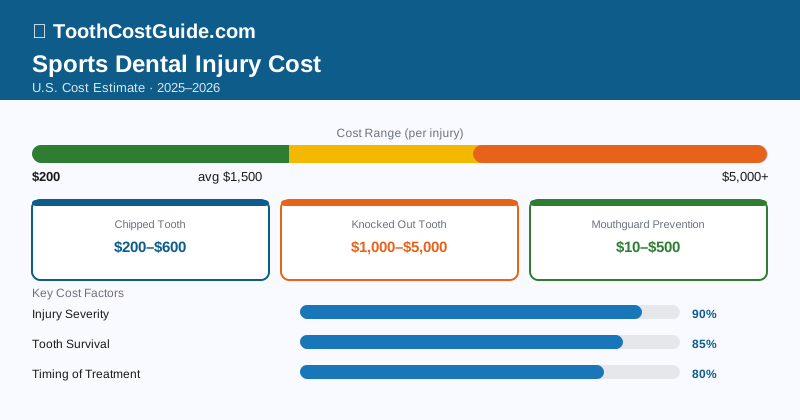
Five million. That’s how many teeth get knocked out during sports activities in the United States every single year. A basketball elbow to the mouth. A baseball pitch that deflects. A collision in the lane during a pick-up game. Most of those injuries — the ADA has been saying this for years — were preventable. A custom mouthguard costs $300–$500. A dental implant to replace a knocked-out tooth costs $3,500–$6,000. The math isn’t complicated.
If you’re here because an injury already happened, here’s what treatment will run you:
| Injury Type | Treatment | Cost (No Insurance) |
|---|---|---|
| Chipped tooth (enamel) | Bonding or smoothing | $100–$600 |
| Broken tooth (into dentin) | Crown | $1,000–$1,800 |
| Broken tooth (into pulp) | Root canal + crown | $1,700–$3,300 |
| Knocked-out tooth (1–2 hrs from injury) | Re-implantation | $800–$2,500 |
| Knocked-out tooth (implant replacement) | Implant + crown | $3,500–$6,000 |
| Displaced/luxated tooth | Splinting ± root canal | $500–$1,800 |
| Multiple tooth trauma | Complex treatment | $5,000–$20,000+ |
| Custom mouthguard (prevention) | Fabrication | $300–$500 |
Five Factors That Drive the Final Bill
Severity, plain and simple. An enamel chip that can be smoothed or bonded costs $100–$600. A tooth that gets completely knocked out and requires an implant eventually costs $3,500–$6,000 — more if bone grafting is needed because the socket deteriorated. The same force that causes one injury in one person might cause a different injury depending on the angle, tooth health, and age of the athlete.
Sport and activity type. High-contact sports produce the most dental injuries: hockey, football, lacrosse, martial arts. But basketball actually leads all US sports in raw dental injury numbers — not because it’s more violent, but because more people play it. Cycling falls, baseball wild pitches, and gymnastics dismounts also generate significant tooth trauma.
Age of the athlete. Children’s treatment decisions are more complicated because developing teeth require different approaches than adult teeth. A displaced baby tooth may need monitoring for its effects on the permanent tooth developing beneath it. Younger adult permanent teeth are generally better candidates for re-implantation than older teeth.
Mouthguard use — or lack of it. Research puts the injury rate reduction from proper mouthguard use at around 60 times lower than unprotected athletes. That’s not a typo. Athletes who actually wear custom-fitted mouthguards are dramatically less likely to be sitting in an emergency dental appointment on a Saturday afternoon.
Insurance situation. This is where it gets interesting — sports dental injuries can trigger multiple policies at once. Dental insurance, the athlete’s medical insurance, and sports accident insurance through a school or league may all have applicable coverage. More on this below.
Breaking Down Each Treatment
Bonding ($200–$600): The go-to for enamel chips — the elbow to the mouth that takes a piece off the corner of a front tooth. A dentist applies tooth-colored composite resin, shapes it, and cures it with light. Usually one appointment, no drilling required. Cosmetically excellent when done well. Can chip again under another impact.
Crown ($1,000–$1,800): Larger fractures that compromise structural integrity need a full crown. All-ceramic options — especially zirconia — are extremely strong, which matters for athletes who’ll keep competing in contact sports.
Root canal + crown ($1,700–$3,300): When the fracture reaches the pulp (the nerve-containing center of the tooth), a root canal has to happen before any crown can be placed. This is typically two separate appointments — one with an endodontist for the root canal, one back at the general dentist for the crown.
Tooth re-implantation ($800–$2,500, plus follow-up): For knocked-out teeth. Success depends heavily on time from injury to treatment — ideally 30 minutes or less — and on proper storage. Milk is the right storage medium. Water is wrong; it damages the periodontal ligament cells on the root. A re-implanted tooth that survives may still eventually need a root canal, and long-term success isn’t guaranteed, but it’s far better than going straight to an implant.
Dental implant ($3,500–$6,000): When re-implantation isn’t possible or fails, an implant is the standard permanent replacement. Placed after the socket heals, typically 3–6 months post-injury.
Splinting for displaced teeth ($500–$1,500): Teeth that get pushed sideways or partially out of their sockets but remain attached are repositioned and splinted to neighboring teeth for 2–6 weeks. Follow-up continues for up to a year — nerve damage sometimes develops weeks after the initial injury, requiring eventual root canal treatment.
Navigating Insurance After an Injury
Dental insurance treats sports injuries the same as any dental trauma:
- Bonding: 40–80% covered
- Root canal: 40–60%
- Crown: 40–60%
- Re-implantation oral surgery: 50–75%
Medical insurance activates if the situation goes to the ER or hospital for imaging or assessment — which it should for anything beyond a minor chip, especially if concussion is a concern:
- ER evaluation: subject to copay and deductible
- X-rays and CT scans: covered under major medical
Sports accident insurance is the one most families miss. Many school athletic programs offer supplemental accident policies for just $10–$30 per athlete per year. These plans typically pay $1,000–$25,000 per injury incident, usually as secondary coverage after dental and medical insurance pay their share. Club sports leagues sometimes offer this through K&K Insurance, Bollinger Sports & Leisure, or similar carriers. Ask your athletic director or league coordinator — if it exists, it’s probably the best $25 you’ll ever spend.
Auto insurance can apply when dental trauma happens in a vehicle accident — PIP (personal injury protection) or medical payments coverage would kick in.
What To Do in the First 30 Minutes
- Stop play. Immediately. Any tooth injury needs sideline attention before anything else.
- Find the tooth. Handle it by the crown only — never touch the root. The cells on that root surface are what make re-implantation possible.
- Put it in milk. Right now. If there’s no milk, the athlete can hold it inside their cheek. Not water. Not a dry paper towel. Milk or saliva.
- Call a dentist or go to an ER. For a knocked-out tooth, every minute genuinely matters for re-implantation chances.
- Control bleeding. Direct pressure with gauze for 15–20 minutes.
- Ice on the outside. Reduces swelling; don’t apply directly to the gum.
- Document everything. Photos of the injury, incident report from the coach, contact information for witnesses. You’ll want this for insurance claims.
Keeping Costs Under Control
Buy the mouthguard before anything happens. A custom guard from your dentist costs $300–$500. A boil-and-bite from the drugstore costs $15–$25 and provides far less protection — athletes feel the bulk and don’t wear them consistently. One prevented implant pays for 10 custom guards. This is not a close financial call.
Enroll in supplemental sports accident insurance. Ten to thirty dollars per year through the school or league. If a serious dental injury does happen, this coverage can cut thousands off your out-of-pocket costs.
Train coaches and athletic trainers. The knocked-out tooth protocol is simple: tooth in milk, get to a dentist in 30 minutes. But most coaches don’t know it. A brief training session with a local dentist for your team’s staff is an easy, low-cost intervention.
Use dental schools for non-emergency follow-up. Once the emergency stabilization is done, crowns, implants, and root canal follow-up can be completed at dental school clinics for 40–60% less than private practice rates.
A custom-fitted mouthguard ($300–$500) prevents dental injuries that cost $1,500–$5,000+ to treat. For any athlete in a contact sport, a custom mouthguard is among the best investments available. Ask your dentist about sport-specific guards.
Head and facial injuries from sports should be evaluated for concussion before focusing on dental injuries. If there is any loss of consciousness, confusion, headache, neck pain, or neurological symptoms, prioritize medical evaluation at an emergency room. Concussion protocols must be followed before dental treatment is initiated.
Bottom Line
Minor chips run $200–$600. Knocked-out teeth that need implants run $3,500–$6,000. Multiple-tooth trauma can exceed $20,000. Those numbers are painful to read — but a $300–$500 custom mouthguard makes most of them avoidable. If you’re already past prevention, check all three potential insurance sources (dental, medical, sports accident), act immediately with any knocked-out tooth, and use dental schools for follow-up work to manage costs.
Frequently Asked Questions
A dental implant to replace a knocked-out tooth typically costs $1,500–$5,000, depending on whether bone grafting is needed and your location. This is significantly more expensive than preventive measures like a custom mouthguard, which costs only $300–$500.
Most dental insurance plans cover tooth injuries as accidental damage, typically covering 50–80% of treatment costs after your deductible. However, you'll likely pay $300–$1,500 out-of-pocket depending on your plan's annual maximum and the severity of the injury.
You should see a dentist within 30 minutes of the injury for the best chance of saving the tooth; if reattachment isn't possible, treatment options like implants or bridges take 3–6 months to complete. Immediate care can reduce your total treatment cost by preventing complications that require more extensive procedures.