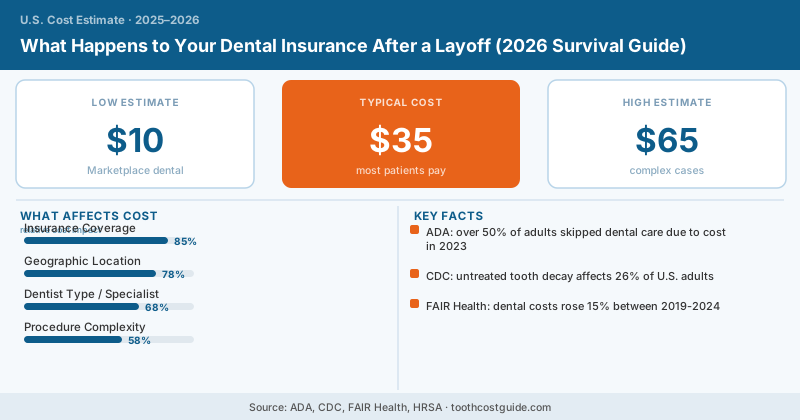
Picture this. It’s a Friday afternoon, you get the call, and by Monday your dental card is dead. For a lot of employer plans, coverage ends on your last day of work — not the end of the month, not 30 days later. The day you walk out, the benefit walks out with you.
Some employers extend it to month-end. Many don’t. So step one after a layoff: find out your exact last covered day. Call HR or read the COBRA notice they’re legally required to mail you.
Then you’ve got four real options.
Option 1: COBRA — keep your exact plan
COBRA lets you continue the same dental plan you had at work, usually for up to 18 months. The catch is the price. You now pay the full premium plus a 2% admin fee, with no employer subsidy. Dental-only COBRA is cheaper than medical COBRA, but it still stings.
| Option | Typical monthly cost | Best for |
|---|---|---|
| COBRA (dental) | $30–$65 | Mid-treatment; keeping your dentist |
| New private plan | $25–$55 | Long gaps; only need basics |
| Marketplace dental | $20–$50 | Pairing with ACA health plan |
| Discount plan | $10–$20 | Cash-flow crunch; no waiting periods |
You have 60 days to elect COBRA — and here’s the trick most people miss: it’s retroactive. If you have no dental emergencies during those 60 days, you can wait and not pay. If you crack a tooth on day 40, you can elect COBRA, pay the back premiums, and the coverage applies retroactively. It’s a free safety net while you decide. Read more on how COBRA dental works.
Option 2: Buy a private standalone plan
If you don’t need to keep your specific dentist or finish ongoing work, a fresh private plan is often cheaper than COBRA. The downside: waiting periods. Major work like crowns or bridges usually won’t be covered for 6–12 months on a new plan.
So a new plan is great for cleanings and checkups, weak for surprises.
Option 3: Marketplace coverage
If you’re picking up an ACA health plan after the layoff (losing job-based coverage triggers a Special Enrollment Period), you can often add a standalone dental plan through the same marketplace. KFF has reported that millions of Americans lose employer coverage in any given year through job changes — the marketplace exists for exactly this moment.
Option 4: Skip insurance, use a discount plan
If money’s tight and you just need to get through the gap, a dental discount plan runs $10–$20 a month, has no waiting periods, and cuts cash prices 10–60% at participating dentists. It’s not insurance — there’s no annual maximum and no reimbursement — but it works immediately. See how discount plans compare.
If you’re in the middle of treatment — say a root canal and crown that’s half done — COBRA is usually your safest bet. A new plan will likely treat the unfinished work as a waiting-period or pre-existing issue and refuse to pay. Don’t switch carriers mid-procedure unless you’ve confirmed the new plan will cover it.
A quick decision path
- Mid-treatment or need a specific dentist? Elect COBRA (or sit on the 60-day window).
- Only need cleanings, no urgent work? A new private or marketplace plan beats COBRA on price.
- Cash-strapped and need care now? Discount plan today, real insurance once you’re re-employed.
- Re-employed soon? Use the COBRA grace window as a bridge and let new employer coverage take over.
One more thing: if you’ve got a Health Savings Account from your old job, the money in it is yours forever. You can spend it on dental care even while unemployed. Same goes for FSA dollars — though those usually expire when you leave, so spend them before your last day if you can.
A layoff is stressful enough. Don’t let a surprise dental bill pile on. Know your last covered day, lean on the COBRA grace period, and pick the cheapest option that covers what you actually need.
Frequently Asked Questions
Individual dental plans typically range from $20–$65 per month depending on coverage level and your location. Basic plans covering cleanings and exams cost $20–$35/month, while comprehensive plans including major procedures (crowns, root canals) run $50–$65/month with annual maximums between $500–$1,500.
Yes, COBRA allows you to extend employer dental coverage for up to 18 months after job loss, though you'll pay the full premium plus a 2% administrative fee—typically 102% of what your employer paid. You must elect COBRA within 60 days of losing coverage, but this option is expensive compared to short-term alternatives like ACA or discount dental plans.
Within 24 hours, call your HR department to confirm your exact last covered date—some plans end the same day you're laid off while others extend to month-end. Then enroll in a short-term alternative like a discount dental plan ($80–$200/year membership), ACA marketplace coverage, or COBRA before your 60-day election window closes.