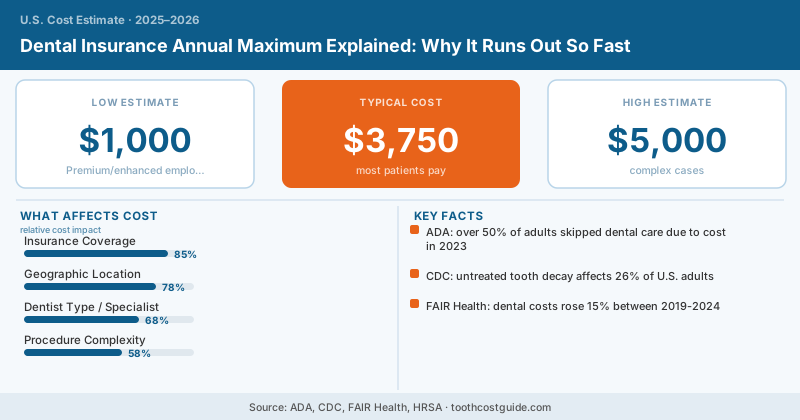
A $2,000 annual maximum sounds like real protection until you need a root canal and a crown in the same year. Do that math: $1,200 for the root canal, $1,000 for the crown, and you’ve blown through your entire year’s dental benefit on one tooth — with your deductible already stacked on top.
That’s not a fluke of your particular plan. It’s how dental insurance annual maximums are structured almost everywhere in the US, and understanding why reveals a lot about what dental coverage can and can’t do for you.
| Plan Type | Typical Annual Maximum |
|---|---|
| Basic individual dental plan | $1,000–$1,500 |
| Mid-tier employer plan | $1,500–$2,500 |
| Premium/enhanced employer plan | $2,500–$5,000 |
| High-end PPO plan | $3,000–$5,000+ |
| Medicare Advantage dental add-on | $1,000–$3,000 |
The Number Hasn’t Moved Since the 1970s
Here’s the uncomfortable data point: dental insurance annual maximums have barely budged since employer dental benefits became common decades ago. The National Association of Dental Plans has pointed out that if the typical $1,000–$1,500 maximum from that era had simply tracked inflation, it would be worth roughly $8,000–$10,000 in today’s dollars. Instead, the average maximum today sits at $1,000–$2,000 — meaning real purchasing power has fallen by more than half.
Meanwhile, dental procedure costs have risen steadily with general healthcare inflation. The gap between what a maximum covers and what a major procedure actually costs has widened every year, which is why so many people describe their dental insurance as “good for cleanings, useless for anything real.”
What Counts Against Your Maximum
Not everything applies. Preventive care — cleanings, exams, routine X-rays — is typically covered at 100% outside the annual maximum on most plans, or at least doesn’t eat into it much. It’s the basic and major categories that drain the number fast:
- Fillings and simple extractions (basic, usually 70–80% covered)
- Root canals, crowns, bridges (major, usually 50% covered)
- Periodontal treatment and oral surgery (varies by plan)
A single crown at $1,200, covered at 50%, uses $600 of your maximum even though your out-of-pocket share is also $600. The insurer’s payout — not your payment — is what counts against the cap.
If you know you need multiple procedures and your plan year is ending, ask your dentist whether splitting treatment across two calendar years is medically reasonable. Getting one crown in December and the next in January effectively doubles your usable annual maximum across the two years, rather than draining one year’s cap entirely.
Why Insurers Keep the Cap Low
From the insurer’s side, the annual maximum is the mechanism that keeps dental premiums affordable — often $20–$60/month for individual plans. Unlike medical insurance, dental plans are largely designed around routine, predictable care rather than catastrophic risk. The low maximum lets insurers price premiums low because their maximum exposure per member per year is capped and known in advance.
This is fundamentally different from medical insurance, which typically has no such hard dollar ceiling on covered care once you’re past your deductible and out-of-pocket maximum. Dental insurance was never built to function the same way — it behaves more like a discount and cost-sharing program than true risk insurance.
Working Around the Cap
Coordination of benefits: If you and a spouse both have dental coverage, the secondary plan often picks up costs after the primary maximum is exhausted, up to the total bill amount.
HSA/FSA funds: Use pre-tax dollars to cover whatever the insurance doesn’t, which effectively gives you a 20-37% discount depending on your tax bracket.
Dental discount plans: Some patients supplement traditional insurance with a discount plan (typically $100-200/year) that has no annual maximum, just negotiated fee reductions of 10-60% at participating dentists.
Don’t assume your dentist’s office is tracking your annual maximum for you in real time. Ask directly, before scheduling major work, how much of your maximum you’ve used this plan year — a five-minute phone call to your insurer can prevent an unpleasant surprise bill.
The Bottom Line
Dental insurance annual maximums are a structural limitation, not a flaw in your particular plan — most plans in the US cap out at $1,000-$2,500, a number that has lost most of its real value to inflation since it was set decades ago. Plan major treatment around your calendar year, ask about splitting procedures across two plan years, and use HSA/FSA funds to close the gap the insurance leaves behind.
Frequently Asked Questions
The annual maximum is the total dollar amount your dental insurance will pay toward your care in a plan year, typically $1,000–$2,000. Once you hit that cap, you're responsible for 100% of any further dental costs for the rest of the year, regardless of your monthly premium.
Dental annual maximums have remained largely unchanged since many plans were designed in the 1970s, when $1,000–$2,000 covered most routine and major care. According to the National Association of Dental Plans, if maximums had kept pace with inflation, they'd be closer to $8,000–$10,000 today.
Yes, this is called coordination of benefits. If you're covered under two plans — for example, your own employer plan and a spouse's plan — the secondary plan can often pick up costs after the primary plan's maximum is reached, though total payout usually can't exceed 100% of the actual bill.