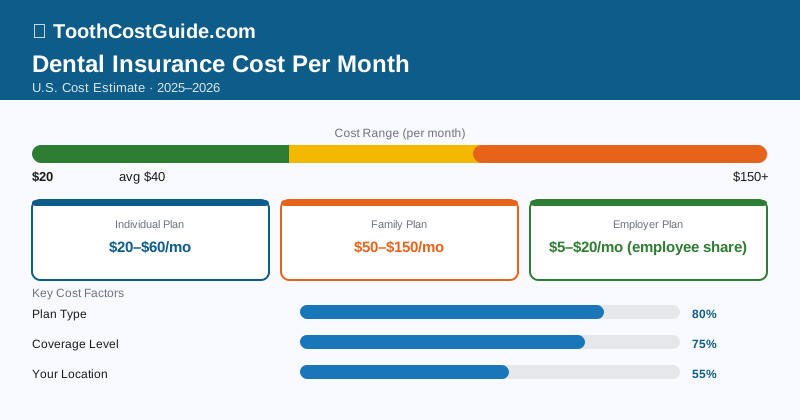
The $20/month dental plan and the $55/month dental plan are not the same thing with different prices. They cover fundamentally different situations, and choosing the wrong tier is how people end up paying $720/year in premiums for a plan that won’t cover the crown they actually need.
Here’s what you’re actually buying at each price point.
Premium Ranges by Plan Type
| Plan Type | Monthly Premium | Annual Max | What It Covers |
|---|---|---|---|
| Preventive-only HMO | $8–$20 | No cap (fixed copays) | Cleanings, X-rays, exams |
| Individual basic PPO | $25–$40 | $1,000–$1,500 | Preventive + fillings + some major |
| Individual comprehensive PPO | $40–$60 | $1,500–$2,000 | Full coverage including major |
| Family plan (2 adults, 2 kids) | $60–$150 | $2,000–$4,000 | All members, often includes ortho rider |
| Employer-sponsored individual | $5–$25 (employee share) | $1,500–$3,000 | Comparable to comprehensive, employer pays rest |
What You’re Actually Buying at Each Tier
$8–$20/month (HMO / preventive plans):
You’re essentially buying discounted cleanings. A dental HMO or low-tier plan at this price covers routine preventive care — two cleanings, exam, X-rays — with fixed copays that are often $0–$15. There’s no deductible, no annual maximum drama, no 50% major coverage that turns out to be less than you expected.
What you’re not getting: meaningful coverage on fillings, crowns, or root canals. If you need a crown, you pay the HMO’s copay fee schedule for that procedure (which might be $200–$400, still better than full cash price) or you’re largely on your own on a preventive-only plan.
These plans make sense if: you’ve had no cavities in 5+ years, your cleaning costs and discounts essentially break even with the premium, and your priority is preventive maintenance without higher premiums.
$25–$40/month (basic PPO):
The traditional 100-80-50 structure. Preventive at 100%, fillings at 80%, major (crowns, root canals) at 50%, with a $1,000–$1,500 annual maximum. At $300–$480/year in premiums, this plan pays off whenever you need even one filling on top of routine cleanings.
The limit to watch: $1,000–$1,500 annual max. A single molar crown at $1,200 from a dentist with $1,400 fees exceeds your whole year’s benefit. If the crown plus earlier cleanings have used the annual max, anything else that year is out of pocket.
$40–$60/month (comprehensive PPO):
Higher annual maximums ($1,500–$2,000), sometimes with orthodontic riders, and occasionally better major coverage. At $480–$720/year in premiums, this is worth it for families (children’s preventive care, approaching braces age) or adults who regularly need major dental work.
$60–$150/month (family plans):
The value case for family plans is preventive care × number of people. Two adults and two children getting two cleanings each per year = 8 cleanings + X-rays. At $150–$200 per cleaning/exam, that’s $1,200–$1,600 in annual preventive services, typically covered at 100% on a family plan. Many family plans pay for themselves on preventive care alone.
If your employer offers dental benefits, do the comparison before buying individual market insurance. An employer group plan at $15/month (your share after employer contribution) that provides $1,500–$3,000 annual coverage is dramatically better than the $40/month individual market equivalent. The employer subsidy — often $25–$50/month of the premium — is real compensation you should use.
What the Premium Doesn’t Include
Monthly premium is the floor, not the ceiling, of what you’ll pay.
Annual deductible ($50–$200 per person): Applied before basic and major coverage kicks in. A family of four each paying a $100 deductible adds $400 in year-one costs before insurance pays anything on fillings or crowns.
Your copay after insurance: 50% of a $1,400 crown = $700 you still owe, plus any unmet deductible. The premium didn’t account for that.
Annual maximum cliff: When your benefits are exhausted for the year, you pay 100% of remaining costs — regardless of the coverage percentage your plan advertises. A $1,000 annual max in an expensive dental year is a hard ceiling, not a percentage discount.
Out-of-network balance billing: PPO plans cover out-of-network dentists, but the plan pays based on its “allowed amount” — not the dentist’s actual fee. The gap between the dentist’s fee and the plan’s allowed amount is billed to you on top of your coinsurance.
How to Calculate Whether Your Plan Is Worth It
This takes 10 minutes and actually tells you what to expect:
List the dental services you’ll realistically use this year: 2 cleanings, possibly 1–2 fillings, possibly 1 major procedure.
Look up the out-of-pocket cost for each at the plan you’re considering (the Summary of Benefits or Evidence of Coverage document has this).
Add those copays to your annual premium total.
Compare that number to what you’d pay cash — with a dental discount plan at $80–$120/year providing 20–35% off.
| Scenario (basic user, 2 cleanings + 1 filling) | Cost |
|---|---|
| No insurance, no discount plan | $350–$600 |
| Dental discount plan at $99/year | $200–$400 total |
| Individual PPO at $35/month | $420 premiums + $30–$50 copay = $450–$470 |
| Employer plan at $15/month | $180 premiums + $30–$50 copay = $210–$230 |
For a light dental user: discount plans beat individual market insurance. Employer plans beat almost everything.
Why Waiting Periods Change Everything
The single most important thing to read in any individual market dental plan’s fine print:
Waiting periods on major services. Most individual market PPO plans require 6–12 months of enrollment before covering crowns, root canals, bridges, and dentures. If you’re buying insurance because you need a crown next month, your plan won’t cover it. You’ll pay $540+ in premiums and get zero coverage on the major procedure.
What to ask before buying: “What is the waiting period for major restorative services?” If the answer is 12 months and you have a near-term need, that plan is not useful for your current situation. A dental discount plan with no waiting period is better.
Bottom Line
Individual dental insurance costs $20–$60/month for plans that cover meaningfully different needs. The $25–$40/month basic PPO is the sweet spot for most adults who use preventive care and occasionally need fillings — it pays for itself most years. The $8–$20/month plan is adequate if you’re confident you won’t need anything beyond cleanings. At $40–$60/month, you’re paying for higher annual maximums that benefit families or patients with known dental needs.
If your employer offers dental benefits, that’s almost always the best-value option regardless of tier. On the individual market, run the actual numbers for your expected use before choosing a tier — the monthly premium is only part of the cost equation.
Before choosing any dental plan, find the Summary of Benefits and read these four numbers: the annual maximum, the deductible per person, the coverage percentage for major restorative services, and the waiting period for major services. These four numbers determine whether the plan actually helps you — more than the monthly premium headline.
Frequently Asked Questions
Individual dental insurance premiums range from $20–$60 per month, while family plans cost $50–$150 per month depending on the plan type and coverage level. The cheapest preventive-only plans offer basic coverage at the lower end of this range, while comprehensive plans with major restorative benefits cost significantly more.
Budget plans at $20–$30/month typically cover only preventive care like cleanings and X-rays, with little to no coverage for fillings, root canals, or crowns. A $55/month plan usually includes basic restorative work with 50–80% coverage, whereas major procedures like crowns may require you to pay $300–$1,200 out-of-pocket even with insurance.
No—most dental plans have waiting periods of 6–12 months before covering major restorative work like crowns, so enrolling now won't help you immediately. If you need a crown within the next year, paying cash or using a dental discount plan may be cheaper than paying premiums for coverage you can't use yet.