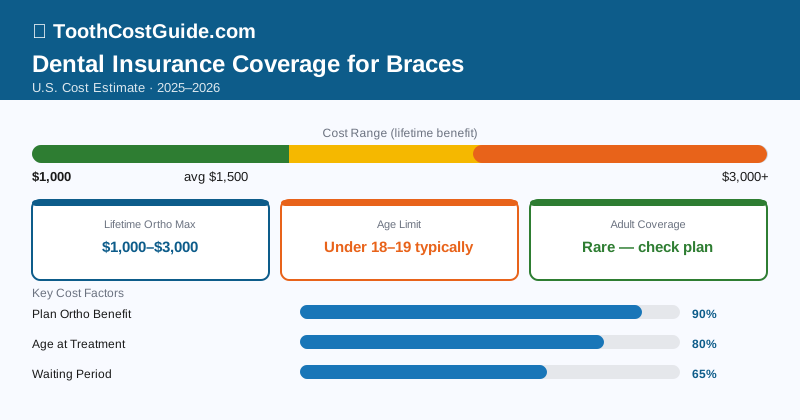
Braces and Invisalign run $3,000–$8,000. Dental insurance orthodontic benefits — when the plan includes them — typically cover $1,000–$2,000 lifetime. That’s not a misprint: lifetime, not per year. Use it for your 13-year-old’s braces and there’s nothing left if you decide to straighten your own teeth at 40.
That said, $1,000–$2,000 per person is still real money. On a $5,000 braces case, a $1,500 insurance benefit reduces your out-of-pocket by 30%. For a family with multiple kids, the per-person lifetime benefits stack: three kids, each with a $1,500 lifetime max, means up to $4,500 in total orthodontic insurance benefits across the family.
The catch is timing. Most plans require 12–24 months of continuous enrollment before orthodontic benefits activate. If you haven’t started that clock yet, you’re leaving money on the table.
| Orthodontic Treatment | Average Cost | Insurance Covers (typical) | Your Out-of-Pocket |
|---|---|---|---|
| Traditional metal braces | $3,000–$5,000 | $1,000–$2,000 lifetime | $1,000–$4,000 |
| Ceramic braces | $4,000–$6,000 | $1,000–$2,000 lifetime | $2,000–$5,000 |
| Invisalign (full) | $4,000–$8,000 | $1,000–$2,000 lifetime | $2,000–$7,000 |
| Lingual braces | $8,000–$12,000 | $1,000–$2,000 lifetime | $6,000–$11,000 |
| Minor/limited orthodontics | $1,500–$3,000 | $500–$1,000 | $500–$2,000 |
| Retainers (post-treatment) | $150–$600 | Sometimes included | Varies |
How Orthodontic Benefits Actually Work
Orthodontic coverage is structured completely differently from regular dental benefits. If you’re used to thinking in annual maximums and coinsurance percentages, here’s what you need to reset:
Lifetime maximum, not annual. Regular dental benefits reset each January. Orthodontic benefits don’t. The lifetime max is a one-time number per covered person — typically $1,000–$2,000. Once paid, it’s gone, regardless of how many plans you carry, how long you stay enrolled, or whether you switch insurance companies.
Benefits are disbursed over the treatment period, not upfront. Most plans don’t write a check for $1,500 when treatment starts. They pay installments over the course of treatment. A $1,500 lifetime max spread over 24 months works out to roughly $62.50/month from the insurance company — reducing your monthly payment to the orthodontist by that amount. Some plans pay a lump sum at treatment start and then monthly after; others pay entirely in installments. Know your plan’s specific payout structure before treatment begins.
Age restrictions are common. The majority of employer and individual dental plans restrict orthodontic benefits to dependent children under 19. Adult orthodontic coverage exists but isn’t the norm. If you’re an adult considering Invisalign and you want insurance to help, you need to specifically verify that adult orthodontics is covered before you rely on those benefits.
Waiting periods are the longest in dental insurance. Most plans with orthodontic coverage require 12–24 months of continuous enrollment before the benefit activates. For comparison, the waiting period for major restorative work (crowns, etc.) is usually 12 months. The ortho wait is sometimes longer.
Orthodontic benefits use lifetime maximums, not annual ones. Once used, they’re gone — even if you switch plans or your employer changes carriers. Enroll in a plan with orthodontic benefits well before treatment starts (12–24 months ahead), and confirm whether the benefit covers adults or only children.
Which Plans Include Orthodontic Coverage
Employer PPO plans with ortho benefits:
These are the best-value orthodontic coverage when you can get it. Employer-subsidized premiums combined with employer-negotiated coverage terms often include $1,000–$2,000 lifetime per dependent child. Waiting periods on employer plans are sometimes shorter — 12 months instead of 24 — because group enrollment is less subject to adverse selection.
Delta Dental PPO with orthodontic rider:
$1,500 lifetime max per child is common on individual plans; 24-month waiting period on most. On some employer plans, the wait is shorter. Uses the Delta Dental network — 155,000+ dentists — which means most orthodontists participate. Check whether your specific plan includes an ortho rider; some tiers don’t.
Cigna Total Dental Plan:
$1,000–$2,000 ortho lifetime max; 12-month wait; covers children and often adults (verify). Cigna’s network includes most orthodontists in major metros. This is one of the more accessible adult orthodontic options on the individual market.
Humana DentalCopay Plans:
Some Humana plans structure orthodontic coverage as a copay schedule rather than a percentage benefit — specific dollar amounts per appointment or phase of treatment. Worth comparing against standard percentage plans depending on your treatment timeline.
Spirit Dental:
Some Spirit plans include orthodontic coverage with no waiting period — consistent with their broader no-wait philosophy. Worth confirming on the specific plan you’re considering. If you need orthodontic coverage to start soon, Spirit is worth a direct check.
United Concordia:
Certain group plans include no ortho wait for new employees — this is unusual and valuable. If your employer offers United Concordia, check the Summary of Benefits specifically for orthodontic waiting period language.
Invisalign specifically: Most plans treat Invisalign identically to traditional braces. The ortho benefit applies regardless of whether the appliance is metal brackets or clear aligners. The exception: plans with benefit language specifying “fixed orthodontic appliances” may technically exclude Invisalign. Confirm before starting treatment. This is worth a direct call to your insurer, not just reading the brochure.
How to Actually Maximize What You Get
Start the waiting period immediately — today if you haven’t already.
If you have children who are even remotely approaching orthodontic age (10–12+), enroll in a plan with orthodontic benefits now. The 24-month waiting period is the biggest variable in your control. Every month you wait to enroll is a month the waiting period isn’t running. A family that enrolls when their child is 10 has their ortho benefits fully active by 12 — right when most orthodontists start treatment.
Negotiate the treatment start date.
Orthodontists formally date the beginning of treatment to when the first appliance is placed or the first aligner set is delivered. If your waiting period ends February 15 but the orthodontist’s schedule says you could start in January, ask to delay the formal treatment start until after February 15. This ensures your lifetime benefit applies to the entire treatment rather than being partially excluded.
After insurance pays its $1,500 lifetime maximum, you’re paying the rest out of pocket. That remaining balance — potentially $2,000–$6,500 — is fully eligible for FSA and HSA payment. Pre-tax dollars reduce the effective cost by 20–37% depending on your tax bracket.
Compare orthodontist fees before committing.
Even within the same city, orthodontic fees vary by $1,000–$2,500 for the same treatment. Most consultations are free. Call four or five practices, get the fee for your child’s specific treatment plan, and compare. A $1,000 difference in the orthodontist’s base fee has a bigger impact on your total cost than most plan benefit differences.
Avoid lingual braces unless you have a compelling reason.
Lingual braces (placed on the tongue side) cost $8,000–$12,000 — double or more the cost of Invisalign or metal braces — while your insurance benefit is the same $1,000–$2,000. The extra cost comes entirely out of your pocket. Invisalign and traditional braces produce comparable results for most cases at significantly lower cost.
Use both insurance and the orthodontist’s payment plan.
Most orthodontic practices offer in-house installment plans at 0% interest — a payment spread over the treatment period. This is separate from insurance. You can use both simultaneously: insurance pays its $1,500 lifetime benefit (disbursed monthly or as a lump sum), while you pay the remaining balance in monthly installments to the practice. There’s no conflict between the two.
Using your lifetime orthodontic benefit means it’s gone forever. If your child wears retainers and later needs a touch-up treatment as an adult, there will be no insurance benefit left. Consider this when deciding whether to use the full benefit or preserve some for future adult treatment — though most plans pay the full lifetime max during the treatment period automatically.
For Adults Wanting Orthodontic Coverage
Adult orthodontic coverage is the minority case. Most individual market plans and many employer plans limit ortho benefits to children under 19. But a minority of plans do cover adults, and for an Invisalign case costing $5,000–$8,000, a $1,500–$2,000 benefit is worth seeking.
Plans more likely to cover adult orthodontics: Cigna, some Aetna plans, and certain employer-sponsored group plans. When comparing plans as an adult with orthodontic intent, specifically ask: “Does the orthodontic benefit apply to adult members, or only to dependent children?” Don’t assume the answer from the brochure.
If adult coverage isn’t available through your current plan, weigh the cost of switching plans and satisfying a new waiting period against the benefit you’d receive. For Invisalign at $6,000 with a $1,500 benefit after a 12-month wait, you’d pay ~$480 in added premiums (if the ortho-covering plan costs $40 more per month) and receive $1,500 back — net gain of $1,020. The math usually works.
Dental insurance orthodontic benefits provide $1,000–$2,000 in lifetime coverage per person — a meaningful but partial offset to the $3,000–$8,000 cost of braces or Invisalign. The most important action is to start the waiting period clock well before treatment begins. Combine insurance benefits with FSA/HSA payments and orthodontist payment plans to minimize out-of-pocket costs.
The Essential Summary
Orthodontic insurance benefits are structured unlike any other dental coverage: lifetime limits, multi-year waiting periods, and monthly disbursements that track treatment timelines. The benefit itself — $1,000–$2,000 per covered person — won’t eliminate your cost, but it meaningfully reduces it, especially on a treatment that runs $5,000 or more.
The single most important variable in your control: when you start the waiting period clock. Enroll in a plan with orthodontic benefits well before your child (or you) needs treatment. Combine that insurance benefit with FSA funds for the remaining balance and an in-office payment plan for cash flow. And compare orthodontist fees — on a $5,000 case, the difference between practices often dwarfs the difference between plan options.
Frequently Asked Questions
Braces typically cost $3,000–$8,000 depending on the type, complexity, and treatment duration. Metal braces are usually the most affordable option within this range, while ceramic or lingual braces cost toward the higher end. Most treatment lasts 18–36 months.
Dental insurance orthodontic benefits typically cover $1,000–$2,000 as a lifetime maximum per person, not per year. This means once you use your lifetime benefit, you have no additional coverage for orthodontic treatment, even if you switch plans later. Many plans also require a waiting period of 6–12 months before orthodontic coverage begins.
Invisalign costs $3,000–$8,000, similar to traditional braces, though some plans cover it less generously. Invisalign may be faster (12–18 months) for mild-to-moderate cases but works only if you commit to wearing aligners 20+ hours daily. If your insurance covers orthodontics, check whether it includes clear aligners, as some plans exclude them or offer lower benefits.