Quick question: can a college student stay on a parent’s dental insurance? Yes — and that’s almost always the best move. But there are real gotchas with out-of-state schools, dependent age limits, and finding an in-network dentist 800 miles from home. Let’s sort out exactly what works for students on a budget.
First, the age rule. Unlike medical insurance, which guarantees dependent coverage to age 26 under the ACA, dental insurance is not required to follow that rule. Many dental plans do extend dependent coverage to 26 anyway, but some cut it off at 19 — or 23 if you’re a full-time student. So step one is checking your parent’s specific plan for the dependent age limit and any student status requirement.
Option 1: Stay on a parent’s plan (usually the winner)
If a parent’s plan covers you to 26 (or while enrolled full-time), staying put is typically the cheapest and simplest option. The premium’s already being paid, preventive care is covered, and you don’t deal with a new deductible.
The one real problem: networks. If you’re at school in another state, your parent’s plan may have few in-network dentists nearby.
Before classes start, check two things on your parent’s dental plan: the dependent age limit (it may be lower than the medical plan’s age 26) and whether there are in-network dentists near campus. If the network’s thin, ask whether the plan pays out-of-network at a reduced rate — many do, so you’re not stranded for a filling or cleaning while you’re away.
Option 2: Student health plan dental add-on
Many universities offer a student health insurance plan, and some bundle or sell dental as an add-on. These are designed for the campus area, so the network is convenient by definition. Costs vary, but dental add-ons often run $15–$40 a month. Worth comparing if the parent’s network doesn’t reach campus.
Option 3: Individual or discount plan
If you’ve aged off a parent’s plan or it doesn’t cover you as a student, an individual plan or a dental discount plan fills the gap.
| Option | Typical monthly cost | Best for |
|---|---|---|
| Stay on parent’s plan | $0 extra (already paid) | Most students under 26 |
| Student health dental add-on | $15–$40 | Out-of-state, thin parent network |
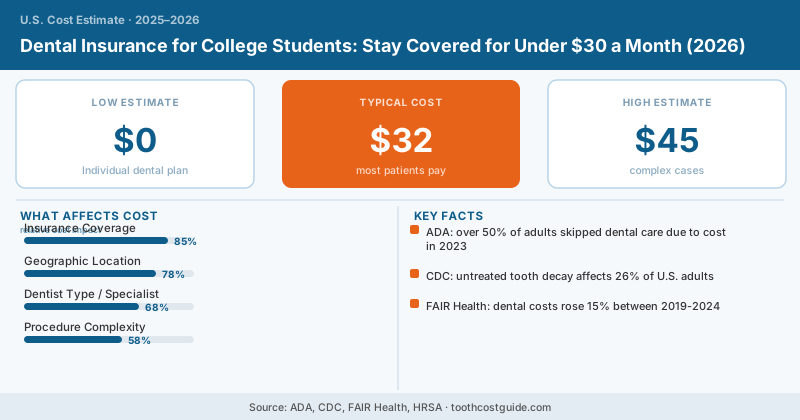
| Individual dental plan | $20–$45 | Aged off parent’s plan |
| Dental discount plan | $8–$20 | Tight budget, mostly cleanings |
What students actually need covered
Most college-age dental needs are routine: two cleanings a year, the occasional filling, maybe getting wisdom teeth removed. That last one is the big-ticket item — the ADA notes wisdom tooth extraction is one of the most common procedures for people in their late teens and early twenties, and impacted cases can run well over $1,000 without coverage.
If wisdom teeth are looming, this changes your math. A plan that covers oral surgery — even after a waiting period — can save a lot. Check whether insurance covers wisdom teeth removal on whatever plan you land on.
Don’t wait until a toothache hits to figure out coverage. If you skip dental insurance entirely and need an emergency root canal during finals week, you’re paying full cash price at an unfamiliar dentist. Even a cheap discount plan gives you something. The CDC has reported that young adults have some of the highest rates of untreated cavities of any age group — partly because this is exactly when coverage lapses.
Money-saving tactics for students
- Use the campus dental school if there’s one nearby. Supervised student clinics offer deep discounts on cleanings, fillings, even more complex work.
- Time wisdom teeth around breaks. Schedule the surgery over summer or winter break while you’re back on solid network footing at home.
- Pay with an HSA if you have one. A working student with an HSA can use those pre-tax dollars on dental — see how HSAs cover dental.
- Don’t double-pay. If you’re already covered on a parent’s plan, skip the redundant school dental add-on unless the network gap is real.
The bottom line for students: staying on a parent’s plan usually wins on cost, as long as the age limit allows it and there’s a dentist near campus. If not, a student add-on or discount plan keeps you covered for under $30 a month — cheap insurance against a toothache that always seems to strike during exam week.
Frequently Asked Questions
Most college dental plans cost between $15 and $30 per month, though some student discount plans run as low as $10 monthly. Staying on a parent's plan is often free if the parent's employer covers dependents, but you may pay a monthly premium if added as a dependent on an individual parent plan, typically $20–$50.
Yes, you can stay on your parent's dental plan, but dental insurance age limits vary by plan — unlike medical insurance which covers dependents to age 26, dental plans may cut off at 19, 23, or 26 depending on the policy. Check your parent's plan documents or call their dental carrier to confirm the dependent age limit before assuming coverage continues.
Out-of-network dental care typically costs 30–50% more in out-of-pocket expenses than in-network visits. Before enrolling in your parent's plan or choosing a school plan, search the carrier's network in your college town to confirm dentists are available, or consider a discount plan (like dental schools offering services at 40–60% below market rates) as a backup option.