People with diabetes are about twice as likely to develop gum disease. The CDC has flagged that link for years, and the math is brutal: high blood sugar feeds the bacteria that inflame your gums, and inflamed gums make blood sugar harder to control. It’s a loop. So if you’ve got Type 1 or Type 2, your mouth isn’t an afterthought. It’s part of the disease.
That changes how you should shop for a dental plan.
Why standard coverage falls short for diabetics
Most plans cover two cleanings a year. Fine for someone with a healthy mouth. But your dentist may want to see you three or four times a year for “periodontal maintenance” once gum disease shows up — and the ADA notes that more than 47% of adults over 30 already have some form of periodontitis. Diabetics sit at the high end of that range.
Here’s where a basic plan bites you: the third and fourth cleaning often aren’t covered. You pay out of pocket.
| Service | Typical cost | What good coverage pays |
|---|---|---|
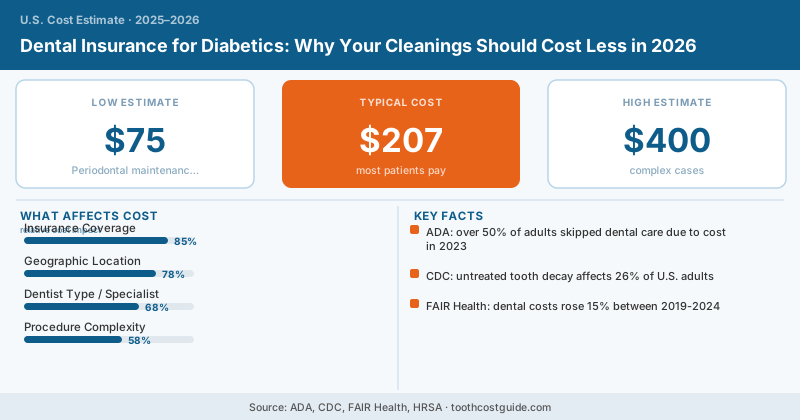
| Routine cleaning (prophylaxis) | $75–$200 | 100% (2/year) |
| Periodontal maintenance | $115–$300 | 80% (often capped at 2–4/year) |
| Scaling & root planing (per quadrant) | $200–$400 | 50–80% after deductible |
| Extra cleanings beyond plan limit | full price | $0 |
If you need four periodontal maintenance visits and your plan only covers two, that’s an extra $230–$600 a year straight from your wallet.
Don’t just compare premiums. Read the frequency limits on cleanings and periodontal maintenance. A plan that covers 3–4 cleanings a year is worth more to a diabetic than one with a slightly lower monthly cost. Also check whether gum disease treatment like scaling and root planing counts as “basic” or “major” — that swings your coverage from 80% down to 50%.
The enhanced-benefit plans worth knowing about
Some insurers now offer “wellness” or “enhanced” plans that add extra cleanings specifically for people with diabetes, heart disease, or during pregnancy. Cigna, Delta Dental, and a handful of others have versions of this. The medical logic is solid — keeping your gums healthy genuinely lowers medical costs — so insurers started paying for it.
If your employer offers one of these, take it. The extra premium is usually a few dollars a month and it pays for itself the first time you use that third cleaning.
Don’t skip the deep cleaning
Scaling and root planing — the “deep cleaning” below the gumline — is the front line against periodontitis. It runs $200 to $400 per quadrant, and your mouth has four quadrants. So a full-mouth deep cleaning can hit $800 to $1,600 before insurance.
With coverage, you’re typically looking at 50% to 80% after your deductible. That’s the difference between a $400 bill and a $1,200 one. For a diabetic, skipping this isn’t a money-saver — uncontrolled gum infection can spike your A1C.
Watch your annual maximum. Most plans cap total payouts around $1,000–$2,000 a year. A round of deep cleaning plus extra maintenance visits can eat that cap fast, leaving nothing for a crown or filling later in the year. Time bigger procedures across two plan years when you can.
Tell your dentist you’re diabetic — and tell your insurer
Sounds obvious, but plenty of people don’t mention it. Your dentist needs to know to schedule the right number of visits and bill them correctly. And when periodontal maintenance is medically justified, that documentation helps if a claim gets questioned. If a claim ever gets denied, a note in your chart about your diabetes diagnosis is your best appeal evidence.
If you don’t have insurance yet
A standalone plan still beats paying cash for the care you’ll actually use. Compare what you’d spend in a year — four cleanings, possible deep cleaning, X-rays — against the monthly premium. For most diabetics, the plan wins. If a plan’s frequency limits are too tight, a dental discount plan can stack on top to knock down the cash price of those extra visits.
The takeaway: shop on coverage depth, not just price. Your gums are doing double duty.
Frequently Asked Questions
Most diabetics need 3–4 cleanings per year instead of the standard 2, which adds $300–$1,000 annually to dental costs. A single professional cleaning typically runs $75–$200, so the extra 1–2 visits per year can quickly add up without proper insurance coverage.
Many plans still limit coverage to 2 cleanings per year regardless of diabetes diagnosis, leaving you to pay out-of-pocket for medically necessary additional cleanings. Some employers and insurers now offer diabetic-specific dental plans that cover 3–4 cleanings annually at in-network rates, typically with 80–100% coverage after your deductible.
The American Diabetes Association recommends 3–4 professional cleanings per year for people with diabetes, compared to 2 for the general population, because high blood sugar accelerates gum disease. Your dentist may recommend even more frequent cleanings (every 3 months) if you already have signs of periodontitis or poor blood sugar control.