Q: Is family dental insurance actually worth it, or should we just pay out of pocket?
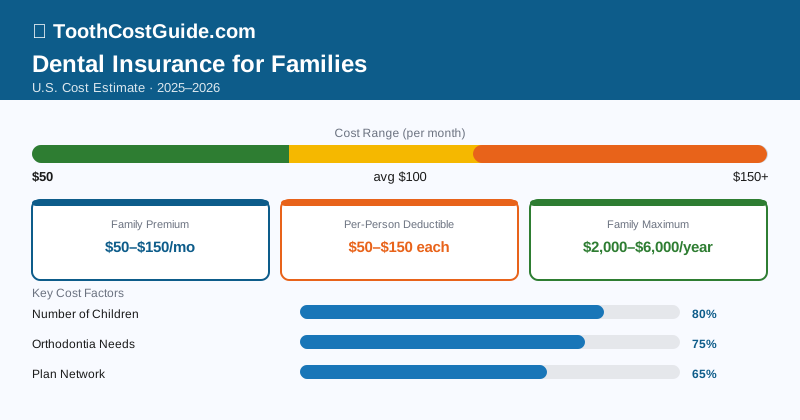
A: Run the numbers. Two kids need cleanings and exams twice a year — that’s $400–$600 in preventive care alone. Add one filling, one set of sealants, and an X-ray series, and you’re looking at $800–$1,200 in a typical year. Family dental insurance costs $50–$150/month, which is $600–$1,800 annually. For most families with children, the math tilts toward insurance — especially because each family member gets their own annual maximum, meaning a family of four can access $4,000–$8,000 in total benefits.
The key is finding the right plan and understanding how the family structure actually works.
| Plan Type | Monthly Cost (Family of 4) | Annual Max Per Person | Ortho Included? |
|---|---|---|---|
| Employer PPO (typical) | $30–$70 (employee share) | $1,000–$2,000 | Sometimes ($1,000–$2,000 lifetime) |
| Individual market PPO | $80–$150 | $1,000–$2,000 | Sometimes |
| Individual market HMO | $40–$90 | None (copays) | Some plans |
| ACA marketplace family dental | $60–$120 | $1,000–$2,000 | Rarely |
| CHIP/Medicaid (children) | $0–$10/month | Unlimited (EPSDT) | Yes (if medically necessary) |
| Delta Dental Family PPO | $90–$140 | $1,500–$2,500 | $1,000–$2,000 lifetime |
How Family Dental Plans Are Structured
Family dental insurance covers all enrolled members under a single plan, but the deductible and maximum structure is more complex than most people realize.
Family deductible cap: Most plans have both a per-person deductible ($50 per person is common) and a family cap ($150 for the whole family). Once any combination of family members hits the cap, no one else pays a deductible for the rest of the year. If three kids each trigger a $50 deductible in the same year, the fourth family member’s procedures run deductible-free.
Per-person annual maximums: Each enrolled family member has their own annual maximum — typically $1,000–$2,000. A family of four with $1,500 individual maximums has up to $6,000 in total available coverage. That’s a significant advantage when multiple family members need work done simultaneously.
Children’s coverage perks: Kids often get enhanced benefits not available to adults. Sealants, fluoride treatments, and space maintainers are routinely covered for children on family plans. Preventive care for kids comes in at 100% from day one on almost every plan.
Orthodontic benefits: Many family plans include ortho coverage with a lifetime maximum per covered person ($1,000–$2,000) and a waiting period of 12–24 months. Coverage typically applies to children under 19, though some plans extend it to adults.
With a family plan, each family member gets their own annual maximum — meaning a family of four with $1,500 individual maximums has up to $6,000 in total annual dental coverage available. This per-person structure makes family plans particularly valuable when multiple children need orthodontic work or restorative care.
Plan Options and What They Cost
Employer-sponsored family dental: The best deal for most families, full stop. Employers typically cover 50–100% of the employee’s premium and 25–75% of dependent premiums. The employee’s share for family coverage averages $30–$70/month. Benefits mirror the employer’s group plan: 100% preventive, 80% basic, 50% major, with $1,000–$2,000 per-person annual maximums.
Individual market PPO plans:
- Delta Dental Family PPO: $90–$140/month depending on state; $1,500–$2,500 annual max per person; 155,000+ dentist network; 6-month basic wait, 12-month major wait
- Cigna Dental Family: $80–$130/month; $1,500 max; broad network
- Ameritas Family: $70–$120/month; no-waiting-period options available on premium plans
- MetLife Dental: $85–$130/month; strong group and family options
ACA marketplace family dental:
- Low tier: $60–$90/month; preventive 100%, basic 50%, major 50% after deductible
- High tier: $90–$120/month; preventive 100%, basic 80%, major 50%
- Note: Pediatric dental is an essential health benefit under the ACA — your health plan may already include it for children under 19
HMO family plans: $40–$90/month depending on location. No deductibles, no annual maximums, fixed copays. Children’s preventive care often at $0 copay. Works best in major metro areas where HMO networks are robust.
CHIP for qualifying children: If your children qualify for CHIP (income limits generally up to 200–300% of the federal poverty level), they get comprehensive dental for $0–$10/month. Even families with private insurance can have children enrolled in CHIP. This can cut your total dental premium substantially.
The Best Strategy by Family Situation
Families with young children benefit most from family dental plans because children have high preventive care needs that come in at 100%. Starting preventive care early prevents costly adult dental problems down the road.
Families with orthodontic-age kids should prioritize plans with ortho benefits and manageable waiting periods. If braces are needed in 1–2 years, enroll now so the waiting period clock is already running.
Two-income families should compare both employers’ dental offerings side by side. One employer might cover dependents at 75% while the other covers only the employee — that difference alone can save $400+ per year.
Single-parent families on tight budgets should check CHIP eligibility for children first (potentially free coverage), then buy an affordable adult plan separately.
Practical Ways to Spend Less
Enroll children in CHIP if eligible. If your children qualify — and you’d be surprised how many families at $70,000–$80,000 income do — enrolling them in CHIP and keeping only an adult plan for yourself can cut family dental costs by 40–60%.
Maximize the family deductible cap. Schedule multiple family members’ work in the same policy year once the family deductible cap is met. The third and fourth family member’s procedures carry no deductible once the cap is hit.
Start orthodontic coverage waiting periods early. If you anticipate braces in 3–5 years, enroll in a plan with orthodontic benefits now. By the time treatment starts, the 12–24 month wait will be in the past.
Use coordination of benefits if both spouses have employer dental. When both spouses have coverage, use one plan as primary and the other as secondary. The secondary plan can cover copays and amounts the primary plan didn’t pay — potentially covering most out-of-pocket costs.
Don’t confuse “pediatric dental” under ACA health plans with comprehensive family dental coverage. The pediatric dental essential health benefit covers children under 19 but often has limited benefits for major work and does not cover adult family members. You likely still need a separate family dental plan.
Family dental plans are generally worth the premium, especially with children who benefit from 100% preventive coverage and orthodontic benefits. Employer-sponsored family dental is typically the best deal — check whether your or your spouse’s employer plan offers better family coverage. If you’re on the individual market, compare Delta Dental, Cigna, and Ameritas family PPO plans, and check CHIP eligibility for the children in your household.
Bottom Line
Family dental insurance costs $50–$150/month on the individual market, often much less through an employer. Per-person annual maximums, shared family deductibles, and children’s preventive and orthodontic benefits make family plans a strong value for most households with kids. The smartest moves: check CHIP eligibility for children, start orthodontic waiting periods well before treatment is scheduled, and coordinate benefits if both spouses have employer dental. Done right, a family of four can save $500–$2,000 per year compared to paying every bill out of pocket.
Frequently Asked Questions
Family dental insurance typically costs $50–$150 per month for a family of four, depending on the plan type and coverage level. This works out to $600–$1,800 per year, which can offset significant dental costs when you factor in routine cleanings, exams, and unexpected treatment.
Most family dental plans cover 100% of preventive care for children, including cleanings, exams, and fluoride treatments. Many plans also cover a portion of basic restorative work like fillings (typically 70–80%) and orthodontics through separate add-on coverage, though orthodontics often has a $1,200–$2,000 annual limit.
The best time to enroll is during your employer's open enrollment period or within 60 days of a qualifying life event like birth, marriage, or job change. If you miss these windows, you may have to wait until the next annual enrollment period, though some individual plans accept applications year-round with waiting periods of 6–12 months for major treatment.