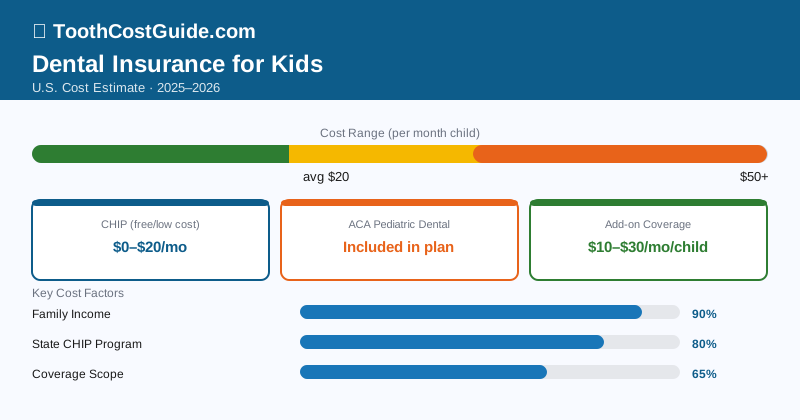
Most parents who buy dental insurance for their kids could be getting the same coverage — or better — for free. CHIP (the Children’s Health Insurance Program) covers comprehensive dental care for eligible children at $0–$10 per month, and more families qualify than you’d expect. A family of four earning up to about $63,500 in most states qualifies for CHIP dental coverage for their children. That’s not a poverty-level income.
Before you add your kids to a private dental plan or buy a standalone policy, check CHIP eligibility. It takes ten minutes at insurekidsnow.gov.
| Coverage Option | Monthly Cost | What’s Covered | Age Limit |
|---|---|---|---|
| Medicaid dental | $0 | Full preventive + restorative | Under 21 (EPSDT) |
| CHIP dental | $0–$10 | Full preventive + restorative + ortho | Under 19 (varies by state) |
| ACA health plan (embedded pediatric dental) | Part of health plan premium | Varies; often preventive + basic | Under 10 (varies by plan) |
| ACA standalone pediatric dental | $20–$40/month | Preventive 100%, basic 80%, major 50% | Under 19 |
| Family PPO plan (per child share) | $15–$30/child added to family plan | Full plan benefits | Varies (26 in many plans) |
| Family HMO plan (per child share) | $8–$15/child | Copay model | Varies |
The Coverage Landscape for Children
Kids have more dental coverage options than adults, and federal law sets stronger minimum requirements for children’s benefits than for adult coverage. Here’s how each program actually works:
Medicaid: For the lowest-income families
Medicaid covers children in families below approximately 138% of the federal poverty level — about $32,150 for a family of four in 2025. Zero premiums. Zero copays for dental in most states.
The federal EPSDT requirement (Early and Periodic Screening, Diagnostic, and Treatment) mandates that Medicaid cover any medically necessary dental service for enrolled children under 21. That’s a broader coverage mandate than adult Medicaid dental — and it’s federal law, not state discretion.
CHIP: The program most families overlook
CHIP covers children in families earning roughly 138–400% of the federal poverty level, with exact thresholds varying by state. That upper limit works out to around $100,000+ for a family of four in states with more generous CHIP programs. Many families who don’t think of themselves as CHIP-eligible actually qualify.
Premiums are $0–$50/month depending on income and state. In many states, families earning below 200% FPL pay nothing. Copays are typically $0–$5 per visit.
What CHIP dental typically includes:
- 2 preventive cleanings per year: $0
- Dental X-rays: $0
- Fluoride varnish (under 6): $0
- Sealants on back teeth: $0
- Fillings: $0–$5 copay
- Extractions: $0–$5 copay
- Root canals (when medically necessary): $0–$10 copay
- Orthodontics when medically necessary: $0 with documented malocclusion
That last one is significant. Families whose children qualify for CHIP and have orthodontic needs may be able to get braces or other orthodontic treatment covered at zero cost through CHIP — compared to $3,000–$5,000 out of pocket with private insurance. The documentation requirement for “medical necessity” is real, but for cases with genuine functional malocclusion, it’s achievable.
ACA pediatric dental — required but variable
The Affordable Care Act requires all non-grandfathered individual and small-group health insurance plans to include pediatric dental as one of ten essential health benefits. In practice, this means your health plan should cover your kids’ dental — but “should” carries important caveats.
The minimum standard varies by state based on the state’s benchmark plan. Some states have comprehensive pediatric dental EHB requirements. Others have thin coverage that may not include major restorative work or may have very limited networks. Additionally, “embedded” pediatric dental coverage in your health plan doesn’t require a separate premium — but the coverage level may be basic, not comprehensive.
ACA standalone pediatric dental plans
These are purchased separately on the healthcare.gov marketplace and cost $20–$40/month for one child. They typically cover preventive at 100%, basic at 70–80%, and major at 50% with a deductible of $50–$100. Some include orthodontic coverage with a $1,000 lifetime maximum.
If you’re above CHIP income limits and buying ACA marketplace coverage, comparing standalone pediatric dental plans against adding children to your family plan is worth doing — the premium and coverage structures differ enough that one option often beats the other depending on your state.
Before purchasing any dental plan for your children, check CHIP eligibility first. A family of four earning up to approximately $63,500 in 2025 may qualify for free or very low-cost comprehensive CHIP dental coverage for the children, even if the parents don’t qualify for Medicaid. Use insurekidsnow.gov to check eligibility.
Income Thresholds and What They Mean
Here’s an approximate guide to which program covers your children based on household income (family of four, 2025 estimates):
- Under ~$32,150 (138% FPL): Medicaid — $0 premium, $0 copays, comprehensive dental through age 21
- $32,150–$48,000 (200% FPL): CHIP — typically $0 premium in most states, minimal copays
- $48,000–$63,500 (300% FPL): CHIP — $0–$15/month premium depending on state, low copays
- $63,500–$80,000 (350% FPL): CHIP in some states; ACA marketplace in others — check your state
- Above these thresholds: ACA marketplace standalone pediatric dental or private family plan
State variation is real and significant. California, New York, and Illinois have particularly generous CHIP thresholds and benefits. Always verify your state’s specific program at insurekidsnow.gov rather than relying on national averages.
The Importance of Starting Early
The American Academy of Pediatric Dentistry recommends a child’s first dental visit by age 1 — or within 6 months of the first tooth appearing. This seems aggressive, but it serves real purposes: it establishes baseline records, gives dentists the chance to monitor development, and introduces children to dental care before there’s any anxiety around it.
Preventive care at this stage is inexpensive and covered free by CHIP and most private plans. The payoff is significant: dental sealants applied to first permanent molars (typically around age 6–7) reduce cavity risk on those teeth by up to 80% according to CDC data. At $30–$60 per tooth without insurance — and $0 with CHIP — sealants are one of the highest-value preventive interventions in dentistry.
Private Plans: When They’re the Right Answer
CHIP has provider network limitations — fewer dentists accept Medicaid and CHIP than accept private insurance, and wait times for new patients can be longer. For families who value access to a specific pediatric dentist or specialist, or who live in areas with thin CHIP networks, private insurance may provide better practical access even at higher cost.
Adding children to an employer family plan: The cost depends on your employer’s contribution structure. Employer-subsidized family dental often costs $15–$40/month more for each child added, with benefits that match the adult plan. If your employer’s family plan is good, adding children is usually straightforward.
Individual market family plan: Purchasing directly from a carrier adds $15–$30/child to the family premium. Benefits match the adult plan. Generally works well for families above CHIP income limits who want broad network access.
What Not to Do
Don’t buy duplicate coverage. If your health plan already includes embedded pediatric dental coverage and you also purchase a standalone pediatric dental plan, you’re usually paying for duplicated benefits. Confirm what your health plan’s pediatric dental actually covers before adding a separate plan. Duplicate coverage rarely provides double benefits — most plans coordinate to avoid paying more than 100% of a claim.
Don’t forget to re-enroll in CHIP annually. CHIP requires annual renewal, and it’s easy to miss the renewal window amid other life logistics. When families miss renewal, children fall off coverage. Set a calendar reminder for your state’s CHIP renewal period. If income changes qualify you for CHIP mid-year, you can enroll at any time — CHIP has no open enrollment restriction.
Don’t skip preventive appointments because “nothing’s wrong.” Children’s dental health deteriorates faster than adult dental health when preventive care lapses. Cavities in baby teeth matter — they affect development and can cause pain that interferes with eating and learning. Regular cleanings catch problems when they’re small and cheap to fix.
If your child has an ACA health plan with embedded pediatric dental but you also purchase a standalone pediatric dental plan, you may be paying for duplicate coverage. Check what your health plan’s pediatric dental benefit actually covers before adding a standalone plan. Duplicate coverage rarely provides double benefits.
Additional Resources for Uninsured Children
Federally Qualified Health Centers (FQHCs): These community health centers provide dental services to patients regardless of ability to pay, with fees on a sliding scale based on income. Many have pediatric dental services. Find one at findahealthcenter.hrsa.gov.
Dental school pediatric clinics: Dental schools with pediatric dentistry residency programs provide children’s dental care at 40–60% below market rates. Faculty supervise all treatment. Wait times can be longer, but the cost savings are significant for families without coverage or above CHIP limits.
State-specific programs: Many states have supplemental children’s dental programs beyond Medicaid and CHIP. Check with your state’s department of health for local options.
Children’s dental coverage is more accessible and affordable than most parents realize. CHIP and Medicaid provide near-comprehensive dental coverage for free or near-free to most American children. Check CHIP eligibility before spending money on private pediatric dental plans — in most cases, CHIP is the better deal by a wide margin.
What to Do Next
- Check CHIP eligibility at insurekidsnow.gov — even if you think you earn too much
- If your children qualify for CHIP, enroll. It’s year-round, no open enrollment window
- If you’re above CHIP limits, compare ACA standalone pediatric dental plans against adding children to your family plan — cost and coverage differ by state
- Schedule that first dental appointment if your child hasn’t been seen recently
- Ask about sealants at the first appointment — they’re one of the highest-ROI preventive treatments in pediatric dentistry and covered free by most plans
Children’s dental coverage in the US is genuinely good — better than most people realize. The biggest obstacle is usually awareness: knowing CHIP exists, knowing your income threshold, and actually checking eligibility. That 10-minute check at insurekidsnow.gov is worth doing before you spend another month on private premiums for coverage your children might already qualify to get for free.
Frequently Asked Questions
CHIP dental coverage costs $0–$10 per month in most states, making it one of the most affordable options for children's dental care. Some states offer CHIP dental at no cost, while others charge a small monthly premium depending on family income and state program structure.
CHIP covers comprehensive dental care including routine exams, cleanings, X-rays, fillings, and extractions with minimal to no out-of-pocket costs. Families earning up to approximately $63,500 annually (for a family of four) typically qualify, and coverage includes preventive and basic restorative services.
Visit your state's CHIP program website or use the Healthcare.gov tool to check eligibility based on your family income and household size. Most applications can be completed online within 15 minutes, and you'll receive notification of approval or denial within 30 days.