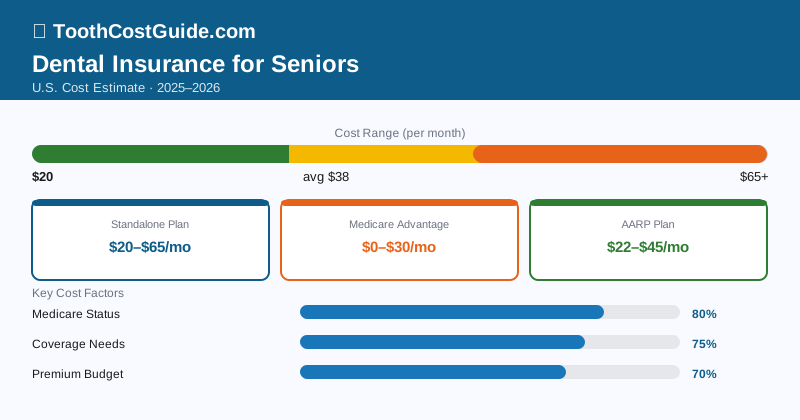
Retire at 65. Lose your employer dental plan. Then discover that Original Medicare covers almost nothing in your mouth. That’s the situation facing millions of Americans every year — and it’s expensive. Seniors average $685 out of pocket annually on dental care. Those facing dentures, crowns, or implants can easily hit $3,000–$8,000 in a single year.
The right plan changes that math dramatically. Options range from $20/month preventive-only coverage to $80/month comprehensive plans that include dentures and implants. Here’s what actually matters when you’re shopping at 65+.
| Plan Type | Monthly Premium | Annual Max | Major Work Covered? | Best For |
|---|---|---|---|---|
| Medicare Advantage (dental included) | $0–$80 above Part B | $1,000–$3,000 | Sometimes | Seniors wanting one plan |
| AARP/Delta Dental (via UnitedHealthcare) | $26–$52 | $1,000–$2,500 | Yes (after wait) | AARP members |
| Humana Dental Premier | $30–$58 | $1,000–$2,000 | Yes | Broad network users |
| Cigna Dental 1500 | $35–$50 | $1,500 | Yes | Those needing high max |
| Spirit Dental & Vision | $33–$57 | $3,000–$5,000 | Yes, no wait | People needing immediate major care |
| Dental discount plan (Careington, etc.) | $8–$15 | N/A (discounts) | Yes (discounts only) | Budget-only option |
What Actually Matters for Seniors (It’s Not the Premium)
Younger adults often shop dental insurance by monthly premium. That’s backwards for most people 65 and older.
Seniors are more likely to need major restorative work — crowns to restore worn teeth, partial or complete dentures, periodontal treatment for gum disease. A plan with a $1,000 annual maximum is often inadequate for someone facing multiple crowns or a full set of dentures. The $1,000 covers maybe half of one crown.
The four metrics that matter most:
Annual maximum. Aim for at least $2,000, ideally $3,000–$5,000 if major work is in your future. Spirit Dental’s top tier goes to $5,000 — unusual in this market.
Denture coverage. Many seniors will eventually need partial or complete dentures ($1,000–$3,500 per arch without insurance). Not all plans cover them. Those that do often have waiting periods.
Implant coverage. Implants run $3,000–$5,000 per tooth. Only a minority of dental plans cover them at all. If implants are on the table, verify this before enrolling.
No waiting period options. A 12-month wait for major-work coverage is a real problem when you have an active dental issue. Spirit Dental offers no-wait coverage on all services — most competitors don’t.
For seniors, annual maximum benefit is often more important than premium price. A plan with a $2,500 annual max and $50/month premium is usually worth far more than a plan with $1,000 max and $30/month premium when you’re likely to need crowns, dentures, or periodontal treatment.
The Major Plans, Compared
AARP Dental Insurance Plans (underwritten by Delta Dental): Available to AARP members (membership ~$16/year). Two tiers — Value and Premier. Value plan: ~$26–$38/month, $1,000 annual max, 6-month wait for basic, 12-month wait for major. Premier plan: ~$40–$52/month, $2,500 annual max, no wait for preventive, shorter waits elsewhere. Strong Delta Dental network with 155,000+ dentists.
Humana Dental: Multiple plan tiers for seniors. Preventive Plus ($20–$30/month) covers cleanings and X-rays only. Complete Dental ($38–$58/month) covers preventive, basic, and major with $1,000–$2,000 annual max after a 12-month wait for major work. Humana Loyalty Plus plans waive waiting periods in some states.
Cigna Dental 1500: ~$35–$50/month depending on location. $1,500 annual maximum. Standard waiting periods (6 months basic, 12 months major). Large network of 90,000+ dentists. Good choice if your existing dentist is already in-network.
Spirit Dental & Vision: One of the few plans with no waiting periods on any covered service. Premiums range from $33–$57/month. Annual maximums of $3,000–$5,000 — significantly higher than typical plans. Covers dentures, crowns, and often implants without a wait. Best for seniors who need immediate major work.
Medicare Advantage dental: The average MA plan with dental covers about $1,500 in annual dental expenses. Some top-rated plans (certain Blue Cross Blue Shield, Humana, Aetna MA plans) go up to $3,000 at no added premium. The catch: dental coverage can change year-to-year as plans adjust their benefits.
Medicare Advantage vs. Standalone: The Real Trade-Off
Medicare Advantage dental — Pros: often $0 added premium, one ID card to manage, preventive care at 100%, some plans cover dentures and implants.
Medicare Advantage dental — Cons: benefit can change or disappear at annual plan renewal, network restrictions, many plans offer only preventive dental.
Standalone dental for seniors — Pros: independent of medical insurance choices, can keep your current dentist (PPO plans), more predictable year-to-year.
Standalone dental for seniors — Cons: additional monthly premium, waiting periods on many plans, annual maximums may not cover large expenses.
Who Should Get What
Seniors with significant upcoming dental needs — told by their dentist they’ll need a crown, bridge, or dentures soon — should prioritize high-annual-maximum plans (at least $2,000) or no-waiting-period plans like Spirit Dental. Don’t let a 12-month wait force you to delay necessary treatment.
Relatively healthy seniors who mainly need cleanings and occasional fillings can get by with lower-premium plans ($20–$30/month) since preventive care is the primary use case.
Snowbirds and frequent travelers should choose PPO-based plans with large national networks. Regional HMOs don’t travel with you.
Low-income seniors who qualify for both Medicare and Medicaid (dual eligibles) may receive dental benefits through both programs. Check whether your state’s Medicaid program covers adult dental in addition to your Medicare coverage.
How to Cut Costs on Senior Dental Care
Compare Medicare Advantage plans each fall (Oct. 15 – Dec. 7). Use medicare.gov’s Plan Finder to filter for plans with comprehensive dental benefits. In many counties, MA plans include $1,500–$2,000 in annual dental benefits at $0 extra premium. This is often the highest-value option available.
Enroll in a standalone plan before you need it. If you’re currently in good dental health, lock in a comprehensive plan now while waiting periods won’t affect you. Buying insurance after you know you need a crown means either waiting 12 months or paying the full cost out of pocket.
Use dental schools for expensive procedures. Seniors facing $5,000+ in implant or denture costs should know that dental school clinics provide the same care at 40–60% below market prices. Appointments take longer — that’s the only real trade-off.
Bundle dental with vision. Spirit Dental & Vision and Humana both offer bundled senior plans for $35–$60/month — often less than purchasing each separately.
Watch out for “first-year maximums” on some senior dental plans. A plan might advertise a $2,000 annual maximum but only allow $500 in benefits during the first year, $1,000 in year two, and the full $2,000 from year three onward. Read the fine print before enrolling.
Seniors have more dental insurance options than many realize — from Medicare Advantage plans with embedded dental benefits to standalone plans with no waiting periods and $5,000 annual maximums. The best strategy is to compare Medicare Advantage plans every fall for embedded dental value, and supplement with a standalone plan if the MA dental benefit is insufficient for your needs.
Bottom Line
Dental insurance for seniors is essential — Original Medicare doesn’t cover routine care, full stop. Monthly premiums range from $20 for basic preventive coverage to $80 for comprehensive plans. The best options for most seniors: Medicare Advantage plans with comprehensive dental benefits (often at $0 added premium), or standalone plans like Spirit Dental for those who need immediate major work or higher annual maximums. Always compare annual maximums, waiting periods, and denture and implant coverage when shopping. For seniors, those details matter far more than the monthly premium.
Frequently Asked Questions
Dental insurance for seniors aged 65+ ranges from $20–$80 per month depending on the plan type and coverage level. Medicare Advantage plans with dental coverage often fall on the lower end, while standalone dental plans for seniors typically cost $30–$60 monthly with varying deductibles and annual maximums.
Original Medicare covers virtually no routine dental care, including cleanings, fillings, extractions, or crowns. Many seniors turn to Medicare Advantage plans (Part C) that include dental benefits, or standalone dental insurance plans that cover preventive care at 100% and major procedures at 50% after meeting a deductible.
Most standalone dental plans for seniors include waiting periods of 6–12 months for major procedures like crowns, bridges, and implants, though some plans advertise no waiting periods for preventive care. Medicare Advantage dental plans typically have shorter or no waiting periods, making them a faster option if you need immediate dental work.