Here’s something most people discover too late: the rules that govern health insurance pre-existing conditions don’t apply to dental insurance. The ACA changed health coverage forever — but dental benefits were carved out of those protections. Dental insurers can, and routinely do, limit or exclude coverage for conditions that already exist when you enroll.
Two mechanisms do most of the damage: waiting periods and the missing tooth clause. Understanding both before you buy can save you thousands. Finding out about them after you’ve had a tooth pulled? That’s an expensive lesson.
| Pre-Existing Condition | Typical Coverage Rule | Common Workaround |
|---|---|---|
| Untreated cavities (known) | Covered after waiting period (6–12 months) | No-waiting-period plan |
| Missing teeth (already gone) | Often excluded via missing tooth clause | Plans without missing tooth clause |
| Active gum disease | Some plans delay coverage; others cover | Periodontal maintenance covered on most plans |
| Broken tooth (existing) | Covered after major service waiting period | Prior coverage waiver if switching plans |
| Needed crown (already diagnosed) | Covered after 6–12 month wait | No-waiting-period plan or prior coverage waiver |
| Existing dentures | Replacement dentures often have wait | Plans with 5-year replacement window |
How the Exclusions Actually Work
The ACA eliminated pre-existing condition exclusions for major medical insurance. Dental coverage — classified as supplemental rather than a core health benefit — is largely exempt from those rules. Dental insurers maintain several tools to limit payouts on conditions that exist at enrollment.
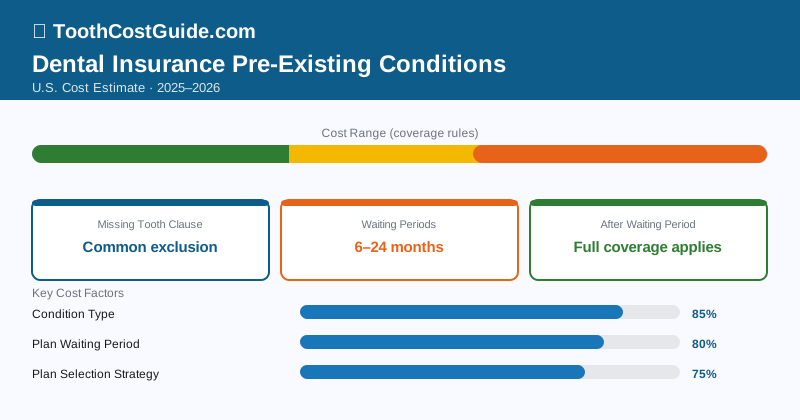
Waiting periods. This is the most common mechanism. The insurer doesn’t technically discriminate against pre-existing conditions — they just require everyone to wait 6–12 months before major or basic services are covered. The practical effect is the same: if you enroll knowing you need a crown, you’re waiting 12 months before the plan contributes a dollar toward it.
The missing tooth clause. This is the exclusion that surprises people most. A missing tooth clause (MTC) states that the plan won’t cover replacement of teeth that were already missing when your coverage started. Lose a molar in a car accident three years ago and decide to get an implant after enrolling in dental insurance? Most plans will treat that implant as excluded — permanently.
Missing tooth clauses are common. According to dental benefits industry data, a majority of individual market dental plans include this provision. It’s one of the primary reasons patients shopping for dental coverage specifically to address tooth loss end up frustrated.
Condition documentation and prior treatment exclusions. Some plans ask about current dental conditions during underwriting. If you disclose active problems, the insurer may add specific exclusions. Others exclude coverage for treatment that represents a “continuation” of work begun before your coverage started — meaning a crown being prepared before you enrolled might not be covered when it’s finished.
The missing tooth clause is the single most important pre-existing condition exclusion to check for before buying dental insurance. If you have missing teeth you want to replace with implants or a bridge, specifically look for plans that do NOT contain a missing tooth clause — they exist, but you have to search for them.
What These Exclusions Cost You
Missing tooth clause — the financial math: A dental implant runs $3,000–$5,000 per tooth. A bridge spanning a missing tooth costs $2,500–$6,000 for the full span. With a missing tooth clause, none of that is covered — ever, regardless of how long you’ve been on the plan. Without the clause, a plan covering major work at 50% saves you $1,500–$2,500 per tooth. That’s not a minor footnote. That’s a plan that either costs you $3,000 or $1,500 for the same procedure.
Plans known to avoid missing tooth clauses:
- Spirit Dental: Explicitly markets plans without MTCs in most states; $33–$57/month
- Ameritas: Certain plan tiers exclude the MTC
- Delta Dental preferred plans: Some (not all) lack the clause — read the plan documents carefully
- AARP/Delta Dental Premier: No MTC on some plans
- Group employer plans: Frequently have no MTC or more lenient terms than individual plans
The real cost of a 12-month waiting period: A year of waiting for a needed crown isn’t just inconvenient. If you need the crown and can’t wait, you pay full price — say $800–$900 out of pocket (the 50% the insurance would have covered). Alternatively, paying $10–$30/month more for a no-waiting-period plan eliminates that exposure entirely.
Gum disease: Active periodontitis requiring deep cleaning is typically covered as a basic or major service on most plans — the question is timing, not coverage. Periodontal maintenance (the 3-month cleaning cycle after treatment) is covered on most plans as a preventive or basic service.
Existing dentures: If you already have dentures when you enroll, replacements are typically covered only after 5–7 years of plan membership. Repairs to existing dentures are often covered sooner.
Who Feels This Most Acutely
People with missing teeth planning to get implants or bridges face the greatest financial risk. Always read the exclusions section of any plan you’re considering. Look for the words “missing tooth” — if they’re in the exclusions, that plan won’t help you with replacement.
People returning to dental care after a gap. If you haven’t seen a dentist in three years, you’ve probably developed some dental issues during that time. Those issues are now pre-existing from the insurer’s perspective. A 12-month waiting period means a 12-month wait for coverage on any significant work.
Job changers losing employer coverage. Dropping employer dental coverage and buying an individual plan can reset your waiting period clock — even if you’ve been covered continuously through work. A Certificate of Prior Coverage from your old insurer can prevent this.
Patients facing major restorative work. Multiple crowns, bridges, or implants require careful modeling of how waiting periods and MTCs interact with their specific situation. Running the numbers before enrolling is essential.
Strategies That Actually Work
Prior coverage documentation. Most dental insurers will waive waiting periods — not the missing tooth clause — if you can demonstrate continuous prior coverage with no gap larger than 30–63 days. When your old dental coverage ends, request a Certificate of Prior Coverage from the insurer immediately. Present it when applying to a new plan. If it qualifies, your waiting period clock resets as if it never started.
Search specifically for plans without missing tooth clauses. Use comparison tools like eHealth, GoHealth, or NetQuote. Call and ask explicitly: “Does this plan include a missing tooth clause?” Don’t assume. An insurer representative who says “we cover implants” and a plan that explicitly excludes teeth missing at enrollment are not contradictions — they just mean they’ll cover future tooth loss, not historical loss.
Dental school care during the waiting period. If you have a condition that can’t wait and you’re stuck in a waiting period, dental schools offer care at 40–70% below private practice rates. Use a dental school for the crown you need now; let your insurance mature for future work.
Pre-treatment estimates before committing. Before major work begins, ask your dentist’s office to submit a predetermination (also called a pre-authorization or pre-treatment estimate) to your insurer. The insurer responds in writing with exactly what they’ll cover — including any exclusions that apply. This takes the uncertainty out of major dental decisions before you’re committed.
Phase treatment strategically. If conditions can wait, your dentist can sometimes delay non-urgent work until after your waiting period ends. Ask which procedures are clinically urgent versus deferrable — this simple conversation can shift thousands of dollars from out-of-pocket to covered.
The missing tooth clause doesn’t expire — it’s a permanent exclusion for teeth missing at enrollment, not just a waiting period. Even after 10 years on the same plan, a tooth that was missing when you enrolled may still be excluded from bridge or implant coverage. The only cure is to enroll in a plan without this clause from the start.
Dental insurance pre-existing condition rules — especially the missing tooth clause and waiting periods — are the most common source of coverage disappointment. Check for missing tooth clauses before buying any plan, present prior coverage proof to waive waiting periods, and choose no-waiting-period plans when you have known upcoming dental needs. Don’t assume dental insurance works like health insurance — the ACA’s pre-existing condition protections largely don’t apply.
Bottom Line
Dental insurance’s pre-existing condition rules operate on completely different logic than health insurance. Waiting periods, missing tooth clauses, and prior treatment exclusions are legal, common, and consequential. Before buying any dental plan, verify whether a missing tooth clause appears in the exclusions. Present prior coverage documentation to waive waiting periods wherever possible. For patients with known upcoming dental needs, no-waiting-period plans from carriers like Spirit Dental cost $10–$20/month more but eliminate the most damaging pre-existing condition barriers. The research you do before enrolling is worth far more than the research you do after getting a denied claim.
Frequently Asked Questions
A single dental crown typically costs between $800 and $1,500 in the US, depending on material (porcelain, ceramic, or gold) and your dentist's location. With dental insurance, you'll usually pay 50% of the cost after your deductible, bringing your out-of-pocket to $400–$750 per crown.
Most dental plans exclude or limit coverage for missing teeth through a missing tooth clause, which typically applies to teeth missing before your enrollment date. This exclusion can mean $0 coverage for implants, bridges, or dentures to replace those pre-existing missing teeth, regardless of your plan level.
Waiting periods for pre-existing conditions range from 6 to 24 months depending on your plan, with 12 months being most common for major services like root canals or extractions. Some plans waive waiting periods if you had continuous coverage with another insurer, so check your plan documents carefully.