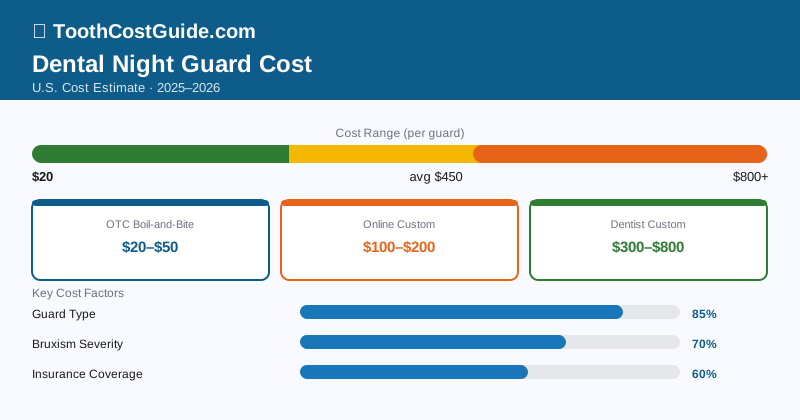
Your bed partner hears it before you do — a grinding sound that shouldn’t be coming from a sleeping person. Or maybe your dentist points out wear facets on your back teeth that weren’t there two years ago. Or you wake up with a sore jaw. These are the signs of bruxism, and ignoring them eventually gets expensive.
A cracked tooth requiring a crown costs $800–$1,800. A worn-down tooth needing a full restoration can cost thousands more. A custom night guard that prevents all of that: $300–$800, worn nightly, potentially lasting a decade.
That’s the decision. Here’s everything that affects the cost.
Night Guard Types and Their Costs
| Night Guard Type | Cost |
|---|---|
| OTC boil-and-bite (pharmacy/online) | $20–$50 |
| Custom soft night guard (dentist) | $300–$500 |
| Custom hard acrylic night guard (dentist) | $400–$700 |
| Custom dual-laminate night guard (dentist) | $400–$800 |
| Online direct custom guard (mail-in impression) | $100–$200 |
| TMJ/NTI occlusal splint | $400–$800 |
| Replacement custom guard (same dentist) | $200–$400 |
The Honest Rundown on Each Type
OTC boil-and-bite ($20–$50). Heat it, bite it, it hardens around your teeth. Available at any pharmacy — DenTek, Plackers, SleepRight are common brands. For a light clencher who’s not sure if they can tolerate wearing something in their mouth, this is a low-risk starting point. Heavy grinders chew through them in weeks. They’re not a long-term solution for bruxism, but they’ll tell you whether you can actually sleep wearing a guard.
Online direct-mail custom guards ($100–$200). Companies like Chomper Labs, ProTeeth Guard, and Remi send a putty impression kit, you make impressions at home, mail them in, and get a lab-fabricated guard back within a week or two. These use the same dental lab materials as dentist offices — just without the dentist overhead. For mild-to-moderate bruxism in healthy teeth with no TMJ complications, the quality is legitimately good and the savings are real.
Custom soft guard from dentist ($300–$500). Comfortable, easy to adjust to, often the first recommendation for mild-to-moderate grinding. Made from a pliable material similar to a sports mouthguard. Downside: soft material wears down under heavy grinding, typically lasting 1–3 years before replacement.
Custom hard acrylic guard ($400–$700). Rigid material — exactly what it sounds like. Takes a night or two to adjust to. The clinical standard for moderate-to-severe bruxism. Durable (5–10 years with proper care). Can be adjusted by the dentist if needed. If you grind hard and consistently, this is what you want.
Dual-laminate guard ($400–$800). Hard on the outside, soft on the inside — the popular middle-ground option. Combines the durability of acrylic with the initial comfort of a soft guard.
NTI/anterior bite stop ($400–$800). A small device that covers only the front teeth, preventing back-tooth contact. Used specifically for TMJ pain and severe grinding. Requires dental fitting and periodic adjustment. Note: the FDA has issued guidance on long-term NTI use for some patients — discuss with your dentist before choosing this type.
The cost of a custom night guard — $300–$800 — is significantly less than the cost of repairing damage from unchecked bruxism. A single cracked tooth requiring a crown costs $800–$1,800. Patients who grind through multiple OTC guards without resolving their bruxism often spend more on replacements than a custom guard would have cost initially.
What Affects the Final Price
Custom vs. OTC. The biggest variable by far. Dentist-made guards require an office visit, impression, lab fabrication, and fitting appointment. The dental lab alone charges $75–$200. OTC guards skip all of that.
Material. Soft, hard, dual-laminate — each has different fabrication costs and durability profiles. Hard acrylic costs more upfront but typically has the lowest cost-per-year when you factor in lifespan.
Upper vs. lower arch. Lower arch guards are slightly cheaper to fabricate and easier for most people to tolerate. Upper arch guards are more stable and preferred by some dentists. Both work. Ask why your dentist recommends one over the other.
Where you’re treated. General dentists charge $300–$600. TMJ specialists — prosthodontists, oral surgeons focused on jaw disorders — charge $600–$900 or more for a more precisely calibrated occlusal splint. Urban practices in high-cost markets charge $100–$200 more than rural or suburban offices for the same appliance.
Insurance: When It Helps and When It Doesn’t
Night guard coverage is inconsistent. Most plans categorize them under “other services” or “appliances” at 50–80% coverage, subject to the annual maximum. But many insurers require pre-authorization and documented clinical evidence of bruxism before they’ll approve the claim.
For insurance to approve a night guard, your dentist needs to document clinical evidence of bruxism: wear facets on teeth, muscle tenderness, cracked tooth lines, or patient-reported symptoms. Make sure your chart notes support the claim before submission — an undocumented claim is almost always denied.
A separate angle worth pursuing: if your night guard is prescribed specifically for temporomandibular joint disorder (TMD) with documented jaw pain, headaches, or restricted opening, some medical insurance plans cover the appliance under durable medical equipment (DME) benefits. This requires a formal TMD diagnosis from your dentist or physician. It’s worth a phone call to your medical insurer.
Without insurance, the out-of-pocket cost is real but manageable. At $300–$800 for something that can last 5–10 years, the per-year cost works out to $30–$160 — less than most people spend on coffee in a month.
Getting the Cost Down
Try online mail-order first. For mild-to-moderate grinding without TMJ complications, Chomper Labs, ProTeeth Guard, or Remi produce lab-quality guards at $100–$200 — less than half the dentist price. If you later determine you need more precise occlusal calibration or a TMJ specialist’s assessment, you haven’t wasted much money.
Pre-authorize before committing. Have your dentist submit the night guard to insurance with bruxism documentation before treatment starts. Even if denied initially, an appeal with clinical notes and X-rays showing tooth wear often succeeds.
Dental schools. Custom night guards at dental school clinics run $120–$250 — 40–60% below private practice rates. Fabricated by the same dental labs. For an appliance you’ll wear for years, the savings are meaningful.
Take care of what you have. Rinse the guard under cool (not hot) water each morning. Store in the provided case. Clean weekly with a soft brush and mild soap. Avoid soaking in mouthwash — it degrades acrylic. A guard that lasts 8 years instead of 4 is effectively half the price.
HSA/FSA. Night guards are qualified medical expenses. A $500 guard costs $320–$390 in real dollars after the tax benefit. It’s the most financially efficient way to pay.
In-office payment plans. Most dental practices offer 0% financing for 3–6 months on appliance costs. CareCredit is available at most offices, though for a $300–$500 guard it’s often simpler to use HSA/FSA funds and skip the card entirely.
Dental cost estimates in this guide reflect U.S. national averages for 2024–2025 and may vary significantly by geographic region, provider type, and individual treatment needs. Always request a written treatment plan with itemized costs before agreeing to any dental work. Confirm coverage details directly with your insurance provider before treatment begins.
Frequently Asked Questions
A custom night guard from your dentist typically costs $300–$800, depending on the material quality and your location. This is a one-time investment that usually lasts 3–5 years before needing replacement, making it more durable than over-the-counter options that cost $20–$50 but wear out faster.
Many dental insurance plans cover 50–80% of a custom night guard cost, though some classify it as a preventive device covered at 100%, while others treat it as a specialty item with lower coverage. You'll want to check your plan's coverage limits, as some policies cap night guard benefits at $100–$200 per year.
Getting a custom night guard typically takes 1–2 weeks total: your dentist takes an impression at the first visit, then the lab fabricates it, and you return for a fitting appointment to ensure proper alignment and comfort. Over-the-counter boil-and-bite guards are ready to use immediately, but they often require multiple adjustments and replacements due to poor fit.