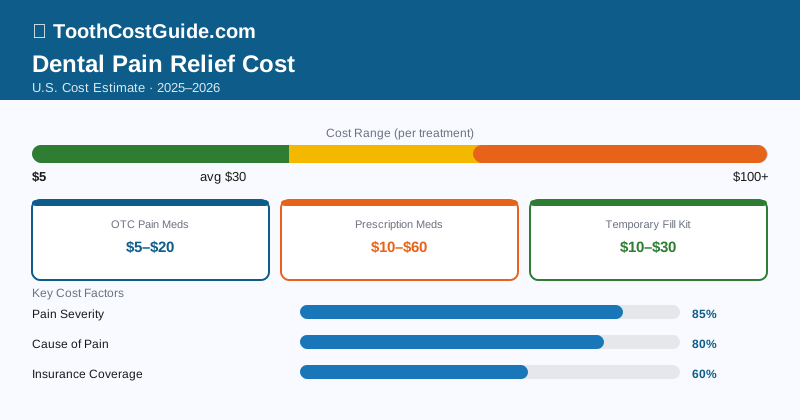
Before you spend $150 at urgent care for a prescription, try this: ibuprofen 600 mg plus acetaminophen 1,000 mg, taken together, right now. Multiple clinical trials — including a well-cited 2017 study in the Journal of the American Dental Association — found this combination rivals prescription opioids for acute dental pain in a majority of patients. The total cost at a drugstore? Under $20 for a week’s supply.
That doesn’t mean prescription options are never warranted. Severe infections, post-surgical pain, or cases where OTC options genuinely aren’t cutting it are real situations. But understanding the full landscape — what works, what it costs, and what order to try things in — saves both money and unnecessary medical appointments.
| Pain Relief Option | Cost | Effectiveness | Availability |
|---|---|---|---|
| Ibuprofen 200 mg tabs (OTC) | $6–$12 | High (reduces inflammation) | Any pharmacy |
| Acetaminophen 500 mg tabs (OTC) | $5–$10 | Moderate-high | Any pharmacy |
| Ibuprofen + acetaminophen combo | $11–$22 | Very high | Any pharmacy |
| Clove oil / eugenol (topical) | $8–$15 | High for exposed nerves | Pharmacy/health store |
| Benzocaine gel (Orajel, Anbesol) | $8–$15 | Moderate (short-acting) | Any pharmacy |
| Prescription ibuprofen 800 mg | $10–$25 (GoodRx) | High | Prescription required |
| Acetaminophen w/ codeine (Tylenol #3) | $15–$40 (GoodRx) | High | Prescription required |
| Hydrocodone/acetaminophen (Norco) | $20–$60 (GoodRx) | Very high | Prescription required |
| Dexamethasone (prescription) | $10–$30 (GoodRx) | High (reduces swelling) | Prescription required |
What Drives the Cost Differences
OTC versus prescription. Everything over the counter runs $5–$30 and requires no appointment. Prescription options add the cost of a visit — $100–$250 at urgent care or a dental emergency appointment — on top of the medication itself ($10–$60 with GoodRx). When the OTC combination is sufficient, skipping the prescription route saves $100–$250 in visit costs alone.
Generic versus brand name. Generic ibuprofen is the same active ingredient as Advil. Generic acetaminophen is the same as Tylenol. Chemically identical, same dose, different packaging. Store brands at Walmart, Target, and CVS cost 50–70% less than name brands. There’s no clinical argument for spending more.
Pharmacy coverage. With a pharmacy benefit, most generic prescription pain medications fall in the $0–$15 copay tier. Without coverage, GoodRx closes most of the gap — prescription ibuprofen 800 mg runs $10–$20 at most pharmacies with a GoodRx coupon.
The visit cost factor. If you need prescription medication, someone has to write the prescription. Your dentist at an emergency appointment: $100–$250. Urgent care with medical insurance: $20–$75 copay. Urgent care without insurance: $100–$250. Telemedicine: $50–$100. Telemedicine wins on price for straightforward cases.
OTC Options: What Each One Actually Does
Ibuprofen — Start Here
Ibuprofen is the best OTC option for dental pain. Full stop. The reason it outperforms acetaminophen as a standalone is that dental pain is driven by inflammation — and ibuprofen is an anti-inflammatory. It doesn’t just blunt the pain signal; it attacks the underlying cause of that signal.
Adult dosing: 400–600 mg every 6–8 hours with food. Maximum 2,400 mg per day OTC. You can achieve the prescription-strength 800 mg dose by taking four 200 mg tablets — you don’t necessarily need a prescription for that dose, though your doctor or dentist should be advising you.
Cost: A bottle of 100 generic 200 mg tablets runs $6–$10. Don’t buy Advil brand unless it’s on deep sale.
Don’t take ibuprofen if you have kidney problems, stomach ulcers, or you’re on blood thinners. Not safe in the third trimester of pregnancy.
Acetaminophen — Take It Alongside Ibuprofen
Acetaminophen works through a completely different mechanism than ibuprofen, which is exactly why they combine so well. Taking both simultaneously isn’t doubling up — it’s using two independent pain pathways at once. Adult dosing: 500–1,000 mg every 6 hours. Maximum 3,000 mg per day (or 4,000 mg short-term for healthy adults without liver concerns).
Cost: 100 tablets of 500 mg generic: $5–$9.
Clove Oil — For Exposed Nerves
Clove oil contains eugenol, the same compound dentists use in certain cavity liners and dry socket treatments. Applied directly to an exposed nerve, lost filling, or cracked tooth with a cotton swab, it produces intense localized numbness within 1–2 minutes. Lasts 30–90 minutes. Not a systemic medication — it works topically on the specific nerve area.
This is the best option for that horrible exposed-nerve sensation where even breathing cool air hurts. Use a cotton swab. Apply sparingly. Undiluted clove oil on soft tissue causes chemical burns if you slather it around carelessly.
Cost: $8–$15 per small bottle at most pharmacies.
Benzocaine Gel (Orajel, Anbesol)
Works in 30–60 seconds. Lasts 10–20 minutes. Good for situational relief — before sleep, before eating — but it’s not addressing inflammation and it doesn’t last. Useful as a stopgap rather than primary management.
Cost: $8–$15. Generic benzocaine gel costs 30–50% less.
Don’t use benzocaine heavily in infants — there’s a rare but serious risk of methemoglobinemia.
Prescription Options
Ibuprofen 800 mg (Rx)
This is the same medication as OTC ibuprofen at a higher dose — four 200 mg OTC tablets. The main practical difference is convenience (one pill instead of four) rather than a fundamentally different drug. If your dentist writes this, fill it. But understand you can replicate the dose OTC.
With GoodRx: $10–$25 for 30 tablets.
Acetaminophen with Codeine (Tylenol #3)
Adds 30 mg of codeine to 300 mg of acetaminophen per tablet. A moderate-level opioid that provides meaningfully better pain relief than OTC options when dental pain is severe. Side effects: sedation, constipation, nausea on an empty stomach. Short-term dependence risk with extended use.
With GoodRx: $15–$40 for 30 tablets.
Hydrocodone/Acetaminophen (Norco, Vicodin)
Stronger opioid. Appropriate when infection is severe or OTC options are genuinely insufficient. Many dentists are appropriately conservative here given opioid prescribing guidelines — expect to be asked about your OTC regimen before this is prescribed.
With GoodRx: $20–$60 for 20 tablets.
Dexamethasone (Rx Steroid)
A short corticosteroid burst — typically 4–6 mg per day for 3–5 days — can dramatically reduce dental-related swelling and inflammation. Particularly useful after wisdom tooth extraction or in acute pericoronitis. Not appropriate for everyone (contraindicated in uncontrolled diabetes, some active infections without concurrent antibiotics).
With GoodRx: $10–$30.
The Insurance Angle
OTC products aren’t covered by dental or medical insurance (though FSA/HSA accounts can often reimburse OTC items used for a diagnosed medical condition — keep receipts).
Prescription medications are covered under pharmacy benefits at $0–$15 for most generics. Without pharmacy coverage, GoodRx closes the gap significantly.
The visit cost is often the biggest variable. Dental emergency visits: $100–$250 without insurance. Urgent care with medical insurance: $20–$75 copay. Telemedicine: $50–$100 with or without insurance. If you only need a prescription for pain management and there’s no active infection requiring in-person assessment, telemedicine is the most cost-efficient path.
How to Manage Pain While You Wait for Treatment
- Start the combination immediately. Ibuprofen 600 mg plus acetaminophen 1,000 mg together is your first move, not your last resort.
- Take on a schedule. “As needed” dosing means you’re constantly chasing pain after it peaks. Taking ibuprofen every 6–8 hours maintains steady blood levels and works far better than reactive dosing.
- Use clove oil between systemic doses. When the oral medications haven’t fully kicked in or are wearing off, topical clove oil to the specific tooth provides fast localized relief.
- Don’t put aspirin directly on the tooth. It’s fine as an oral tablet, but aspirin against gum tissue causes chemical burns.
- Skip opioids on an empty stomach. Nausea is predictable — eat something first.
- Book the dental appointment today. Pain management is symptom control. It doesn’t fix an abscess, fill a cracked tooth, or stop an infection from spreading. You need actual treatment.
Saving Money at Every Step
Try the OTC combination before seeking a prescription. Ibuprofen 600 mg plus 1,000 mg acetaminophen is clinically validated. It works for most patients with acute dental pain. If it works, you’ve avoided a $100–$250 urgent care visit and a prescription.
Generic everything. Same drug, lower price. No exceptions.
GoodRx for any prescription you do need. Compare prices at several nearby pharmacies — the same drug can vary by $20–$40 in a single city. The app is free.
Telemedicine for after-hours prescription access. Far cheaper than an ER visit when your issue is straightforward pain or infection management.
Use FSA/HSA funds. Prescription medications and qualifying OTC dental products are FSA/HSA eligible. At a 22–37% effective tax savings on the expense, that’s real money over the course of a year.
The most cost-effective dental pain management is ibuprofen 600 mg + acetaminophen 1,000 mg taken simultaneously every 6–8 hours. This combination, validated in multiple clinical trials, provides relief comparable to prescription opioid combinations for most dental pain — at a total cost of under $25 for a week’s supply.
Pain medication is for symptom management only. Dental infections do not resolve on their own — the source of infection must be professionally treated. Do not use pain medication to indefinitely postpone dental treatment. Swelling, fever, or worsening pain despite medication requires same-day dental or emergency evaluation.
The Short Version
OTC: $11–$22 for the ibuprofen-plus-acetaminophen combination that works as well as prescription opioids for most dental pain. Prescription options: $10–$60 with GoodRx, plus the cost of the visit to get the prescription. Start with OTC, escalate if needed, and use telemedicine to keep visit costs down if you need a prescription after hours. Either way — manage the pain and schedule the appointment that actually solves it.
Frequently Asked Questions
OTC dental pain relief options like ibuprofen and acetaminophen cost $5–$30 for a week's supply at most US drugstores. A combination of ibuprofen 600 mg plus acetaminophen 1,000 mg taken together typically costs under $20 and has been shown in clinical trials to rival prescription opioids for acute dental pain relief.
Most dental insurance plans do not cover OTC pain medications like ibuprofen or acetaminophen since they are available over-the-counter without a prescription. However, if a dentist prescribes pain medication, your medical health insurance may cover part of the cost, typically leaving you with a $10–$60 out-of-pocket expense depending on your plan and deductible.
OTC pain relief works best for temporary acute dental pain while you wait for a dental appointment, which typically costs $150–$300 at urgent care or an emergency dentist. If pain persists longer than a few days, worsens, or is accompanied by swelling, fever, or difficulty swallowing, you should see a dentist immediately as these may indicate infection or a serious dental problem requiring professional treatment.