In 2010, your dentist applied sealants to your molars. It’s 2026. Those sealants are very likely gone — and cavities can now form in those grooves again.
Dental sealants don’t last forever. Most wear down within 5–10 years, sometimes faster depending on your bite habits and diet. When that happens, the deep pits and fissures on your molars are exposed again — exactly the grooves that trap bacteria and resist toothbrush bristles.
Reapplication is quick, painless, and far cheaper than filling the cavity you’d get without it. Here’s what it costs and how to get insurance to help pay for it.
Why Sealants Wear Off
Sealants are thin coatings of resin or glass ionomer applied to the chewing surfaces of back teeth. They physically block the pits and fissures where 80–90% of cavities in children and teens form.
But chewing creates enormous forces — hundreds of pounds of pressure on molars at peak. Over years of use, sealant material wears, chips at the margins, and eventually breaks down. Several factors accelerate this:
- Bruxism (teeth grinding): The most damaging. Patients who grind their teeth can wear through a sealant in 1–2 years
- Acidic diet: Soda, citrus, and energy drinks chemically erode the resin
- Hard foods: Chewing ice, hard candy, or nuts creates mechanical wear
- Age of application: Older sealant formulations from 10+ years ago used less durable materials than current products
According to the CDC, dental sealants reduce the risk of cavities in molars by 80% while they’re intact — and by 60% up to four years after application even as they begin to wear. Once they’re fully gone, that protection disappears entirely.
What Reapplication Involves
Good news: reapplication is one of the fastest, least invasive procedures in dentistry.
Your dentist or hygienist will:
- Clean the tooth surface and dry it completely
- Apply an acid etch solution to microscopically roughen the enamel (this helps the sealant bond)
- Apply the sealant material (liquid resin)
- Cure it with a UV light (takes about 30 seconds)
- Check your bite to make sure the sealant isn’t too high
If there’s a partial sealant remaining, it doesn’t need to be removed first — new sealant bonds to existing material. If any early decay has started in the groove, your dentist may need to use a very small drill or air abrasion to clean it out before sealing, which adds to the visit time.
The whole process takes about 5–10 minutes per tooth. No anesthetic required in most cases.
Sealant Reapplication Cost Breakdown
| Situation | Cost Per Tooth (No Insurance) | Total (4 Molars) |
|---|---|---|
| Straightforward reapplication | $30–$60 | $120–$240 |
| Sealant over existing partial sealant | $35–$65 | $140–$260 |
| Reapplication with minor prep (small decay) | $50–$100 | $200–$400 |
| Sealant with preventive resin restoration | $75–$150 | $300–$600 |
| Children (ages 6–14, most plans) | $0–$10 copay | $0–$40 |
Regional variation is real. In high-cost-of-living cities (New York, San Francisco, Seattle), expect to pay 25–40% more than the national averages above. Dental school clinics charge 40–60% less than private practice.
If your dentist finds minor decay starting in a groove before reapplication, they may recommend a preventive resin restoration (PRR) instead. This is a hybrid between a sealant and a tiny filling — the decay is removed, then the entire occlusal surface is sealed with composite resin. PRRs cost more ($75–$200) but address early decay while protecting the rest of the tooth surface. They’re billed as a restorative procedure (small composite filling), not a sealant, which changes insurance coverage.
Insurance Coverage: Children vs. Adults
This is where sealant reapplication gets complicated.
For children (typically up to age 14 or 16): Most dental insurance plans cover sealants at 100% on permanent molars, often including reapplication. The ADA CDT code D1351 (sealant per tooth) is classified as a preventive service for children. Many plans cover it twice per tooth over a 3–5 year period.
For adults: Coverage drops dramatically. Many plans either exclude adult sealants entirely, cover them at a much lower percentage (50%), or have age cutoffs that stop coverage at 14–18. Some PPO plans do cover adult sealants — but you need to read your specific Explanation of Benefits or call your insurer to check.
Questions to ask your insurer:
- Does your plan cover CDT code D1351 for adults?
- What is the age cutoff for sealant coverage?
- Is reapplication covered within 3–5 years of the original application?
- Is there a frequency limitation?
FSA and HSA Coverage
Sealants — including reapplication — are qualified medical expenses eligible for FSA and HSA reimbursement. If your dental plan doesn’t cover adult sealants, paying with pre-tax FSA or HSA funds effectively gives you a 20–35% discount depending on your tax bracket.
For four molars at $50/tooth without insurance, FSA/HSA coverage reduces your effective cost to $130–$160 for someone in a 22% bracket — compared to $200 out-of-pocket.
Never skip sealant reapplication to save money without understanding the alternative cost. A single composite filling on a molar — the direct result of a cavity forming in an unsealed groove — costs $150–$300. A crown on a severely decayed molar costs $1,000–$1,800. Four sealant reapplications at $200 total is one of the highest-ROI dental expenses available.
Who Benefits Most From Reapplication
Not everyone needs sealants reapplied. Your dentist should assess each tooth individually. Reapplication makes the most sense for:
Adults with a history of occlusal cavities. If your teeth have had multiple fillings in the grooves, your anatomy or diet makes you high-risk — sealants are worth maintaining.
Patients with deep pits and fissures. Some people have anatomically deeper grooves than average. These are almost impossible to clean with brushing alone and benefit significantly from sealant protection.
Patients with dry mouth. Saliva’s buffering capacity is a natural cavity defense. Without adequate saliva flow, the protective benefit of sealants becomes even more important.
Teens whose sealants are aging. If sealants were applied at ages 6–12 (the typical window for first and second molars), they’re likely due for reapplication by the late teens or early 20s.
The CDC data is clear on sealant effectiveness: school-age children without sealants are almost three times more likely to develop cavities in their molars than children with sealants. The protection extends to adults in the same risk categories.
Bottom Line
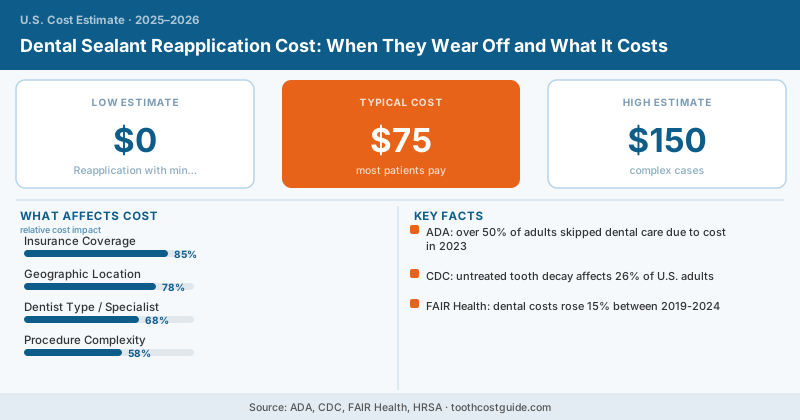
Sealant reapplication is one of the most cost-effective preventive procedures in dentistry. At $30–$75 per tooth, it’s dramatically cheaper than treating the cavity you’d get without it. Children’s insurance almost always covers it; adult coverage varies and often requires a direct conversation with your insurer.
Ask your dentist at your next visit: “When were my sealants applied, and are any showing signs of wear?” A quick visual check during your cleaning appointment takes 30 seconds and can save you hundreds in future restorations.
Frequently Asked Questions
Sealant reapplication costs $30–$75 per tooth without insurance. If you have four molars needing reapplication, expect $120–$300 total. With insurance, children's sealants are typically fully covered; adult reapplication coverage varies significantly by plan.
Clinical studies show sealants retain full effectiveness for 5–7 years in most patients, with some lasting up to 10 years. Retention rates depend on bite forces, diet (acidic foods erode sealants faster), and whether any sealant margins have chipped or lifted.
Most dental plans cover sealants for children up to age 14 (sometimes 18) at 100%. Adult sealant coverage is much more limited — many plans exclude it entirely, and those that do cover it often require prior authorization and may have age restrictions.
Your dentist checks sealant integrity at every visit. Signs that reapplication may be needed include visible chips or cracks in the sealant, areas where the sealant has worn completely through (showing the underlying grooves), or your dentist noting 'sealant marginal breakdown' in your chart.