Dental sedation isn’t just for people with severe phobia — it’s used routinely for wisdom tooth removal, long procedures, and patients with strong gag reflexes. If your dentist is about to pull three teeth at once or you’re getting a full-arch implant placed, sedation isn’t a luxury. It’s a practical tool that makes the procedure go better for everyone in the room.
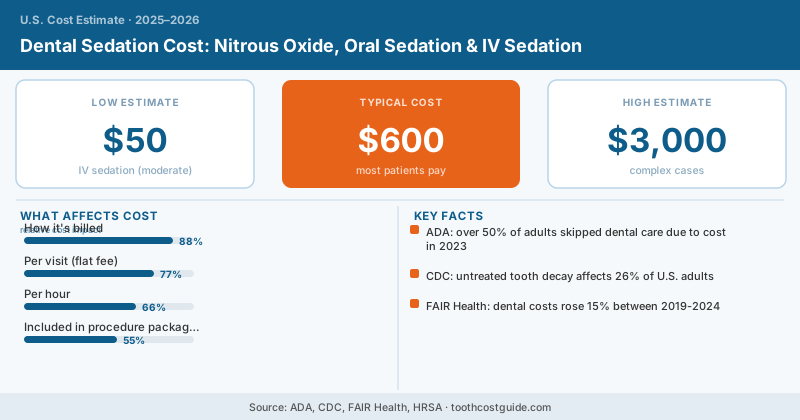
That said, sedation adds real cost. And the range is enormous — from $50 for nitrous oxide to $900+ for IV sedation, before you’ve paid for the actual dental work. Here’s how to understand what you’re paying for and when each level is actually worth it.
The ADA reported in 2022 that approximately 36% of American adults experience some level of dental anxiety, with 12% avoiding necessary care altogether due to fear. That avoidance has a price tag — delayed treatment means more complex, more expensive problems down the line. A $100 nitrous charge to get someone into the chair is often the cheapest line item on their entire treatment plan.
Sedation Types and Costs
| Sedation Type | Typical Cost | What to Expect |
|---|---|---|
| Nitrous oxide (laughing gas) | $50–$150 per visit | Mild relaxation; drive yourself home |
| Oral sedation (triazolam or similar) | $150–$500 per visit | Drowsy, amnesic; need a driver |
| IV sedation (moderate) | $300–$900 per hour | Deep relaxation; can’t drive 24 hrs |
| IV sedation — per full procedure | $500–$1,500 typical | Depends on procedure duration |
| General anesthesia | $1,500–$3,000+ | Surgical facility; anesthesiologist |
Nitrous Oxide ($50–$150)
Nitrous oxide — laughing gas — is the entry level and the most commonly available option. A nose mask delivers a mix of nitrous and oxygen; within 2–3 minutes you’ll feel relaxed, slightly euphoric, and less focused on what’s happening in your mouth. You’re fully awake and can respond to the dentist.
The key advantages: it wears off completely within 5 minutes of removing the mask, you can drive yourself home, and it doesn’t require fasting or a companion. Most general dentists offer it, charged per session rather than per hour. It’s billed as an add-on to your normal procedure fee.
Best for: mild anxiety, sensitive gag reflex, short procedures, children who need a little help staying calm, and patients who want to reduce their awareness of sounds and sensations without significant impairment.
Oral Sedation ($150–$500)
Oral sedation means taking a pill — typically triazolam (Halcion) or diazepam (Valium) — about an hour before your appointment. By the time you’re in the chair, you’ll be significantly drowsy. You’ll be technically awake and able to respond to commands, but you likely won’t remember the procedure clearly, if at all. This is a genuine benefit for patients with high anxiety.
The catch: you can’t drive to or from the appointment. You’ll need someone to bring you and take you home, and you should plan to rest for the remainder of the day. The medication can linger.
Best for: moderate-to-high dental anxiety, longer procedures (1–2 hours), patients who have had bad experiences in the dental chair and want true amnesia.
IV Sedation ($300–$900 per hour)
IV sedation is a category, not a single drug. The most commonly used agents are midazolam, ketamine, and propofol, sometimes combined. Delivered through an IV line, the onset is rapid and the depth of sedation is more precisely controllable than with oral medication. At moderate levels, you’re unresponsive to normal stimuli but not fully unconscious — at deeper levels, it approaches general anesthesia.
Not all dentists are licensed to administer IV sedation. It requires a state-specific deep sedation or general anesthesia permit, hundreds of additional training hours, and current ACLS certification. Many general dentists who want to offer IV sedation bring in a separate dental anesthesiologist or CRNA, which affects pricing.
How it’s billed: usually per hour, with a common first-hour rate of $300–$600 and subsequent hours at $150–$300. A wisdom tooth removal procedure that takes 45 minutes might incur a 1-hour minimum charge. Complex cases that run 2–3 hours can add $600–$1,500 in sedation fees on top of the surgical fee.
Best for: complex oral surgery, full-arch implant work, severe dental phobia, strong gag reflex that makes treatment impossible otherwise, and patients who have failed with lighter sedation options.
- What is your specific sedation permit level, and is it current? (Ask to see the certificate if you want to verify.) 2. Will a second person trained in sedation monitoring be present throughout my procedure? 3. Is the sedation fee billed per hour or as a flat rate — and what’s your minimum charge? Getting clear answers to these three questions separates confident, credentialed providers from those who shouldn’t be administering IV sedation at all.
General Anesthesia ($1,500–$3,000+)
General anesthesia renders you fully unconscious. It’s used for major oral surgery (full-arch implants, complex jaw surgery, large cyst or tumor removal), children who genuinely can’t be treated otherwise, and patients with special needs. It’s almost always performed in a hospital or accredited ambulatory surgical center — not a dental office — with a board-certified anesthesiologist or CRNA managing your airway.
The cost breakdown: anesthesiologist fee ($500–$1,500), facility fee ($500–$1,500), and the surgical fee all billed separately. This is where dental and medical insurance can both be relevant — if the procedure is classified as oral surgery rather than routine dentistry, your medical plan may cover the facility and anesthesia fees.
How Sedation Is Billed
There’s variation in billing practices that can affect what you pay:
Per visit (flat fee): Most common for nitrous oxide and oral sedation — one charge added to your procedure fee regardless of how long the appointment runs.
Per hour: Standard for IV sedation. The billing clock typically starts when you’re sedated and ends when you’re emerging — not when you walk in and out. Ask for the per-hour rate and the minimum charge before agreeing.
Included in procedure package: Some oral surgery practices bundle IV sedation into their surgical fee, particularly for wisdom tooth extractions. When getting quotes, ask explicitly whether sedation is included or separate.
Does Insurance Cover Sedation?
The honest answer: usually no, with specific exceptions.
Most dental plans categorically exclude sedation for adults unless there’s a documented clinical reason. The exceptions worth pursuing:
Impacted wisdom tooth extraction: Many plans cover IV sedation or general anesthesia as part of a covered surgical extraction benefit. Submit the CDT codes for both the extraction and the anesthesia — your plan’s explanation of benefits will tell you what’s covered.
Patients with documented disabilities: Plans often cover sedation when the patient’s cognitive or physical condition makes treatment without sedation impossible to perform safely. A letter from your treating physician documenting the necessity strengthens this claim.
Medical insurance crossover: When oral surgery is performed for medical reasons — jaw fracture, biopsy, cyst removal — the anesthesia component may be covered under your medical plan’s surgical benefit. This requires coordination between your dental office billing team and your medical insurer.
Pediatric sedation: AAPD (American Academy of Pediatric Dentistry) guidelines support sedation for very young children and those with high behavioral needs. Pediatric dental plans often include a benefit for this specifically.
If you’re not sure whether you have any sedation benefit at all, call your insurer and ask: “Does my plan cover anesthesia or sedation for dental procedures, and if so, under what CDT or medical necessity criteria?”
Finding a DOCS-Certified Provider
The Dental Organization for Conscious Sedation (DOCS) certifies dentists in oral and IV sedation with standardized training requirements. A DOCS-certified provider has completed additional coursework in sedation pharmacology, airway management, and emergency protocols.
You can verify a dentist’s sedation permit level through your state dental board’s online license verification tool — most states list permit levels alongside the standard dental license. Look for a provider with explicit sedation permits, not just a general dental license.
Never accept IV sedation from a provider who can’t name their specific sedation permit level, their most recent ACLS recertification date, and the emergency protocols in place at their office. Sedation at any level beyond nitrous requires genuine additional training and certification — and the patient’s right to verify that is absolute. A provider who answers these questions vaguely or defensively is a provider to avoid.
Frequently Asked Questions
There are four main levels. Minimal sedation (nitrous oxide) keeps you fully awake but relaxed — it wears off in minutes and you can drive yourself home. Moderate sedation (oral sedation with a pill like triazolam, or light IV sedation) leaves you drowsy and amnesic for most of the procedure but technically conscious. Deep sedation (IV sedation with drugs like propofol or midazolam) puts you in a sleep-like state where you're difficult to rouse but not fully unconscious. General anesthesia renders you fully unconscious and requires an anesthesiologist or CRNA in a surgical facility. Most dental procedures are done with minimal to moderate sedation — deep sedation and general anesthesia are reserved for major oral surgery or patients who genuinely can't cooperate otherwise.
Rarely, for adults. Most dental plans exclude sedation for routine procedures — it's classified as an add-on comfort service rather than a clinical necessity. The clearest exceptions are: pediatric patients with documented behavioral challenges, patients with severe cognitive or physical disabilities, and adults undergoing complex oral surgery (like impacted wisdom tooth removal) where the plan covers anesthesia as part of the surgical benefit. When sedation may be covered, always get pre-authorization in writing before the appointment — verbal approvals from a call center representative don't protect you when the bill arrives.
All levels of dental sedation carry some risk, but serious complications are rare when performed by properly credentialed providers. Nitrous oxide is extremely low risk — it's been used safely in dentistry for well over a century. Oral sedation and IV sedation carry more risk (respiratory depression, allergic reactions, paradoxical agitation in some patients) and should only be administered by dentists with specific state-issued sedation permits and current ACLS or PALS certification. Ask your dentist specifically what their sedation credential level is and whether a second person trained in sedation monitoring is present during IV procedures. Never accept IV sedation from a provider who doesn't answer those questions clearly.