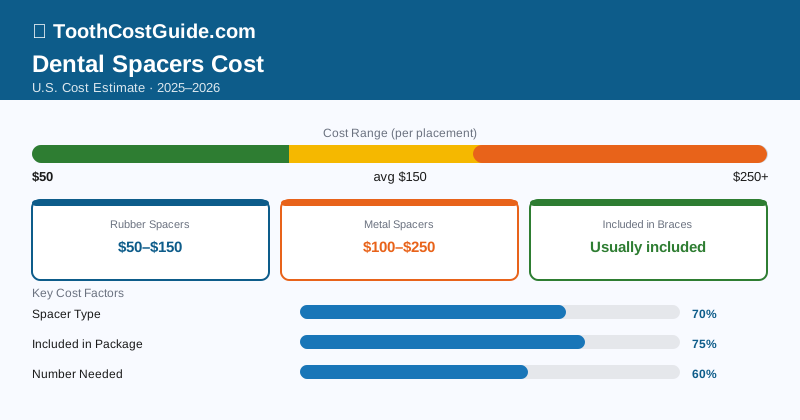
Your kid comes home from the orthodontist and says they’re getting “spacers” next week, and suddenly you’re wondering if this is another item to add to the already substantial braces invoice. Good news: it’s probably already included. Orthodontic spacers are a standard preparatory step for traditional braces — in most practices, they’re bundled into the comprehensive treatment fee you’ve already been quoted. The only time you’ll see a separate bill is if the spacer placement happens at its own standalone appointment billed as an office visit.
Here’s what the numbers look like when they do appear separately:
| Spacer Service | Cost |
|---|---|
| Orthodontic spacers (included in braces fee) | $0 additional |
| Spacers billed separately (stand-alone visit) | $50–$250 |
| Rubber (elastic) spacers — per placement | $50–$150 |
| Metal (spring) spacers — per placement | $75–$250 |
| Spacer replacement (fell out before banding) | $25–$100 |
| Emergency appointment if spacer causes severe pain | $50–$150 |
The Point of Spacers — and Why They’re Necessary
Your back molars sit in very tight contact with the teeth next to them. Metal bands — the rings that wrap around the molars to anchor the archwire in traditional braces — need a small amount of clearance to slide into position. Without spacers, fitting those bands would be painful, difficult, and potentially damaging to adjacent tooth surfaces.
Spacers create about 2 millimeters of separation between the molars over 1–2 weeks, just enough space to make banding possible. They’re preparatory hardware, not an active treatment appliance. They don’t move teeth — they just make room for the hardware that will.
Rubber vs. Metal: Two Types of Spacers
Rubber (elastic) spacers are small donut-shaped rings threaded between the teeth using a dental floss looping technique. The orthodontist or assistant snaps them into the contact point between molars. Most patients get these because they’re easy to place, inexpensive, and work well in most cases. Some pressure and soreness for 2–5 days. Cost when billed separately: $50–$150.
Metal (spring) spacers are tiny coiled metal springs inserted between molars when more rigid separation is needed or when rubber spacers keep falling out before the banding appointment. Less common, slightly more expensive at $75–$250 when billed separately.
Spacers are not a treatment themselves — they’re a preparatory step for placing molar bands. Their cost is almost always included in the comprehensive braces fee. If your orthodontist is billing spacers separately, ask whether this is standard practice for their office or whether it should be included in your quoted treatment cost.
The Placement Appointment: What to Expect
The whole thing takes 5–10 minutes. No anesthetic. Here’s the sequence:
- The assistant threads each rubber spacer between the back molar contact points using dental floss and a loop technique
- The spacer is popped into position — there’s a momentary snapping sensation at each tooth
- Typically 1–4 spacers total, depending on how many molar bands the treatment plan requires
- You leave with small rubber rings sitting between certain back teeth
The next few days feel like something is stuck between your teeth — because something is. Pressure and soreness peak around day 2 or 3, then ease up. By days 5–7 most patients barely notice them. OTC ibuprofen or acetaminophen handles the discomfort without any issues.
Diet adjustments: Soft foods for the first 2–3 days. Spacers get dislodged by sticky, chewy, or hard foods. Gummy bears, caramel, thick bagels, raw carrots — skip these until the banding appointment.
Hygiene note: Do not floss between the spacer teeth. Normal flossing technique will pull them out. Brush normally around the spacers.
What Happens When a Spacer Falls Out
It happens. The most common reason is actually a good sign — the teeth have moved far enough apart that the spacer no longer has tight contact to grip. What to do:
- Call the orthodontist. Don’t try to replace it yourself.
- If banding is in 1–2 days: Usually fine — enough space has likely been created already.
- If banding is more than a week away: A replacement visit may be needed. Quick appointment, $25–$100.
- Multiple spacers falling out repeatedly: Might signal a bite issue worth discussing with the orthodontist.
Do not try to replace a fallen spacer yourself. The rubber rings are not sterile off-the-shelf products, and improper placement can cause tooth damage or get pushed below the gum line. Call your orthodontist to assess whether professional replacement is needed before your banding appointment.
Is This Included in the Braces Quote?
Usually yes. When an orthodontic practice gives you a comprehensive treatment fee for braces, that fee is supposed to cover everything required to complete treatment — records, consultations, all appliances, follow-up appointments, and preparatory procedures including spacers. The spacer appointment is part of the treatment package, not an add-on.
The exception: Some practices schedule spacer placement as a distinct preparatory appointment several days before the banding appointment. If that visit is billed as a separate clinical visit with its own office charge, you might see $50–$250 on a statement. It’s not always wrong — it’s just practice-dependent. The right question to ask at your consultation:
“Is spacer placement and any necessary replacements included in the total treatment fee?”
Ask it directly. Get a clear answer. It should be yes.
Insurance and FSA
When spacers are bundled into the braces fee, they’re covered under your orthodontic benefit alongside the rest of treatment — whatever percentage your plan covers, the spacers are part of that calculation.
If spacers get billed separately, they’d fall under either your orthodontic benefit or your basic dental services coverage. A $100 charge is small enough that it typically just applies to your annual deductible rather than triggering meaningful benefit payment.
FSA and HSA accounts: spacers are eligible expenses if billed separately. Worth noting for reimbursement purposes even on small amounts.
Making the Discomfort More Manageable
A few things that actually help:
- Take ibuprofen an hour before the placement appointment — getting ahead of inflammation beats playing catch-up
- Eat a real meal before the appointment, since soft-food restrictions start right after
- Apply orthodontic wax over any spacer that keeps rubbing against the inside of your cheek
- Warm salt water rinses reduce gum soreness well
- Avoid anything hard, sticky, or crunchy for the full week
Bottom Line
Orthodontic spacers cost $50–$250 if billed separately, but in the vast majority of cases they’re included in your comprehensive braces fee. They’re a brief, low-discomfort preparatory step — a 10-minute appointment followed by a few days of soreness that most patients describe as feeling like something stuck between their teeth. Confirm with your orthodontist that spacers are part of your quoted fee, take ibuprofen ahead of time, and eat soft foods for a few days. That’s really the whole story.
Spacers are a routine preparatory step for braces, not a significant separate cost. Their discomfort (typically 2–5 days of soreness) is the most notable aspect, not their price. Confirm with your orthodontist that spacer placement is included in your comprehensive treatment fee, and take ibuprofen before the appointment to stay ahead of the discomfort.
Frequently Asked Questions
Orthodontic spacers typically cost between $50 and $250 per placement, though most orthodontists include them as a standard preparatory step bundled into your overall braces treatment plan at no additional charge. If charged separately, the cost varies by region and practice, with urban areas generally running higher than rural practices.
Most dental insurance plans that cover orthodontics include spacers as part of standard braces treatment, so they are typically covered at the same percentage as your overall orthodontic benefits (usually 50% after deductibles). However, if spacers are placed outside a comprehensive braces plan, some insurers may not cover them or may classify them as a separate preventive service with different coverage limits.
Spacers are placed 1–2 weeks before your orthodontist fits the metal bands around your back molars for traditional braces, creating space between teeth so bands fit properly. They remain in place for that brief period and are typically removed during your next appointment when the bands are bonded, so you won't wear them for the duration of your braces treatment.