Drive 90 minutes east of Yuma, Arizona. Park your car on the US side. Walk across the border. Walk two blocks. Sit down in a modern dental clinic staffed by English-speaking dentists and get a porcelain crown for $300–$500. Cross back, drive home. Same day.
That’s Los Algodones. It sounds too simple to be real — but hundreds of thousands of Americans do exactly this every year, and the best clinics in town genuinely deliver quality that rivals what you’d find in a US office. The savings are dramatic enough that FAIR Health data and anecdotal reporting alike confirm a consistent pattern: a full mouth reconstruction that would run $20,000–$30,000+ in the US routinely gets done across the border for a third of that price.
| Procedure | US Average Cost | Los Algodones | Tijuana | Savings |
|---|---|---|---|---|
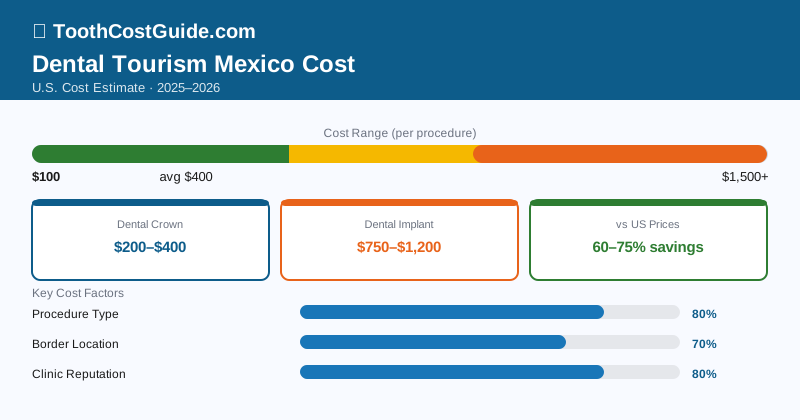
| Dental implant (single) | $4,000–$5,000 | $1,100–$1,800 | $1,200–$2,000 | 55–70% |
| Dental crown (porcelain) | $1,200–$1,800 | $300–$500 | $350–$600 | 60–75% |
| Root canal (molar) | $1,400–$2,000 | $300–$500 | $350–$550 | 65–75% |
| Full arch dentures | $2,500–$4,000 | $600–$1,200 | $700–$1,400 | 55–70% |
| All-on-4 implants (arch) | $25,000–$35,000 | $8,000–$14,000 | $9,000–$16,000 | 50–65% |
| Composite filling | $150–$300 | $40–$80 | $50–$100 | 65–75% |
| Teeth cleaning & exam | $150–$300 | $35–$60 | $40–$70 | 70–80% |
| Porcelain veneers (per tooth) | $1,200–$2,500 | $350–$600 | $400–$700 | 60–75% |
The Two Main Destinations
Los Algodones — “Molar City” is a small Mexican border town in Baja California, directly adjacent to Yuma, Arizona. It has more dentists per square mile than any other place on earth — over 300 dental offices packed into roughly four city blocks. The town’s entire economic purpose is serving American and Canadian dental tourists. Essentially every dentist in town speaks fluent English. Essentially every clinic is set up to take walk-in patients.
The competition is intense, which keeps prices at their absolute floor. That same competition, though, means quality varies significantly. The best clinics in Los Algodones are excellent. The worst are not. The margin between them isn’t obvious from the outside — which is why research matters.
Tijuana serves a different market. Larger city, broader range of clinics, 10–20% higher prices than Los Algodones on average, but access to more specialized, high-end facilities — CBCT cone beam imaging, digital impressions, same-day CAD/CAM restorations, US-trained specialists. Accessible from San Diego via the Blue Line trolley to the San Ysidro port of entry. For complex cases involving implants, oral surgery, or full-mouth reconstruction, Tijuana’s top clinics are where many experienced dental tourists choose to go.
What Real Savings Look Like
Scenario: 2 implants + 3 crowns + 1 root canal
In a major US metro area, this case could run $14,000–$16,000. Done at a solid clinic in Los Algodones, the same work runs $4,000–$6,000. Add a round-trip flight from Phoenix or a night in a border motel on the US side: $200–$500. Net savings: $9,000–$10,500 on a case that’s entirely within the capability of an established Los Algodones clinic.
Scenario: All-on-4, one arch
This is where the absolute dollar savings get remarkable. A full-arch implant restoration that runs $25,000–$35,000 in the US costs $8,000–$14,000 in Los Algodones and $9,000–$16,000 in Tijuana at reputable clinics using tier-1 implant brands. Even after two trips (implant placement, then permanent arch placement 4–6 months later) and hotel stays, patients commonly save $15,000–$20,000 on a single arch.
No Special Eligibility Required
Any US citizen with a valid passport can cross into Mexico for dental care. No visa needed for short visits to the border zone. No special medical certification for routine to moderate dental work.
Complex medical histories — uncontrolled diabetes, active heart conditions, bleeding disorders — should be disclosed to your clinic before booking. Ask them directly whether your health situation affects what can be done safely. Reputable clinics take this seriously and will tell you honestly if you’d be better treated domestically.
IV sedation is available at select Tijuana clinics for patients with severe dental anxiety.
The Real Pros and Cons
Advantages worth considering:
- 40–70% savings on virtually every procedure
- Los Algodones is the most accessible dental tourism destination for Southwest-based Americans — a day trip from Phoenix, Yuma, or Palm Springs
- No language barrier at tourist-oriented clinics
- Top clinics use the same materials as US offices — 3M, Ivoclar, Nobel Biocare, Straumann
- Same-day appointments available in Los Algodones for basic work
- High daily patient volume means experienced clinical teams
Drawbacks to think through honestly:
- Wide quality variation — doing your research isn’t optional, it’s essential
- Complications that develop at home mean another trip or paying US rates
- Multi-stage procedures (implants) can’t be compressed into one visit
- US dental insurance almost never covers out-of-country care
- Warranty enforcement is genuinely harder from across the border
- Border wait times re-entering the US can run 30–90 minutes
Avoid clinics that approach tourists on the street or promise same-day implants. Reputable clinics have online reviews, documented credentials, and proper consultation processes. Dental implants require bone healing time — any clinic promising to place and restore an implant in one day is cutting corners.
Eight-Step Guide to Doing This Right
1. Research before you go. Read Google Reviews, Yelp, and forums — particularly Reddit’s r/DentalTourism and DentalTown, which have active discussions specifically about Los Algodones and Tijuana clinics. Target clinics with 4.5+ stars across 50+ reviews, with English-language reviews from returning US patients. Look for the same reviewer mentioning multiple visits — that’s a strong signal of sustained quality.
2. Request a virtual consultation. Don’t book flights based on a price quote alone. Most established clinics offer free video consultations. Share your X-rays (your US dentist is legally required to give you a copy upon request), discuss your case, evaluate the dentist, and get a written treatment plan with line-item pricing.
3. Get quotes from multiple clinics. Price variation within a single border town can run 20–40% for identical procedures. Three quotes takes maybe 30 minutes of email correspondence and can save you hundreds or thousands.
4. Plan logistics by destination. For Los Algodones: fly into Yuma Regional Medical Center Airport (YUM) or Phoenix Sky Harbor (PHX), drive to the San Luis II port of entry. Day trip is feasible for basic work; budget motels on the US side work for multi-day stays. For Tijuana: San Diego International Airport (SAN) is the gateway; the Blue Line trolley goes directly to the San Ysidro border crossing.
5. Bring your records. Any X-rays from the past 6 months, your medical history, and a medication list. Your clinic will take new X-rays, but having your history available speeds up the consultation considerably.
6. Cross with a valid passport. Walking across is standard procedure for both Los Algodones and Tijuana dental trips. Account for re-entry wait times — they fluctuate. The CBP One app shows live wait times at border crossings.
7. Get everything in writing before you leave. Before walking back across the border: written summary of all work completed, brand and model numbers of any implants (this matters enormously for follow-up care anywhere in the world), name of the dental lab used for crowns, warranty terms.
8. Establish US follow-up care. Identify a US dentist before your trip who can handle questions, take follow-up X-rays, and manage any concerns between visits. Some US dentists specifically accommodate dental tourists; it’s worth asking around.
Ask your chosen clinic which dental implant brand they use. Tier-1 brands (Nobel Biocare, Straumann, Zimmer Biomet) cost more but have better long-term success rates and worldwide service. A clinic in Los Algodones using Nobel Biocare implants at $1,500 is often a better value than one using an unknown brand at $900.
Bottom Line
Los Algodones and Tijuana together serve well over a million dental tourists annually. The savings are real. The best clinics are genuinely capable. A full mouth reconstruction that’s financially out of reach in the US becomes achievable across the border — and for many patients, that’s not a small thing. The variable is clinic quality, and that’s entirely controllable through research. Know what you need done before you go, vet your clinic thoroughly, use tier-1 implant brands, and get every detail in writing before you cross back. That’s the framework that works.
Frequently Asked Questions
In Los Algodones, a porcelain crown typically costs $300–$500, while the same procedure runs $1,200–$2,500 in the United States. This represents a 60–70% savings for American patients, even after factoring in travel costs to Arizona.
Most US dental insurance plans do not cover treatment performed outside the United States, though a few plans offer partial reimbursement if you file claims with documentation from the Mexican clinic. You should contact your insurance provider before traveling to confirm your specific policy, as coverage varies widely and most patients pay out-of-pocket.
A same-day porcelain crown typically takes 2–4 hours from start to finish at Los Algodones clinics using modern equipment. Yes, you can legally drive back across the border the same day; however, you should avoid hard foods for the first 24 hours and follow your dentist's post-procedure care instructions during your drive home.