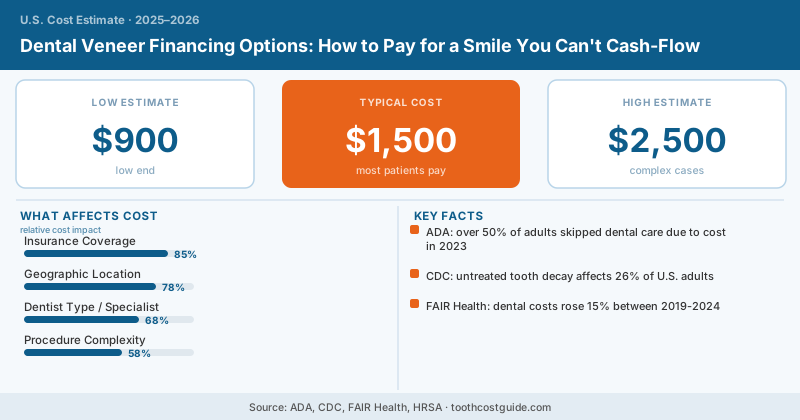
A full set of 8 front-teeth veneers at $1,500 each is a $12,000 bill. Almost nobody pays that in cash on the day of treatment — which is exactly why understanding your financing options matters as much as understanding the procedure itself.
Veneers cost $900-$2,500 per tooth depending on material (porcelain vs. composite) and case complexity. Here’s how patients across the country actually fund that investment.
| Financing Option | Typical Terms | Best For |
|---|---|---|
| In-house payment plan | 0% interest, 6–24 months | Most patients, first option to ask about |
| CareCredit/medical credit card | 0% promotional, 6–24 months, then 17–27% APR | Those confident they’ll pay off within promo window |
| Personal loan (bank/credit union) | Fixed rate, 6–15% APR typical | Larger cases, longer repayment comfort |
| HSA/FSA funds | Tax-advantaged, but cosmetic use often excluded | Repair-related veneer cases only |
| Dental savings/discount plans | 10-20% off cash price, no interest | Uninsured patients seeking a discount |
In-House Payment Plans: Ask This First
Many cosmetic dentistry practices offer their own interest-free payment plans, splitting the total cost over 6-24 months directly through the office rather than a third-party lender. Because the practice isn’t paying interest to a bank to offer this, there’s often no credit check requirement, or a very lenient one. This should be the first financing option you ask about — it’s frequently the cheapest.
CareCredit and Medical Credit Cards: Read the Deferred-Interest Fine Print
CareCredit and similar cards (Alphaeon Credit, Proceed Finance) are heavily marketed in cosmetic dentistry offices, and for good reason — the promotional 0% interest periods make a large bill feel manageable. The catch that trips up many patients: deferred interest. If even $50 remains unpaid when the promotional period ends, some of these plans retroactively charge interest on the entire original balance from day one, not just the remaining amount — often at 20%+ APR. Read your specific agreement’s deferred-interest terms before signing, and set a reminder well before the promotional period ends.
Divide your total veneer cost by the number of months in the promotional 0% period, then confirm you can realistically make that exact payment every month without missing one. A single missed payment can sometimes void the promotional rate entirely on certain cards, triggering full retroactive interest immediately rather than just on the missed payment.
Personal Loans: Sometimes the Smarter Long-Term Option
For larger cases — a full 8-10 tooth veneer treatment plan reaching $10,000+ — a personal loan from a bank or credit union can offer a fixed interest rate and a clear, predictable payoff schedule, avoiding the deferred-interest risk that comes with medical credit cards. Rates typically run 6-15% APR depending on credit score, which may be lower than what you’d pay if a CareCredit promotional period expired with a balance remaining.
Where HSA/FSA Funds Actually Apply
This is where many patients get confused. The IRS generally treats veneers placed purely for cosmetic improvement as ineligible for HSA/FSA reimbursement — the same rule that excludes teeth whitening for appearance alone. However, if a veneer is medically necessary to repair a fractured, decayed, or structurally compromised tooth (rather than simply improving the appearance of an already-healthy tooth), that portion may qualify. Ask your dentist for documentation distinguishing the medically necessary component from the purely cosmetic upgrade, if applicable to your case.
Dental Discount/Savings Plans
Unlike insurance, these membership-based plans (not tied to a specific insurer) offer a negotiated discount, typically 10-20%, off a participating dentist’s cash price for cosmetic work including veneers. There’s no waiting period and no annual maximum, making them a straightforward way to reduce cost for uninsured patients, though the discount is more modest than what insurance coverage would provide for a covered procedure.
Never let financing terms pressure you into a rushed treatment decision. A reputable cosmetic dentist will give you time to review financing paperwork at home rather than requiring a same-day signature to “lock in a discount” — that specific sales tactic is a red flag worth walking away from.
The Bottom Line
Most patients financing veneers combine an in-house payment plan for part of the cost with either CareCredit or a personal loan for the remainder. Ask about in-house financing first, read deferred-interest terms carefully on any medical credit card, and don’t assume HSA/FSA funds apply unless your dentist can document a medical necessity component to your case.
Frequently Asked Questions
The main options are in-house payment plans through the dental office, third-party medical credit cards like CareCredit, personal loans from a bank or credit union, HSA/FSA funds if you have an account, and less commonly, dental insurance for a small portion if veneers double as a restorative repair. Most patients combine at least two of these.
Generally, no — the IRS classifies veneers placed purely for cosmetic reasons as ineligible for FSA/HSA reimbursement. However, if veneers are used to repair a damaged, decayed, or structurally compromised tooth rather than purely for appearance, that portion may qualify, and a letter of medical necessity from your dentist can sometimes support this distinction.
CareCredit can be a good option if you can pay off the balance within the promotional 0% interest period, typically 6–24 months. The risk is deferred interest: if any balance remains after the promotional period ends, some CareCredit plans retroactively charge interest on the entire original amount at a high APR, not just the remaining balance.