Your dentist just told you to “use a Waterpik.” Can insurance help pay for one?
Short answer: dental insurance won’t. But your FSA or HSA account probably will — and that distinction matters, because water flossers can genuinely make a difference if you have implants, braces, or gum disease.
Here’s the full breakdown on coverage, costs, and when a written recommendation from your dentist unlocks additional reimbursement options.
Why Dental Insurance Skips Waterpiks
Traditional dental insurance is built around procedures performed in a dental office. It covers X-rays, cleanings, fillings, crowns. It doesn’t cover toothbrushes, toothpaste, floss, or home oral hygiene equipment — even when those items are strongly recommended by your dentist.
The reasoning is actuarial: if insurance covered every hygiene product a dentist could recommend, premiums would skyrocket. Dental plans are designed as procedure-reimbursement vehicles, not general wellness accounts.
There is a narrow exception worth knowing: some medical insurance plans (not dental) cover oral health equipment for patients with specific conditions. People with diabetes, for instance, have well-documented oral health connections — some medical plans will cover oral hygiene equipment under durable medical equipment (DME) provisions when supported by physician documentation. This is rare, but worth asking about if you have a complicating systemic condition.
FSA and HSA: Your Real Coverage Option
This is where the real money is. Flexible Spending Accounts (FSA) and Health Savings Accounts (HSA) are pre-tax accounts that can pay for qualified medical expenses — and since the CARES Act of 2020, that definition expanded to include many over-the-counter health products.
Water flossers are FSA and HSA eligible. The IRS confirmed OTC eligibility was expanded, and major FSA administrators (Optum, WageWorks, ConnectYourCare) all list water flossers as eligible expenses.
The practical impact: if you’re in a 22% marginal tax bracket and buy a $70 Waterpik with FSA funds, you’re effectively paying $54.60 for it. That’s a real discount, not a trivial one.
In most cases, no. The 2020 CARES Act removed the prescription requirement for many OTC health products, including dental hygiene items. However, some FSA plans are administered more conservatively. If your FSA administrator flags a water flosser, having a Letter of Medical Necessity from your dentist resolves it immediately. Ask your dentist’s office — it’s a simple form letter they produce routinely.
Water Flosser Costs by Model
| Model Type | Price Range | Best For |
|---|---|---|
| Waterpik Classic (WP-60/70) | $30–$45 | Budget-conscious buyers, first-time users |
| Waterpik Aquarius (WP-660) | $55–$75 | Best all-around countertop model |
| Waterpik Ultra Professional (WP-660/900) | $70–$100 | Heavy users, multiple family members |
| Waterpik Cordless Advanced (WP-562/580) | $45–$70 | Travel, smaller bathrooms |
| Philips Sonicare AirFloss Pro | $50–$80 | Air + water microbursts; good for tight contacts |
| Nicwell Cordless | $25–$40 | Budget alternative; decent reviews |
The Waterpik brand dominates the market and has the most clinical research behind it. The Aquarius model (WP-660) is the most-studied consumer model in peer-reviewed literature, which matters if you’re making a clinical case for reimbursement.
When Dentists Specifically Recommend Water Flossers
The ADA notes that only about 30% of Americans floss daily — despite consistent evidence that interdental cleaning prevents gum disease and cavities between teeth. For the 70% who don’t floss consistently, a water flosser is often more effective than trying to enforce a string floss habit.
Dentists particularly recommend water flossers for patients with:
Dental implants. Traditional flossing around implants is difficult and can damage peri-implant tissue if done improperly. Water flossers are gentler and more effective at cleaning around abutments.
Fixed bridges. Flossing under a bridge is awkward and time-consuming. A water flosser thread tip navigates under the pontic easily.
Orthodontic appliances (braces, retainers, clear aligners). Food and plaque accumulate around brackets and wires. Water flossers dramatically reduce plaque scores in orthodontic patients — a 2019 clinical study found a 52% plaque reduction in patients using water flossers compared to string floss during orthodontic treatment.
Periodontal pockets. After scaling and root planing, regular irrigation of periodontal pockets with a water flosser can reduce bacterial recolonization.
Dry mouth or mobility limitations. Patients who struggle with string floss due to arthritis, reduced hand strength, or dexterity issues often find water flossers far more manageable.
Getting a Letter of Medical Necessity
If you want to maximize your chances of FSA/HSA reimbursement — or explore whether your medical insurance has any coverage — a Letter of Medical Necessity (LMN) from your dentist is the key document.
What it should include:
- Your diagnosis (e.g., “Stage II generalized periodontitis,” “patient with implants,” “orthodontic patient”)
- A specific recommendation for a water flosser
- Why it’s medically necessary for your condition
- Your dentist’s signature and contact information
Most dental offices produce these routinely. Call the front desk and ask — it typically takes 1–2 business days and most offices don’t charge for it.
Don’t buy a water flosser expecting dental insurance to reimburse it post-purchase. It won’t. Use your FSA/HSA debit card at purchase, or pay out-of-pocket and submit the receipt with your LMN to your FSA administrator. Keep receipts for at least three years — FSA administrators can audit expenses.
The ROI Calculation
A $70 Waterpik Aquarius, used daily for three years, costs about $1.94/month. Compare that to:
- One round of scaling and root planing (which insufficient flossing can accelerate toward): $800–$1,600
- A single periodontal maintenance visit: $100–$200 per visit, quarterly
Even if your insurance covers none of the water flosser purchase, the math strongly favors buying one. The ADA’s own research indicates that patients who use some form of interdental cleaning daily have measurably lower rates of interproximal decay and periodontal disease progression.
The Waterpik isn’t magic — it doesn’t replace brushing, and if your technique is poor it can miss the critical subgingival area. But for people who genuinely don’t floss consistently, it’s a massive upgrade over doing nothing.
Quick Summary
- Dental insurance: almost certainly won’t cover a Waterpik
- FSA/HSA: yes, eligible since 2020 CARES Act — use pre-tax dollars
- Medical insurance: possible for certain conditions with physician documentation
- Letter of Medical Necessity: your dentist can provide one; helps with FSA claims
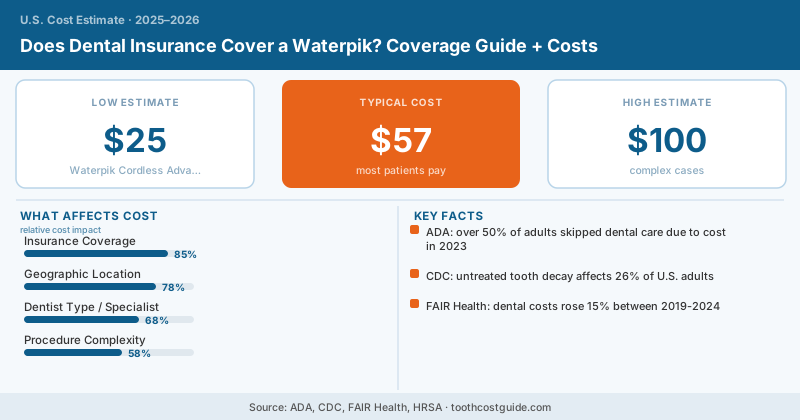
- Cost: $30–$100 depending on model; most mid-range models $50–$75
The best approach: buy the Waterpik with your FSA card, ask your dentist for an LMN if your administrator requires one, and keep the receipt. You’ll save 20–35% on the purchase cost through the tax advantage — which is the closest thing to insurance coverage you’re going to get for home oral hygiene equipment.
Frequently Asked Questions
Standard dental insurance plans almost never cover a Waterpik or other water flosser as a standalone purchase. However, FSA (Flexible Spending Account) and HSA (Health Savings Account) funds can typically be used to buy a water flosser — often without a prescription, as the IRS clarified their eligibility in 2020.
Yes. Water flossers are FSA and HSA eligible under the CARES Act of 2020, which expanded the definition of qualifying medical expenses to include dental hygiene products. You generally don't need a prescription, though some FSA plans may still require a Letter of Medical Necessity for the expense.
Basic countertop Waterpik models cost $30–$60. Mid-range models with more pressure settings and reservoir capacity run $50–$80. Cordless/travel models cost $30–$60. Professional-grade models (Waterpik Ultra Professional) run $70–$100.
A dentist can write a Letter of Medical Necessity (LMN), which may help with FSA/HSA reimbursement and occasionally with medical insurance for patients with specific conditions. Standard dental insurance won't cover it regardless, but some medical insurance plans cover oral hygiene equipment for diabetics or patients with specific systemic conditions.