A new denture fits perfectly the day you pick it up. Six months later, the bone it rests on has already changed shape. That’s not a defect — it’s biology.
When teeth are extracted, the alveolar bone — the ridge that once held those roots in place — no longer has a job. Without the mechanical stimulation of chewing forces transmitted through roots, the body begins resorbing that bone. According to data published in the Journal of Prosthetic Dentistry, patients lose an average of 1–2mm of alveolar ridge height per year in the first year after extraction, with the rate slowing over time. But it never fully stops. The result: a denture that fit well at delivery gradually becomes loose, unstable, and uncomfortable.
A reline is how you close that gap — literally. It adds new material to the tissue-facing surface of your denture so it conforms to your current ridge shape. It doesn’t fix everything, but when done at the right time, it extends the life of your denture and makes a meaningful difference in daily comfort.
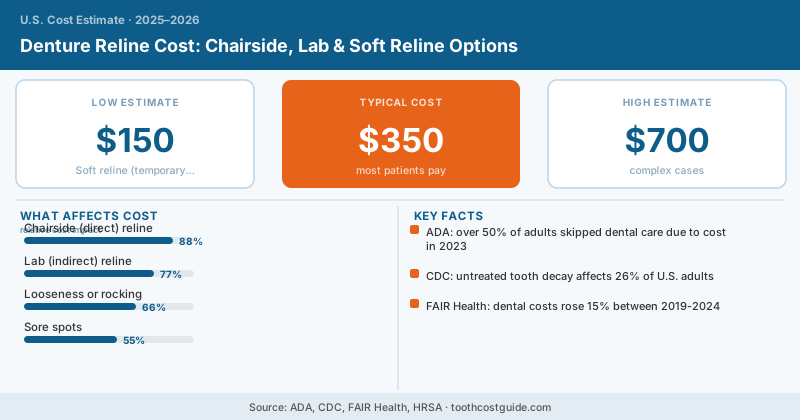
What a Reline Costs
Prices vary by region and provider. Urban practices and specialists typically charge more than rural general dentists. Some practices include one reline within the first year of denture delivery — ask upfront.
Chairside Reline vs. Lab Reline
The difference matters, and it’s worth understanding before you commit.
Chairside (direct) reline is done in the dental office in a single appointment. The dentist adds a self-curing resin directly to your denture, seats it in your mouth while it sets, then trims and polishes the result. You leave with your relined denture the same day. The upside: no awkward days without your teeth. The downside: chairside materials aren’t as durable or precise as lab-processed acrylics. Most dentists consider chairside relines a short-term fix — good for 1–2 years before the material degrades.
Lab (indirect) reline involves sending your denture to a dental lab, where technicians add and cure new acrylic material under pressure and heat — a process that produces a harder, more accurate, and longer-lasting result. You’ll be without your denture for 1–3 business days (some labs offer overnight turnaround for a premium). Lab relines typically last 2–3 years before another adjustment is needed. For most patients, the tradeoff in days without teeth is worth the improved durability.
Soft Relines: When the Hard Stuff Is Too Hard
Some patients — especially those with thin, tender gum tissue or sharp bony ridges — can’t tolerate the rigidity of hard acrylic relines. For them, soft relines use a pliable, cushioning material instead.
Two main materials are used:
- Silicone-based soft reline materials are more biocompatible and last longer (up to 2 years), but they’re harder to bond securely to the denture base. They can peel or separate if the bond isn’t perfect.
- Acrylic-based (plasticized) soft relines bond better but harden over time — usually within 6–12 months — losing the cushioning effect and becoming rough enough to harbor bacteria and odor.
Even the best soft reline materials degrade faster than hard acrylic. Most need replacement every 6–18 months. If you’re using a soft reline as a bridge to letting your tissues heal after extractions, that’s appropriate — but plan on transitioning to a hard reline or new denture once healing is complete.
Signs Your Denture Needs a Reline
Don’t wait until you’re in pain. Watch for:
Looseness or rocking — Your denture should stay in place through normal speaking and chewing. If it’s shifting, clicking, or coming loose when you eat, the fit has degraded.
Sore spots — When the denture no longer distributes pressure evenly across the ridge, certain spots take more force than they should. You’ll notice sore areas that don’t resolve even when you take the denture out overnight.
Food trapping — A well-fitting denture creates a reasonable seal against the ridge. Gaps let food particles in — uncomfortable and unhygienic.
Changes in appearance — If your lips or cheeks are starting to look sunken, your vertical dimension may have dropped. This can happen as the ridge resorbs and the denture drops lower in the mouth.
Clicking sounds — Denture teeth clicking together during speech often signals that the bite relationship has shifted.
How Often Do Dentures Need Relining?
The ADA recommends that denture wearers have their appliances examined annually. In practice, most patients need a reline every 1–3 years, depending on how quickly their ridge resorbs. People who received dentures soon after extractions (before the bone has stabilized) tend to need more frequent adjustments in the first 2–3 years. After 5–7 years of wearing, bone loss usually slows and reline intervals can stretch.
If you’re newly edentulous — meaning you just had extractions and received immediate dentures — expect at least one reline within the first 6–12 months as post-extraction swelling resolves and bone remodeling occurs.
Reline vs. New Denture: When to Stop Relining
A reline isn’t always the right call. Here’s when to have a real conversation about starting over:
- The denture has been relined more than two or three times and the fit still isn’t stable
- The acrylic base has cracks or fractures that compromise structural integrity
- The denture teeth are worn flat — affecting bite force and digestion
- The vertical dimension of occlusion has shifted significantly, affecting jaw joint comfort
- You’re spending more on repeated relines than a new denture would cost over the same period
A quality full denture ($1,200–$2,500) lasts 7–10 years. If you’re relining a 9-year-old denture for $500, that money is often better applied toward a replacement.
Never use over-the-counter denture adhesives as a substitute for a professional reline. Adhesives mask a fit problem without fixing it — and the continued pressure from an ill-fitting denture accelerates bone resorption, making future prosthetic work harder and more expensive.
Implant-Retained Dentures: The Long-Term Alternative
If you’re frustrated by chronic looseness and repeated relines, implant-retained dentures are worth knowing about. Two to four dental implants are placed in the jaw, and your denture snaps or clips onto them. You still remove the denture for cleaning — but it won’t rock, float, or fall out when you bite into an apple.
Costs run $3,000–$30,000+ depending on whether you’re doing a snap-on overdenture (2 implants, $3,000–$7,000 for the implants alone) or a fully implant-supported fixed prosthesis. The implants also stimulate the underlying bone, slowing the resorption that makes conventional dentures require relining in the first place.
Not everyone is a candidate — bone volume, systemic health, and cost are real factors. But for patients who’ve been through multiple relines and are still struggling, it’s the option that actually addresses the underlying problem.
Does Insurance Cover Denture Relines?
Coverage varies significantly. Many dental insurance plans classify relines as a basic service and cover 70–80% after the deductible — but only after the waiting period (typically 6–12 months after plan enrollment). Some plans limit relines to once every 12–24 months.
Check whether your plan’s limitations apply. If you had your denture placed before your insurance started, some plans won’t cover related services for the first year. Call your insurer before the appointment to verify your specific coverage — don’t rely on what the front desk tells you about “what most plans cover.”
Medicaid coverage for denture relines varies by state. Some state programs cover it; others don’t.
Frequently Asked Questions
Most dentures need relining every 1–3 years. The rate of bone resorption varies by person — some patients lose ridge height faster than others. If your denture starts rocking, causing sore spots, or trapping food, don't wait for your annual exam. Get it checked now.
DIY reline kits ($15–$30) are sold at drugstores, but most dentists strongly advise against them. Home kits use soft, temporary material that wears unevenly, can distort your bite, and may cause pressure sores on the ridge. Worse, they can make a professional reline harder by leaving residue that's difficult to remove. For occasional use as a stopgap, they're tolerable — as a long-term solution, they're not.
If your denture has been relined more than twice, the acrylic base is cracked or severely worn, the teeth themselves are flattened from years of grinding, or the fit can't be corrected without significant jaw repositioning — it's time for a new denture. A dentist can evaluate the occlusion and base integrity to give you a clear answer. Most quality dentures last 7–10 years before replacement becomes the smarter investment.