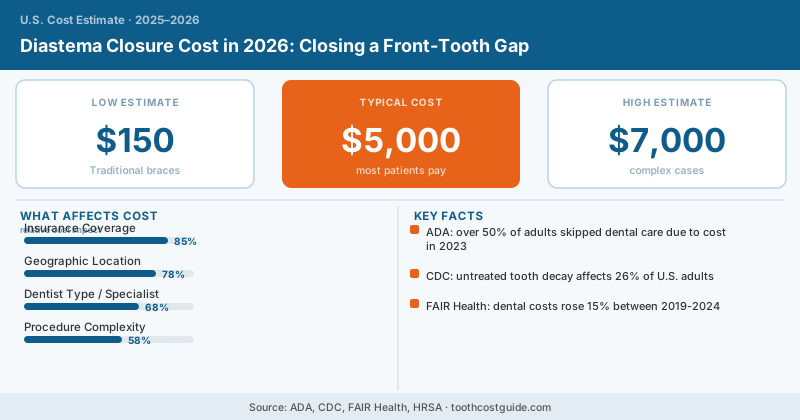
What does it actually cost to close the gap between your two front teeth? Anywhere from $300 to $6,000 — and the spread comes down entirely to which method you pick. A diastema is the technical name for that gap, and it’s incredibly common. There’s nothing wrong with it medically. But if you want it closed, you’ve got four real options at four very different price points.
Here’s the full menu before we dig in.
| Diastema Closure Method | Typical Cost |
|---|---|
| Dental bonding (2 teeth) | $300–$1,200 |
| Porcelain veneers (2 teeth) | $2,500–$6,000 |
| Invisalign/clear aligners | $3,000–$7,000 |
| Traditional braces | $3,000–$7,000 |
| Frenectomy (if gap is muscle-caused) | $250–$800 |
| Retainer (post-orthodontic, to hold result) | $150–$500 |
Why Some Gaps Need More Than Bonding
Before you pick a method, your dentist needs to know why the gap exists. A diastema can come from teeth that are simply spaced apart, from teeth that are too small for your jaw, or from a thick band of tissue called a labial frenum pulling the teeth apart. That last cause matters because if you close the gap without addressing the frenum, it can reopen.
The American Association of Orthodontists notes that diastemas are among the most common reasons adults seek cosmetic orthodontic consults. Some gaps in kids close on their own as adult teeth come in. Adult gaps don’t disappear — they need a deliberate fix.
The cheapest fix isn’t always the right one. Bonding closes a small gap beautifully for a few hundred dollars, but if your gap is wide, closing it with bonding alone can leave your front teeth looking too big or boxy. For wider gaps, moving the teeth with aligners often produces a more natural result than just adding material.
Method by Method
Bonding is the fast, affordable route. Your dentist adds tooth-colored composite to the inner edges of both teeth, sculpting them wider to meet in the middle. One visit, no drilling, $300–$1,200 for the pair. The catch: composite stains over time and the result depends heavily on the dentist’s artistry. Read more in our dental bonding guide.
Veneers wrap the front of both teeth in porcelain, closing the gap while masking color and shape issues at the same time. They last longer than bonding and resist staining, but they cost far more and require removing a thin layer of enamel. See the full dental veneers breakdown.
Aligners and braces physically move the teeth together. This is the only method that fixes the position rather than disguising the gap. It’s the right call for wider gaps or when other teeth are also misaligned. Our Invisalign and braces guides cover the financing.
The Reopening Problem Nobody Mentions
Here’s something that catches people off guard with orthodontic closure: gaps love to come back. Teeth have memory. After braces or aligners close a diastema, you almost always need a retainer — sometimes a permanent bonded wire behind the teeth — to keep it shut. Skip the retainer and you may watch your expensive gap closure slowly reopen over a year or two. Factor the retainer into your budget from day one.
What About Insurance?
Closing a gap is cosmetic, so dental insurance usually won’t help. The exception is if the diastema is part of a bite problem causing functional issues — then orthodontic coverage might apply partially. A frenectomy tied to a documented oral health concern can sometimes get coverage too. Always ask your dentist to clarify the billing before you commit.
Saving Money
Start with bonding for small gaps. If your gap is a couple of millimeters, bonding at $300–$1,200 gives you a near-identical look to veneers at a quarter of the price.
Use a flexible spending account. If any portion qualifies as restorative, an FSA lets you pay with pre-tax dollars.
Finance the bigger options. For aligners or veneers, CareCredit offers 0% promotional windows at most dental offices.
Don’t pay for a full smile makeover if you only have one gap. A targeted two-tooth fix is dramatically cheaper than a full smile makeover you don’t need.
Ask your dentist to mock up the result before you commit. Many offices can do a quick composite mock-up or digital preview so you can see whether closing the gap makes your front teeth look proportionate — before you’ve spent a dime on the permanent version.
If your gap is caused by a thick labial frenum or by gum disease shifting your teeth, closing it cosmetically without treating the underlying cause is a waste of money — it’ll reopen. Get the cause diagnosed first, get a written treatment plan, and ask specifically what’s needed to keep the gap closed long term.
Frequently Asked Questions
The cost ranges from $300 to $6,000 depending on the method you choose. Bonding is the most affordable option at $300–$1,200, while veneers are the most expensive at $2,500–$6,000, with braces and Invisalign falling in the middle range.
Most dental insurance plans do not cover gap closure since it is considered cosmetic rather than medically necessary. You can expect to pay out-of-pocket for the full cost, though some plans may cover a portion if the gap affects your bite or speech.
Bonding takes one visit and produces immediate results, while veneers require two to three appointments over 1–2 weeks. Braces and Invisalign take 6–24 months depending on the size of the gap and your treatment plan.