In 2015, getting a crown meant biting into a tray of thick, mint-flavored putty for two full minutes, trying not to gag while it set. Today, most modern practices run a small wand over your teeth for 90 seconds and get a full 3D model on a chairside screen. The technology changed dramatically — the price for patients, less so.
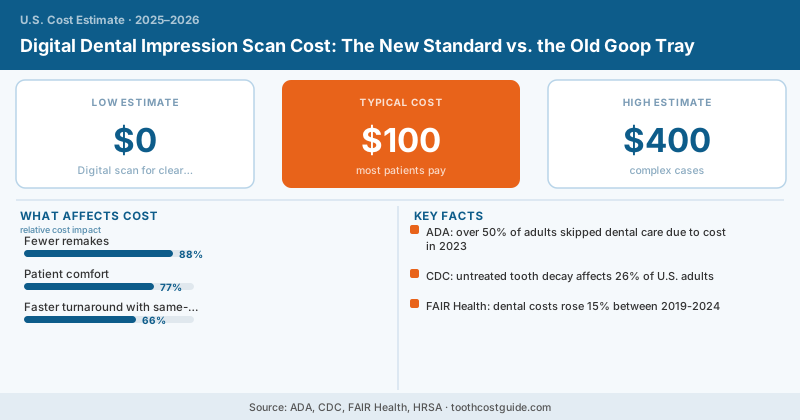
Digital impression scanning runs $100–$300 when itemized separately, though a majority of practices fold this cost into the existing crown, veneer, aligner, or night guard fee rather than adding a new line item.
| Impression Method | Typical Added Cost | Time Required |
|---|---|---|
| Traditional PVS/alginate impression | Bundled into procedure fee | 3–5 minutes per arch |
| Digital intraoral scan (iTero, CEREC, 3Shape) | $0–$300 (often bundled) | 60–90 seconds per arch |
| Digital scan for clear aligners | $50–$150 (sometimes separate) | 5–10 minutes full mouth |
| CBCT 3D scan (implants/surgery) | $150–$400 | 15–30 seconds |
Why Practices Are Switching Even Though It Costs More Upfront
A digital scanner represents a real equipment investment — typically $20,000-$40,000 for the practice. So why are more offices adopting it despite the cost?
Fewer remakes. Traditional impressions can distort during removal from the mouth, during shipping, or from expansion/shrinkage of the material over time. A crown made from a distorted impression doesn’t fit, requiring a remake — an expensive redo for the practice and an extra appointment for you. Digital scans eliminate most of that failure mode because the dentist can see immediately if an area needs rescanning.
Patient comfort. No gag reflex, no waiting for material to set, no messy cleanup. For patients with a strong gag reflex or dental anxiety, this alone is often worth switching providers over.
Faster turnaround with same-day crowns. Digital scans feed directly into same-day milling systems (like CEREC), letting some practices produce a finished ceramic crown in a single visit instead of the traditional two-visit process with a temporary crown in between.
When You Might See a Separate Charge
Orthodontic aligner cases (Invisalign, ClearCorrect) are the most common place to see digital scanning itemized separately, since the scan is the entire basis for the aligner treatment plan sent to the manufacturer, not just one part of a larger procedure. A $50-$150 scan fee here is standard and typically non-negotiable, since the aligner company charges the practice for processing each scan submission.
For most crowns, veneers, and aligners, digital scanning has become the standard and produces excellent results. However, some complex full-mouth reconstruction cases or certain denture fabrication workflows still rely on a physical impression or a combination of both methods. If your case involves extensive reconstructive work, ask your dentist directly which method they’re using and why.
Comfort and Accuracy Side by Side
Independent studies comparing digital scans to traditional impressions for single-crown and bridge cases have generally found comparable marginal fit accuracy, with digital scanning showing a slight edge in reducing the specific distortion errors associated with material handling and shipping. For most single-tooth or small-span restorations, either method produces a clinically successful result in skilled hands — the deciding factor is often practice preference and equipment availability rather than a dramatic accuracy gap.
Should You Ask Your Dentist to Use Digital Scanning?
If your practice still uses only traditional impressions and you have a strong gag reflex, it’s reasonable to ask whether they can refer you to a location with digital scanning, or whether they plan to add it. Many multi-location dental groups have digital scanners at some offices but not all — a quick phone call to the front desk can confirm availability before you book.
If you do have a traditional impression taken, follow post-impression instructions carefully — avoid eating or drinking hot liquids for the recommended waiting period if any numbing agent was used, and report any unusual reaction to the impression material (rare but possible allergy) to your dentist immediately.
The Bottom Line
Digital impression scanning costs the same as, or sometimes slightly more than, traditional impressions when itemized — but most practices absorb the cost since it reduces costly remakes and speeds up their workflow. For a patient, the real benefit isn’t price. It’s comfort, speed, and a lower chance of needing a second appointment because the first impression didn’t come out right.
Frequently Asked Questions
A digital intraoral scan typically costs $100–$300 when billed separately, though many practices now include it in the base fee for crowns, veneers, aligners, or night guards rather than charging extra. Traditional putty impressions, by contrast, are usually bundled into the procedure cost with no separate line item.
Studies comparing digital intraoral scanning to traditional alginate and PVS impressions generally show comparable or better accuracy for most restorative applications, with digital scans reducing the risk of distortion that can occur when a physical impression is removed from the mouth or during shipping to a lab. Digital scans also allow the dentist to review and immediately rescan any area that looks unclear.
It depends on the practice. Many dentists absorb the cost of digital scanning into their existing procedure fees since the technology reduces remakes and saves chair time overall. Some practices, especially newer or premium ones, itemize a small digital scan fee ($50–$150) separately, particularly for orthodontic aligner cases.