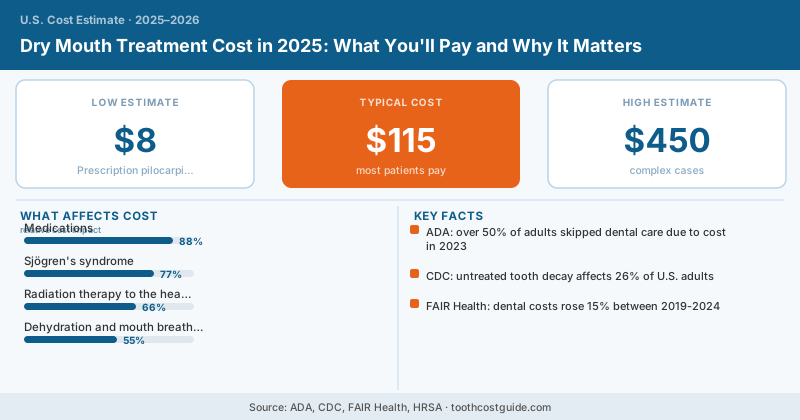
Most people think dry mouth is just uncomfortable. It’s not — it’s destructive. Saliva neutralizes acid, washes away bacteria, and remineralizes early enamel damage. Without enough of it, decay accelerates in places dentists rarely see it: along the gumline, on smooth tooth surfaces, even on root surfaces. Patients on medication-induced dry mouth sometimes go from zero cavities to eight in a single year.
The treatment? Surprisingly affordable — if you catch it early. The cost of ignoring it? Several thousand dollars in dental repairs.
Dry Mouth Treatment Costs
| Treatment | Cost |
|---|---|
| OTC dry mouth rinse (Biotene, ACT) | $8–$18 |
| OTC saliva substitute spray or gel | $10–$25 |
| Prescription fluoride toothpaste (1.1% NaF) | $20–$45 per tube |
| Prescription pilocarpine (Salagen) | $50–$180/month |
| Prescription cevimeline (Evoxac) | $80–$250/month |
| Custom fluoride trays (dental office) | $200–$500 |
| Fluoride varnish (applied at dental visit) | $30–$70 per application |
What’s Actually Causing It
Effective treatment starts with identifying the source. The CDC estimates that more than 400 medications list dry mouth as a side effect — antihistamines, antidepressants, blood pressure medications, diuretics, and antipsychotics are among the most common culprits. CDC data also shows that dry mouth affects up to 65% of older adults, largely driven by the polypharmacy common in that population.
The three main causes:
Medications — By far the most common. The fix usually isn’t a dental product; it’s working with your prescribing physician to adjust medication timing, switch to a lower-impact alternative where possible, or add a saliva stimulant.
Sjögren’s syndrome — An autoimmune disease that attacks salivary and lacrimal glands. The Sjögren’s Foundation estimates that roughly 4 million Americans have the condition. Dry mouth from Sjögren’s is severe, constant, and almost always requires prescription management.
Head and neck radiation therapy — Damages salivary gland tissue, sometimes permanently. Patients who’ve had radiation treatment for oral or throat cancers often have lifelong severe xerostomia. This is the most aggressive presentation and typically requires a combination of prescription medications, custom fluoride trays, and close dental monitoring.
OTC Products: What They Do (and Don’t Do)
Biotene, ACT Dry Mouth, and other OTC rinses contain ingredients that partially mimic saliva functions — lubricating agents, enzymes, or pH buffers. They help with comfort, especially before bed. They don’t replace saliva or stimulate your glands to produce more.
Cost: $8–$18 per bottle. For mild, situational dry mouth — dehydration, mouth breathing, occasional medication side effects — OTC products combined with increased water intake often do the job. Budget around $20–$40 per month for a rinse and spray together.
Start here before spending on prescription options. For mild cases, this is often all you need.
Prescription Options: Pilocarpine and Cevimeline
When the cause is Sjögren’s syndrome or radiation damage, OTC products aren’t enough. Two prescription medications stimulate salivary gland output:
Pilocarpine (Salagen) — $50–$180/month: Taken three to four times daily. Effective but requires consistent dosing throughout the day. Side effects include sweating, flushing, and urinary frequency — manageable for most patients, but worth knowing about. Works best when meaningful gland tissue remains.
Cevimeline (Evoxac) — $80–$250/month: Similar mechanism, taken three times daily. Slightly better tolerated by some patients, with fewer side effects than pilocarpine at equivalent doses. Insurance coverage varies significantly — plans sometimes cover cevimeline under medical benefits (for Sjögren’s diagnosis) rather than dental benefits, which can substantially reduce your out-of-pocket cost.
Both require a prescription. With good pharmacy benefit coverage or generic pilocarpine, monthly costs can drop to $10–$40. Ask your dentist or physician whether either is appropriate before committing to long-term OTC spending.
For patients with severe or medication-induced dry mouth, dentists often prescribe custom fluoride trays used nightly with 1.1% sodium fluoride gel. The trays cost $200–$500 at most dental offices and last for years; the gel runs $20–$45 per tube. This isn’t teeth whitening — it’s aggressive cavity prevention. Studies show that daily high-fluoride tray use can reduce cavity incidence by 60–70% in high-risk patients. The upfront investment pays for itself if it prevents even one or two fillings.
The Real Cost of Ignoring Dry Mouth
Here’s the number that actually matters. A patient with unmanaged dry mouth who skips two years of dental visits might face:
- 4–8 new cavities: $600–$2,800 in fillings
- Root surface cavities (harder to treat, higher cost): $300–$600 each
- Potential tooth loss requiring implants or bridges: $3,000–$5,000 per tooth
Monthly spending of $30–$50 on OTC products plus a prescription fluoride toothpaste looks very different against that math. Dry mouth treatment isn’t optional — it’s damage control.
Does Insurance Cover It?
OTC products: Not covered by dental or medical insurance. Most are FSA/HSA-eligible — check with your plan before paying out of pocket.
Prescription fluoride toothpaste: FSA/HSA-eligible. Some medical plans cover it with a prescription for documented high caries risk.
Pilocarpine and cevimeline: Generally covered under medical insurance prescription benefits — especially with a Sjögren’s or post-radiation diagnosis. With Part D or a strong Rx benefit, monthly costs can drop to $10–$40.
Custom fluoride trays: Some dental plans cover them for high-caries-risk patients. Submit a predetermination before paying out of pocket — coverage varies widely.
If you’re taking medications that cause dry mouth, tell your dentist at every visit. This symptom should trigger more frequent monitoring (every 4 months instead of 6), a prescription fluoride protocol, and fluoride varnish applications at each visit. If your dentist doesn’t ask about it, bring it up. This is one of the most preventable paths to major dental expenses — but only if the problem gets caught and managed early.
Simple Starting Points
For early-stage or mild dry mouth, start with these steps before spending on prescriptions:
- Sip water consistently throughout the day — especially with meals
- Try Biotene or ACT Dry Mouth rinse ($8–$18) before bed
- Switch to an SLS-free toothpaste — sodium lauryl sulfate, the foaming agent in most mainstream toothpastes, worsens dry mouth symptoms in many patients
- Chew xylitol gum — stimulates saliva flow and has documented anti-cavity properties (look for gums listing xylitol as the first sweetener)
- Ask your prescribing physician whether any of your medications can be timed differently, dosed lower, or switched to alternatives
These steps cost under $30 total and provide meaningful relief for mild cases.
Bottom Line
Dry mouth treatment costs $10–$250 per month depending on whether you need prescription medications. OTC products are the right starting point for mild cases. For chronic dry mouth from Sjögren’s or radiation, prescription saliva stimulants and custom fluoride trays are worth the investment when weighed against the dental damage they prevent. Loop in both your dentist and prescribing physician — this condition sits at the intersection of medicine and dentistry, and managing it well requires both.
Frequently Asked Questions
Over-the-counter saliva substitutes and rinses cost $8–$25 per month, while prescription medications like pilocarpine or cevimeline range from $50–$250 per month depending on the drug and your dosage. Total monthly treatment typically falls between $10–$250 depending on severity and whether you combine OTC and prescription options.
Most dental insurance plans do not cover prescription dry mouth medications or saliva substitutes, leaving you to pay out-of-pocket; however, medical insurance may cover prescription medications like pilocarpine if prescribed by your doctor for an underlying condition like Sjogren's syndrome. You should contact your medical insurance provider directly, as coverage varies significantly by plan and diagnosis.
OTC saliva rinses and gels provide immediate relief within minutes but require frequent reapplication throughout the day, while prescription medications like pilocarpine typically show improvement within 2–4 weeks of consistent use. If medication-induced dry mouth is the cause, switching to an alternative medication (if possible) may resolve it faster than any treatment, so discuss this option with your prescribing doctor first.